



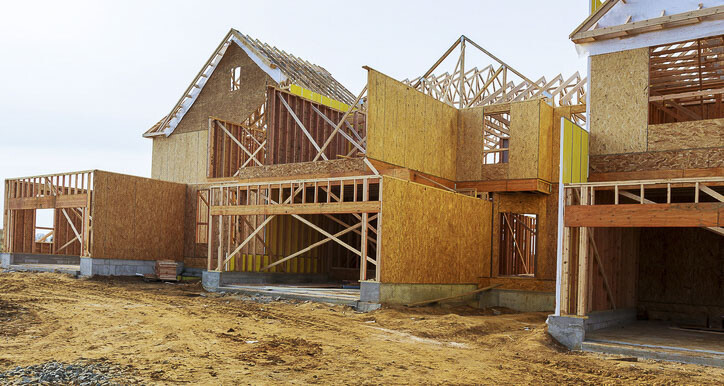
Mark Harmsworth of the Washington Policy Center believes there is more to be done to address affordable housing, much can be achieved without increasing taxes
Mark Harmsworth
Washington Policy Center
During the 2023 Legislative Session, a flurry of bills were introduced to address the issue of affordable housing in Washington. Now the dust has settled and the session is over, we can see the changes that are coming to the housing market.

Some of the changes are good, some not.
Streamlining the permitting process to reduce construction costs was high on the priority list with bills such as House Bill 1167, that would have simplified the design review process and House Bill 1026, which exempts some building permits from onerous environmental review. House Bill 1026 passed, but unfortunately House Bill 1167 died in the Senate after passing the House unanimously.
Increasing density in existing neighborhoods was one of the more controversial solutions offered with homeowners, developers, realtors, cities and counties at odds over the right approach. A mixed voted on the passage of House Bill 1110, referred to as the ‘Middle Housing Bill’ due to concerns on state preemption (overruling local zoning ordinances) and the potential impacts to existing, established neighborhoods. Time will show the effectiveness of the policy and if the bill produces the expected relief. In a similar fashion, the passage of House Bill 1337 will require cities to allow Accessory Dwelling Units (ADUs) in their Urban Growth Areas (UGAs).
Bills that passed that won’t help affordable housing include House Bill 1474 which adds a $100 fee to every document recorded during a sale of a home (and in fact, several other recorded documents) and Senate Bill 5197, making it harder to evict bad tenants.
A couple of other good policy bills that made it across the finish line, House Bill 1349, improves third party purchase protections for foreclosure, Senate Bill 5058, exempting building with 12 or fewer from large building permitting processes and Senate Bill 5290 which consolidates the local permit processes to speed construction. All these bills will reduce construction costs and will help make housing more affordable.
One big win for affordable housing is the failure of House Bill 1628 which would have created a new real estate tax category of 4% on property valued at over $5 million and would allow counties and cities to increase their local Real Estate and Excise Tax (REET) by 50%, without a vote of the people. This would have been a disaster for the cost of multi-unit family homes, specifically the type of homes that help make housing affordable.
In summary, the legislature made some good strides to address some of the issues facing the housing industry. The elephant in the room, however, still wasn’t addressed – that’s updating the Growth Management Act to increase the available buildable land. Simple changes to the Growth Management Act (GMA), by modifying the arbitrary growth boundaries and population density goals set by the Puget Sound Regional Council (PSRC) will increase available land and the ability for more affordable housing to be built. Increasing buildable land not the silver bullet to fixing affordable housing, but combined with other policies, will help significantly.
There is more to be done to address affordable housing, much can be achieved without increasing taxes.
For WPC’s recommendations on how to increase housing affordability and availability, without increasing fees and taxes, click here.
Mark Harmsworth is the director of the Small Business Center at the Washington Policy Center.

Also read:
- Opinion: Defend bail now or face more chaos on our streets
 A proposed Washington court rule would cap bail for most misdemeanors and allow defendants to bypass bondsmen, raising concerns about accountability and public safety.
 - Opinion: Some worker rights get a poster, others get fine print
 Elizabeth New questions why Washington state highlights some workplace protections while Janus First Amendment rights for public employees remain hidden in official materials.
 - Opinion: Someone explain the Democrat Party to me please
 Lars Larson criticizes Democrat politicians for shutdown threats, Homeland Security funding refusals, and positions on election laws, housing, and gun rights.
 - POLL: Do you agree with requiring board members to follow council direction?
 Disagreement among county councilors centers on whether C-TRAN board members should reflect the council’s collective wishes or act independently, highlighting ongoing concerns about public accountability.
 - Opinion: In plain sight – yielding to pedestrians
 Drivers often fail to see pedestrians due to inattentional blindness, which highlights the need for more focused awareness at intersections and stronger safety practices.
