



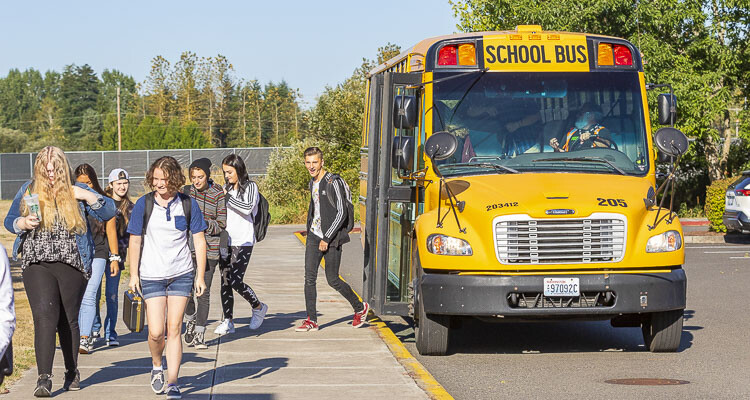
Liv Finne of the Washington Policy Center believes the public is clearly running out of patience with the creaky and unresponsive public education model
A recent report from the Office of Superintendent of Public Instruction (OSPI) finds that 40 percent of Washington’s K-4 students are not reading at grade level. The finding recognizes that public schools are falling short, noting that teachers need better training:
“OSPI will continue to focus on professional learning opportunities to train K–5 teachers in the Science of Reading” (page 7).
Research shows children learn best when they are given quality instruction in phonics to acquire the skills they need to decode the language.

Many teachers in Washington state, however, were trained to ignore phonics and use a failed method called “whole language” which is based on the discredited “balanced literacy” approach. This involves showing children pictures and having them guess at the meaning of printed words.
The University of Washington’s School of Education, for example, takes this approach (see “Improving practice, inspiring growth”). As a result, some 49% of Washington’s students failed the 2022 state test in English.
This failure was noted as early as 2017 in a series of reports by Emily Hanford, who found that:
“Most teachers nationwide are not being taught reading science in their teacher preparation programs because many deans and faculty in colleges of education either don’t know the science or dismiss it. As a result of their intransigence, millions of kids have been set up to fail.”
Many states have made progress in strengthening student learning in phonics. Mississippi and North Carolina have recently passed laws and spent large sums to encourage teachers to use the Science of Reading. The results are striking, and positive. See this article about Mississippi’s program. See this article about North Carolina’s. The states of Ohio, Colorado, Minnesota, and Arkansas also emphasize the need for instruction in evidenced-based phonics.
The ongoing reading problem in Washington state schools helps explain why so many families have left the public system to seek learning alternatives in private schools. Many states (such as West Virginia, Arizona, Iowa, Utah, Florida) now offer families up to $8,000 a year per child to pay for education in any accredited school of the parents’ choice.
Growing parent empowerment has prompted traditional public schools to re-think their methods and seek to serve children better in an effort to maintain their enrollment numbers.
The public is clearly running out of patience with the creaky and unresponsive public education model. OSPI’s latest report is a sign that state officials are starting to take notice, but given rapidly-changing parent expectations, a vague “continued focus on professional learning opportunities” may not be enough.
Liv Finne is the director of the Center for Education at the Washington Policy Center.

Also read:
- POLL: What do you believe is the biggest reason school districts are facing budget shortfalls?
 Districts across Washington warn of budget gaps as debate grows over rising costs versus inadequate state funding.
 - Opinion: The high cost of hiding – Why IBR’s delayed revenue study is a $15 billion warning sign
 IBR delays critical toll revenue analysis until June 2027, hiding financial details until after project approval.
 - Opinion: The high cost of hiding – Why IBR’s delayed revenue study is a $15 billion warning sign
 IBR delays critical toll revenue analysis until June 2027, hiding financial details until after project approval.
 - Opinion: Washington fails the test for affordability
 Mountain States Policy Center analysis reveals Washington ranks 5th most expensive state as residents migrate to Idaho and Texas.
 - Opinion: Washington fails the test for affordability
 Mountain States Policy Center analysis reveals Washington ranks 5th most expensive state as residents migrate to Idaho and Texas.
