


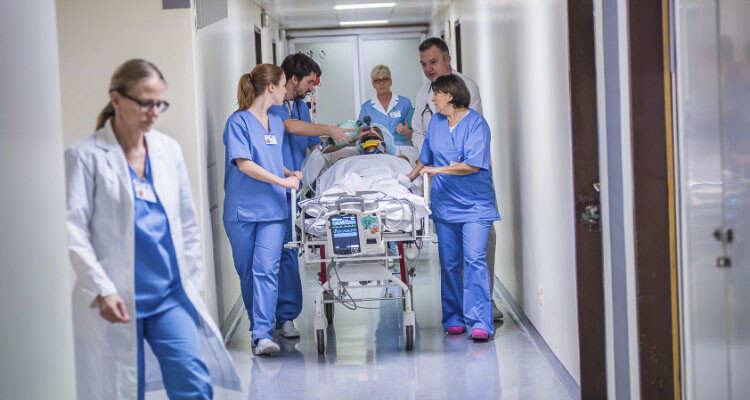
Elizabeth Hovde of the Washington Policy Center believes SB 5103 would bring an important change because hospitals need reimbursement for the care they are giving post-acute patients on Medicaid
Elizabeth Hovde
Washington Policy Center
Why did Sen. Ron Muzzall, R-Oak Harbor, and sponsor of SB 5103, say in a recent public hearing, “I’m honestly ashamed as a representative of the people that their government has failed so completely”?

The bipartisan bill he is sponsoring with Sen. Annette Cleveland, D-Vancouver, and Sen. Ann Rivers, R-La Center, concerns payment to acute care hospitals for Medicaid patients that are difficult to discharge. Right now, hospitals and private payers are picking up much of the bill.
It’s a small piece of a much larger cost-shifting puzzle, for sure. But this bill needs to fly through this legislative session to help protect consumers, insurers and hospitals. It is also needed to help lawmakers live in reality and remember that decisions, such as Medicaid expansion to able-bodied adults and continuing government programs for people who have access to other insurance, end up taking a lot of taxpayer dollars.
The state is failing to pay the true costs of patients on Medicaid and other programs. It is sending hospitals an “abysmal,” as Muzzall described it, reimbursement rate that is making our whole health care system sick. Medical costs are rising for everyone, in part, because the state government is not paying its patients’ way. The problem was exacerbated by COVID-19, but it existed before the pandemic.
While introducing SB 5103 — before a plethora of testimony supporting the legislation followed — the bill sponsor said that for three years he has had the “luxury” of going over hospital and long-term-care facility finances. He has also heard the cry of individuals with private insurance who are experiencing large increases in their health care costs.
“We were able to determine that in many cases, private insurance is picking up the bill for the shortcomings in Medicaid, Medicare and other government programs,” Muzzall said. One hospital, he explained, is charging “somewhere between 170 and 180 percent of the actual cost to private insurance to make up for the shortfall from the government programs.”
Consumers and hospitals across the state have been put in unfortunate and stressful financial situations because the state isn’t living up to its responsibilities.
Again, SB 5103 is just one small step in fixing a larger problem, but our legislators shouldn’t hesitate to right this wrong. The state needs to take responsibility for patients whose health care costs it says taxpayers will cover. And they should see and know what it does to the state’s budget every time they aid in making people dependent on the government for health care, especially when they needn’t be.
The Washington state HealthCare Authority says that Medicaid (otherwise known as Apple Health) now provides health care coverage to nearly 2 million residents. Winding down from federal requirements regarding Medicaid during pandemic times will be important business and require clear thinking about what taxpayers can and can’t, and should and shouldn’t, afford.
For today, SB 5103 would bring an important change. Hospitals need reimbursement for the care they are giving post-acute patients on Medicaid. The costs are bleeding out on all of us.
Elizabeth Hovde is a policy analyst and the director of the Centers for Health Care and Worker Rights at the Washington Policy Center. She is a Clark County resident.

Also read:
- Opinion: Were Republican voters just sleeping during the August primary election?
 CCRP Chairman Matt Bumala says 60% of primary no-shows in the 17th and 18th districts were Republicans.
 - Opinion: WA Cares’ launch showcased care WA Cares did not provide
 Gov. Ferguson showcased a caregiving arrangement at the WA Cares launch that the program had not paid for a single day of.
 - Opinion: Portland’s War on Cars Part 4 – A smarter automobile strategy to end gridlock
 O’Toole argues fuel wasted in Portland-area congestion has sextupled since 1982, generating 250,000 tons of extra greenhouse gases annually.
 - Opinion: The Tooth Fairy’s secrets to making brushing & flossing magical
 Delta Dental of Washington’s Tooth Fairy Experience offers free resources to help children build lifelong brushing and flossing habits.
 - Opinion: Transit ridership trends are dismal but regional plans are oblivious
 Puget Sound transit passenger-miles fell 31% from 2015 to 2024 despite a half-million-resident population increase.