



Lars Larson says that ‘if the kids don’t show up and the teachers don’t teach, maybe those of us who pay the bill should take some time off too’
Lars Larson
The Northwest Nonsense
 See Grok’s analysis of this story
Hundreds of students walked out of classes in Washington County this week to protest enforcement of immigration law.

That’s not just an idiotic message, it suggests a few changes the rest of us should take into account.
Those students sit in an education system with the shortest school year in America.
They enjoy some of the highest funding in America at around 18-thousand dollars per student per year.
And Oregon now ranks as producing some of the worst education results in the country, with reading and math scores at or near the bottom of all 50 states.
Oh, and especially relevant to walk out … Oregon has nearly the highest rate of school absenteeism in America.
For those of us who take our lives seriously, 90 percent are just showing up … for work or school or anything important.
Students and their teachers and administrators who allow and even encourage this nonsense are telling us they won’t show up.
I suggest taxpayers do the same. If the kids don’t show up and the teachers don’t teach, maybe those of us who pay the bill should take some time off too.

This independent analysis was created with Grok, an AI model from xAI. It is not written or edited by ClarkCountyToday.com and is provided to help readers evaluate the article’s sourcing and context.
Quick summary
In this opinion column, radio host Lars Larson criticizes Washington County students who walked out of class to protest immigration law enforcement and argues that taxpayers should consider withholding funds, citing Oregon’s high absenteeism, relatively short school year, high per‑pupil spending, and poor academic outcomes.
What Grok notices
- Frames the walkout as a protest against immigration enforcement and uses it to broaden the argument into a critique of Oregon’s school performance and accountability.
- Cites specific, checkable figures (about $18,000 per student, low reading and math results, high chronic absenteeism, and a shorter school year) to support the author’s frustration.
- Raises questions about the walkout’s scope and organization, including whether it was primarily student‑led or encouraged by adults.
- Reflects Lars Larson’s recurring themes around limited government, personal responsibility, and taxpayer leverage over public institutions.
Questions worth asking
- How many students participated in the Washington County walkouts, and what reasons did they publicly give for doing so?
- Do chronic absenteeism rates differ between districts that experienced walkouts and those that did not, and if so, by how much?
- How does Oregon’s per‑pupil spending and school‑year length compare with states posting stronger academic outcomes?
- What legal and practical options do taxpayers have to express dissatisfaction with school performance or district policy without disrupting student services?
- How do student protests on controversial issues affect school climate, instructional time, and learning outcomes in both the short and long term?
Research this topic more
- Oregon Department of Education – statewide assessment results, absenteeism data, and school finance information
- National Center for Education Statistics – Oregon vs. national comparisons on spending, outcomes, and school-year measures
- Chalkboard Project – independent reports on Oregon K–12 performance and reform proposals
- U.S. Department of Education – national chronic absenteeism trends and definitions

Also read:
- Opinion: Were Republican voters just sleeping during the August primary election?
 CCRP Chairman Matt Bumala says 60% of primary no-shows in the 17th and 18th districts were Republicans.
 - Opinion: WA Cares’ launch showcased care WA Cares did not provide
 Gov. Ferguson showcased a caregiving arrangement at the WA Cares launch that the program had not paid for a single day of.
 - Opinion: Portland’s War on Cars Part 4 – A smarter automobile strategy to end gridlock
 O’Toole argues fuel wasted in Portland-area congestion has sextupled since 1982, generating 250,000 tons of extra greenhouse gases annually.
 - Opinion: The Tooth Fairy’s secrets to making brushing & flossing magical
 Delta Dental of Washington’s Tooth Fairy Experience offers free resources to help children build lifelong brushing and flossing habits.
 - Opinion: Transit ridership trends are dismal but regional plans are oblivious
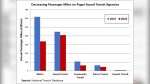 Puget Sound transit passenger-miles fell 31% from 2015 to 2024 despite a half-million-resident population increase.