


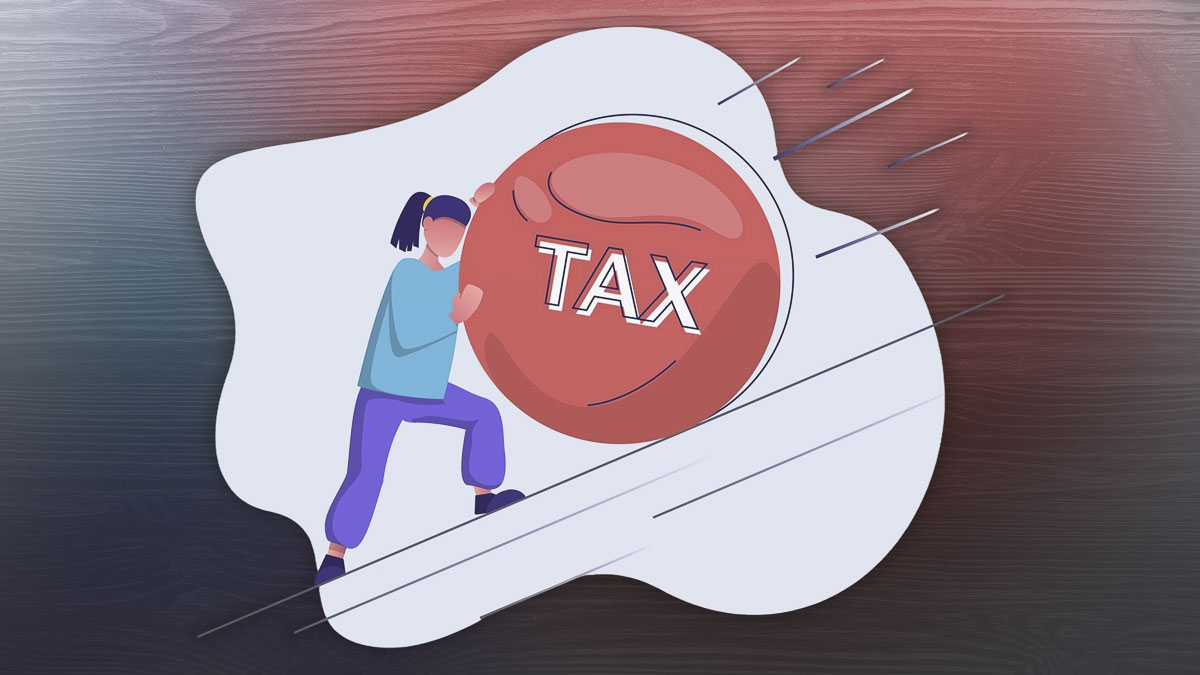
Elizabeth New (Hovde) says penalizing work is bad policy and penalizing it even more is terrible policy
Elizabeth New (Hovde)
Washington Policy Center
The state has built a worker-financed benefit machine that never stops eating wages. Washington’s Paid Family and Medical Leave (PFML) program — sold as a compassionate safety net — is becoming a regressive drain on the workers who fund it.
This isn’t a surprise. It’s exactly what some of us have expected and warned about for years. Washington’s “innovative” and “popular” PFML program could be hundreds of millions of dollars in the red within just a few years. The state predicts a $350 million deficit by 2029, according to The Washington State Standard. Washington workers need to brace for yet another pay cut in the form of higher payroll taxes in 2026.
PFML’s design has always been flawed. Funded by payroll deductions — 72% from employees and 28% from employers — it pays partial wages to those who take time off for medical or family reasons. Lots of new parents are taking advantage of paid time off for mom and dad, compliments of other state workers who have needs and wants to pay for of their own.
The rate started at 0.4% of wages in 2019. It has more than doubled to 0.92% and is projected to climb to 1.13% next year. The law caps the tax rate at 1.2%, but the Employment Security Department expects to hit that ceiling by 2027 and stay there — which is why lawmakers have floated a proposal to increase the ceiling to 2% ($2 for every $100 of earnings).
The average Washington worker earning $95,160 a year now contributes about $626 annually to PFML, while the employer pays another $249. That’s $875 a year — for benefits that most of today’s workers don’t use. (Calculate what you pay each year here: https://paidleave.wa.gov/estimate-your-paid-leave-payments/.)
Supporters like to call PFML a “social insurance” program, but this social program has many lower-wage workers subsidizing higher-income families.
I asked the Employment Security Department again this year about who is using PFML. In fiscal year (FY) 2024, workers earning $61 or more per hour used PFML nearly twice as often as the lowest-wage workers. In fiscal year 2025, people making $61 or more an hour more than doubled the lowest-wage workers using PFML. Usage among the bottom wage quintile has dropped each year, from 12% of all claims in FY 2023 to just 8% in FY 2025. Meanwhile, participation among top earners keeps climbing. Those earning above $61 an hour, grew from 16% to 18% of total PFML users. Middle quintile wage earners are the biggest bulk of users.
Washington state’s paid-leave program is progressive in rhetoric but regressive in reality. Even though more dollars for the program come in from higher-income workers, the lowest-income group uses the program the least. That makes sense. PFML offers a replacement wage, not a full wage. Lower-income workers often can’t afford to give up a portion of their pay. And many workers of low, middle and high incomes will never use PFML at all.
This is a worker- and employer-paid perk for only some, much like WA Cares will be one day. Add the two payroll taxes together with continual rate increases and helloooo income tax in Washington state.
The state briefly papered over funding gaps with $200 million in general-fund money in 2023, but that cushion is gone, and another bailout is politically unlikely. Overspending by lawmakers is already causing budget woes this year. Lawmakers are now weighing ideas to restrict PFML benefits provided, such as lowering the amount of paid time off, or hike the tax.
The tax-increasing proposal that was floated last year is expected to be back in the 2026 legislative session: Senate Bill 5292 would increase the rate cap to 2%, costing the average worker nearly $2,000 a year.
Meanwhile, PFML expansions continue. Last session, lawmakers decided more employees will be eligible for program benefits and workers will be able to take leave in four-hour chunks. Each change is certain to drive claims higher, harming workers and businesses and pushing the fund further underwater.
Federal law already grants 12 weeks of unpaid, job-protected family leave. Washington state misguidedly went further by making family leave paid — and forcing workers of all income levels to fund it. For people living paycheck to paycheck, the PFML deduction isn’t a benefit; it’s a subtraction.
Penalizing work is bad policy. Penalizing it even more is terrible policy. Washington lawmakers aren’t running a safety net for those in hardship. PFML is a state-mandated benefit for middle- and upper-wage earners. If they truly want a safety net, they would fund it from the general fund and do away with this payroll deduction that benefits workers who can better afford to take time off.
Until then, PFML will remain what it has quietly become: a paycheck penalty masquerading as compassion.
Elizabeth New (Hovde) is a policy analyst and the director of the Centers for Health Care and Worker Rights at the Washington Policy Center. She is a Clark County resident.
Also read:
- Opinion: Were Republican voters just sleeping during the August primary election?
 CCRP Chairman Matt Bumala says 60% of primary no-shows in the 17th and 18th districts were Republicans.
 - High school football: New coach prepares for long-term success at Prairie High School
 James Young-Lewis, a Clark County native who graduated from Evergreen in 2009, became Prairie’s head coach in May after working as an assistant coach across various programs since 2015, joining Prairie’s staff in 2024.
 - Cost to battle 20 wildfires in WA has topped $200M
 Twenty wildfires have cost Washington $207M in one month, more than two-thirds of what DNR spent all last fiscal year.
 - Opinion: WA Cares’ launch showcased care WA Cares did not provide
 Gov. Ferguson showcased a caregiving arrangement at the WA Cares launch that the program had not paid for a single day of.
 - Former State Rep. Liz Pike provides update on husband Neil Cahoon
 Neil Cahoon, a Camas resident, has undergone multiple surgeries including five on Aug. 15 after the Aug. 10 crash near La Center’s Daybreak Airport.
 - Opinion: Portland’s War on Cars Part 4 – A smarter automobile strategy to end gridlock
 O’Toole argues fuel wasted in Portland-area congestion has sextupled since 1982, generating 250,000 tons of extra greenhouse gases annually.
 - $1,000 first prize for Camas Plein Air Art Event honoring Marquita Call on Sept. 26
 Plein air artists compete Sept. 26 in Camas for $1,000 first prize honoring gallery founder Marquita Call.