



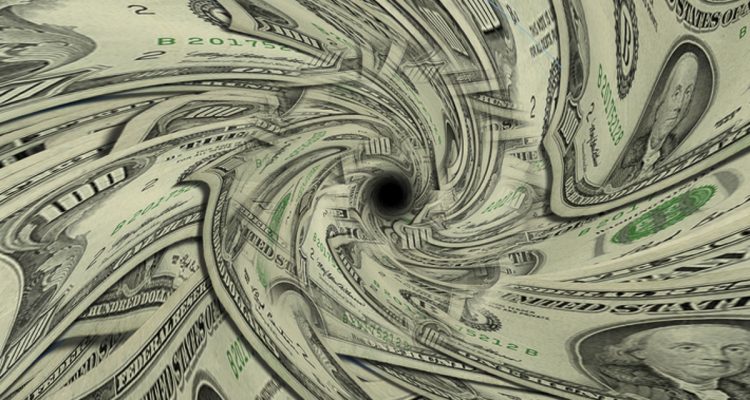
Mark Harmsworth says lawmakers need to reverse course and slash spending to match revenues, repeal punitive taxes like the B&O hikes and gas levy and prioritize efficiencies over entitlements
Mark Harmsworth
Washington Policy Center
The Office of Financial Management announced yesterday a stark $903 million downward revision in projected state revenues through 2029, compared to the June forecast. This isn’t an unexpected shock, it’s the result of the Democratic-controlled Legislature’s reckless spending spree and tax hikes earlier this year, which chased away economic vitality while locking in unsustainable spending. As Forecast Council Executive Director Dave Reich put it, the drop stems from “slower growth in the near-term reflecting a slowing national economy,” but Olympia bears the blame for amplifying the pain.
Flash back to the 2025 session. Lawmakers faced an estimated $16 billion shortfall over four years, driven by inflation, surging caseloads, and faltering tax collections. Instead of prudent cuts, legislators rammed through a $77.8 billion operating budget, a 6.5% hike over the prior biennium, ballooning to $80 billion over four years and outstripping projected economic growth of 4.5%. The majority of the massive increase in taxes went to government pay increases.
Worse, the Legislature unleashed $4.3 billion in new taxes over two years, including hikes to the Business & Occupation (B&O) tax on high earners, expansions of sales taxes to tech and financial services, a beefed-up capital gains tax, and estate tax tweaks, netting approximately $9.5 billion over four years. A proposed financial intangibles tax targeted assets over $50 million, while payroll levies hit big employers.
The results are predictably disastrous. The September forecast slices $412 million from the 2025-27 biennium and $477 million from 2027-29, hitting retail sales, construction, real estate excise taxes, and agency fees hardest. Even with new taxes baked in, June’s outlook showed a $490 million shortfall for 2025-27 and $638 million for the next cycle proving these hikes stifled growth rather than fueling it. Businesses, burdened by Washington’s already top-tier tax load, are fleeing. Tech giants lobby against wealth grabs, and small firms face B&O spikes that erode margins. Republicans warned of this “spending problem,” proposing $2 billion less without tax hikes, but were steamrolled on partisan votes.
OFM Director K.D. Chapman-See admits the “ongoing uncertainty,” but pins hope on monitoring, too late for the damage done. Reserves dwindle to $80 million in cash and $2 billion in the Rainy-Day Fund, leaving Washington exposed. This $903 million gut punch isn’t fate, it’s policy malpractice.
The fix? Reverse course: Slash spending to match revenues, repeal punitive taxes like the B&O hikes and gas levy and prioritize efficiencies over entitlements. As Governor Bob Ferguson (D) urges living “within our means,” the Legislature must heed the alarm or watch Washington’s prosperity evaporate. Taxpayers deserve better than Olympia’s addiction to other people’s money.
Mark Harmsworth is the director of the Small Business Center at the Washington Policy Center.

Also read:
- State Representatives McClintock and Ley answer questions at town hall in Battle Ground
 Residents voiced rising concerns about property taxes, school funding debates, the impact of new income tax legislation, and major costs tied to the Interstate Bridge plan.
 - As Washington gets an income tax, the fight to overturn it begins
 Opponents are organizing lawsuits and potential ballot measures to challenge the new 9.9% income tax on Washington households earning over $1 million.
 - VIDEO: WA diesel hits record $6.53, crushing truckers and school budgets
 With diesel nearing $6.53 per gallon in Washington, trucking businesses and school districts now confront sharply higher fuel expenses affecting budgets and workers.
 - WA’s status solidifies as one of the most expensive places in US
 A new study shows Washington outpaces most states on cost of living, with metrics revealing a sharp rise in daily expenses and major metro areas ranking among the nation’s most expensive.
 - Opinion: Someone explain the Democrat Party to me please
 Lars Larson criticizes Democrat politicians for shutdown threats, Homeland Security funding refusals, and positions on election laws, housing, and gun rights.
