


🎧 WA Families Could Lose $723M in K-12 Funds
Gov. Ferguson can still do right by all schoolchildren, parents, and teachers by opting in to receive this federally induced windfall of education funds
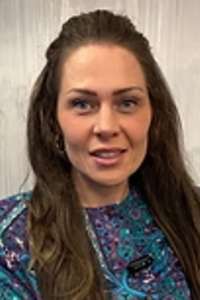
Meg Goudy and Peter Murphy
Mountain States Policy Center
Meg Goudy
During his “State of Education” address earlier this year, Washington Superintendent of Public Instruction Chris Reykdal proposed an income tax to fund education priorities. “Our voters want our schools funded and they’re willing to put their own resources in,” he claimed.
However, amid an exodus of wealth, a lawsuit challenging the constitutionality of the new income tax, which wouldn’t generate revenue until 2029 if upheld, and significant cuts to pre-K–12 education programs amid the state’s multibillion-dollar budget shortfall, why would the Superintendent of Public Instruction refuse an estimated $723 million or more in private charitable donations for K-12 education at no cost to state or local taxpayers?
Reykdal falsely contends that the new federal tax credit scholarship program would be “diverting public taxpayer dollars to private schools.”
Au contraire. Mr. Reykdal has it backwards. The federal tax credit program will generate private dollars for public schools. That means MORE, not less, funding for public education (and non-public) to benefit Washington State’s children. It’s a mathematical certainty.
That is because every state resident who pays federal individual income taxes can become a donor to K-12 education in the Evergreen State and receive 100 percent of his or her donation back on their 2027 federal income tax return (or reduce their withholding or quarterly estimated taxes, accordingly).
Under this historic program, part of the Working Families Tax Cuts legislation passed by Congress last summer, taxpayers can get up to $1,700 back as a federal tax credit by donating to approved nonprofit scholarship-granting organizations (SGOs). SGOs, in turn, award funds to students for use in K-12 education, regardless of where they attend school.
To take advantage of the Federal Education Freedom Tax Credit, the governor of each state must affirmatively opt in to the program. If Washington State does not opt in, students in our state will not benefit.
At this writing, governors in 29 states have chosen to participate in the federal program, including Democratic Governor Jared Polis of Colorado.
The federal program will “help bring more educational services to more kids,” Gov. Polis said, “For some it’ll be tutoring programs, and for others it will be summer learning opportunities, and for others it could be scholarships for school. There are just so many ways for these resources to be used.”
Importantly, every federal individual income taxpayer can obtain the tax credit for donating to an SGO in any state that participates in the program, even if their own state does not. That means if Gov. Ferguson refuses to opt in, Washington state’s federal taxpayers can (and many will) donate to fund scholarships to benefit children in other states, resulting in a significant outflow of K-12 education dollars.
Will Gov. Ferguson follow Gov. Polis’ example and put students first, or will he parrot Supt. Reykdal and shortchange Washington students of much-needed education funding?
Eligible expenses for these donated funds include a wide range of educational uses, similar to the Section 529 program for higher education, including tutoring, books, supplies, fees for extended-day programs, special needs services, computer technology and software, and tuition.
That last item, tuition, is the rub. For all the indisputable financial benefits amounting to hundreds of millions of dollars annually to families with children in public schools, this federal program also allows parents to use scholarships to pay tuition to private schools for their children.
In other words, much to the dismay of the Washington Education Association, opting in to the tax credit program means low- and middle-income Washington parents may finally have financial access to school choice options outside the traditional public school system. Incredible as it sounds, the WEA and some of their dutifully allied elected officials would refuse their own constituents hundreds of millions of dollars for their children’s education if a segment of them ends up in a private school.
Fortunately, it is Gov. Ferguson’s decision whether Washington families will benefit, or if the money will instead flow to students in participating states. Unfortunately, he has been silent on the issue, ignoring two requests for comment.
Gov. Ferguson can still do right by all schoolchildren, parents, and teachers by opting in to receive this federally induced windfall of education funds. The choice is obvious.
Meg Goudy is Director of the Bill & Milly Kay Baldwin Center for Education at the Mountain States Policy Center, an independent research organization based in Idaho, Montana, Eastern Washington and Wyoming. Online at mountainstatespolicy.org. Peter Murphy is Senior Advisor for Invest in Education Foundation.

Also read:
- Opinion: Were Republican voters just sleeping during the August primary election?
 CCRP Chairman Matt Bumala says 60% of primary no-shows in the 17th and 18th districts were Republicans.
 - Opinion: WA Cares’ launch showcased care WA Cares did not provide
 Gov. Ferguson showcased a caregiving arrangement at the WA Cares launch that the program had not paid for a single day of.
 - Auditor, auditor candidate address scrutiny over job title
 Greg Kimsey says roughly 40 county employees hold the deputy county auditor designation Kelly used in his campaign.
 - Opinion: Is Mitchell Kelly misleading voters with his ‘deputy auditor’ claim?
 Clark County HR records show no position called “Deputy County Auditor” has ever existed, Anderson argues.
 - Opinion: Democrats rig the ballot to save their income tax
 Churchill argues the ballot disclosure warning voters of education cuts describes revenue never collected and not yet allocated.