


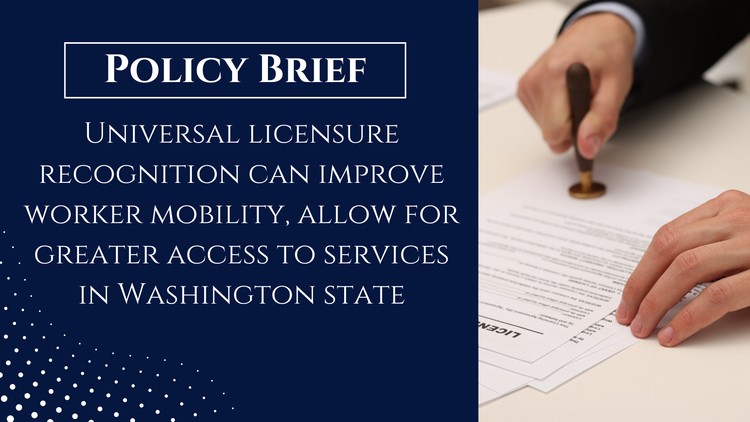
🎧 Fix Licensing Laws to Free Washington Workers
Elizabeth New (Hovde) of the Washington Policy Center offers a policy brief
Elizabeth New (Hovde)
Washington Policy Center
Imagine having to stop at state lines and earn a new driver’s license every time you traveled, despite years of safe driving experience. States recognize that the public benefit of mobility outweighs minor differences in standards. Even when you move to a new state, the process is usually limited: provide your out-of-state license to the DMV, pass a vision test where required, pay a fee and provide documents proving your identity and new address. Washington state does not require adults moving from another state to take a new driving test, even though states have different driving rules and licensing requirements.
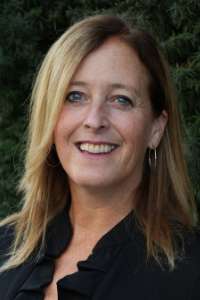
Elizabeth New
Occupational licensing often works differently. Experienced workers who have already proven competence and are licensed elsewhere can still face costly delays, duplicative paperwork, extra schooling, training or other unnecessary barriers before being allowed to work in a new state. Reform is needed to get people to work more quickly, and I’ve written a policy brief that explains how.
Washington state lawmakers have repeatedly tried to help with workforce shortages and lower workplace barriers through profession-specific licensure compacts, allowing workers to take their skills across state lines. Recently, in the 2025 legislative session, they added cosmetology and respiratory therapist compacts to the mix. In the 2026 session that just ended in March, lawmakers passed legislation to join the Dietitian Licensure Compact.
Compact adoption is welcome and has wide bipartisan support. Compacts can get new state residents to work faster. But compacts address worker mobility one occupation at a time. Universal licensure recognition (ULR) offers a broader alternative. If a worker is already licensed and in good standing elsewhere, Washington state would simply recognize that credential unless there is a clear safety reason not to do so. As of 2025, 28 other states have adopted some form of ULR.
Right now, the state is building a patchwork for occupational licensing. ULR offers a broad solution for workers, patients, consumers and employers, while also giving state agencies and lawmakers a more coherent framework than the current compact-by-compact approach.
Read the full brief here.
Elizabeth New (Hovde) is the director of the Centers for Health Care and Worker Rights at the Washington Policy Center. She is a Clark County resident.

Also read:
- Opinion: Were Republican voters just sleeping during the August primary election?
 CCRP Chairman Matt Bumala says 60% of primary no-shows in the 17th and 18th districts were Republicans.
 - Opinion: WA Cares’ launch showcased care WA Cares did not provide
 Gov. Ferguson showcased a caregiving arrangement at the WA Cares launch that the program had not paid for a single day of.
 - Auditor, auditor candidate address scrutiny over job title
 Greg Kimsey says roughly 40 county employees hold the deputy county auditor designation Kelly used in his campaign.
 - Opinion: Is Mitchell Kelly misleading voters with his ‘deputy auditor’ claim?
 Clark County HR records show no position called “Deputy County Auditor” has ever existed, Anderson argues.
 - Opinion: Democrats rig the ballot to save their income tax
 Churchill argues the ballot disclosure warning voters of education cuts describes revenue never collected and not yet allocated.