



Lars Larson: ‘I think we should put the lives and good fortune of people first … and not fish’
Lars Larson
The Northwest Nonsense
 See Grok’s analysis of this story
The biggest news story today and this week in the Pacific Northwest is the so-called atmospheric river of rain headed our way.

Four to seven inches of rain dumping in the next few days means bad news for folks in flood prone areas.
But what do so-called environmentalists demand from the region?
Tear out all the dams.
These fools have already inspired the removal of a number of dams in Oregon and Washington … forfeiting the flood control and power production, transportation and irrigation benefits of those dams.
Lately they’ve demanded the removal of the Snake River dams, despite the fact those dams produce about 8 percent of the region’s hydroelectric power.
The removals cost billions of dollars and no one seems to know how to replace the lost power.
You’d think that when Oregon and Washington see some flooding every year and catastrophic flooding when you get weather like this week … folks would demand MORE dams rather than fewer.
But can you imagine greenie tree huggers endorsing any new dams? Not a chance.
I think we should put the lives and good fortune of people first … and not fish.

This independent analysis was created with Grok, an AI model from xAI. It is not written or edited by ClarkCountyToday.com and is provided to help readers evaluate the article’s sourcing and context.
Quick summary
In this opinion column, Lars Larson argues that calls to remove Northwest dams, particularly on the Snake River, prioritize fish recovery over critical human benefits like flood control, reliable hydroelectric power, transportation, and irrigation, asserting that people should come first.
What Grok notices
- Clearly states the author’s core viewpoint that human safety, electricity needs, and economic activity should outweigh salmon recovery goals.
- Links recent heavy rainfall and flood risks to the role of existing dams, using current weather as context for the argument about flood control.
- Reflects the perspective of a regional commentator skeptical of environmental proposals to breach major Northwest dams.
- Does not go into detail on specific replacement power plans or updated salmon recovery science; readers may want to consult current federal analyses.
- Focuses on illustrative flood‑risk examples more than on formal cost‑benefit studies of removing the four lower Snake River dams.
Questions worth asking
- How would removing the four lower Snake River dams specifically change regional flood‑control capacity during extreme weather events?
- What renewable or other energy sources are being proposed to reliably replace the electricity currently generated by those dams?
- How have salmon and steelhead populations responded to past dam removals or fish‑passage improvements on other Northwest rivers?
- What economic trade‑offs exist between maintaining the dams for barge transportation and irrigated agriculture versus potential restoration of tribal fishing sites and ecosystems?
- How do federal agencies currently weigh human infrastructure benefits against Endangered Species Act obligations in their dam‑management decisions?
Research this topic more
- Bonneville Power Administration – hydroelectric generation data and replacement power studies
- U.S. Army Corps of Engineers, Walla Walla District – Lower Snake River dam studies and flood‑risk information
- NOAA Fisheries – current salmon recovery science and Endangered Species Act listings
- Northwest RiverPartners – reports on the benefits of Northwest dams for power, transportation, and flood control
- Pacific Northwest Waterways Association – navigation and economic impact analyses related to Columbia–Snake River dams

Also read:
- Opinion: Were Republican voters just sleeping during the August primary election?
 CCRP Chairman Matt Bumala says 60% of primary no-shows in the 17th and 18th districts were Republicans.
 - Opinion: WA Cares’ launch showcased care WA Cares did not provide
 Gov. Ferguson showcased a caregiving arrangement at the WA Cares launch that the program had not paid for a single day of.
 - Opinion: Portland’s War on Cars Part 4 – A smarter automobile strategy to end gridlock
 O’Toole argues fuel wasted in Portland-area congestion has sextupled since 1982, generating 250,000 tons of extra greenhouse gases annually.
 - Opinion: The Tooth Fairy’s secrets to making brushing & flossing magical
 Delta Dental of Washington’s Tooth Fairy Experience offers free resources to help children build lifelong brushing and flossing habits.
 - Opinion: Transit ridership trends are dismal but regional plans are oblivious
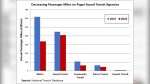 Puget Sound transit passenger-miles fell 31% from 2015 to 2024 despite a half-million-resident population increase.