


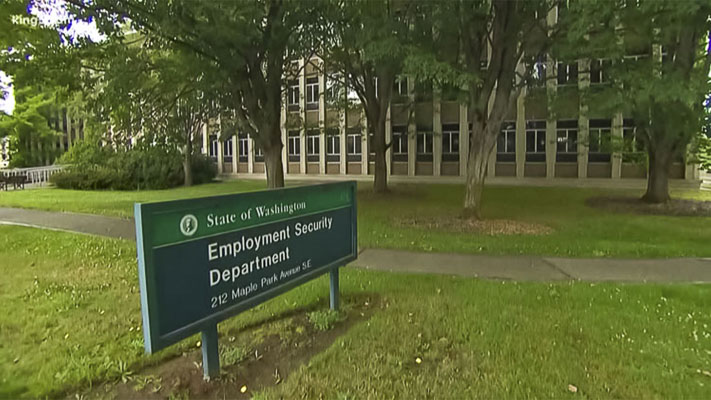
Mark Harmsworth of the Washington Policy Center discusses a recent audit that finds theft of over $600 million of taxpayer funds was primarily due to insufficient fraud prevention controls
Mark Harmsworth
Washington Policy Center
In 2020 The Employment Security Department (ESD) suffered the theft of over $600 million of taxpayer funds from the employment security trust account. A recent audit published by the Washington State Auditor’s office has found that this was primarily due to ESD having insufficient fraud prevention controls. ESD did not agree with the auditor’s assessment of the systemic lack of fraud controls, despite overwhelming evidence to the contrary.

ESD is claiming that it was not entirely the lack of ESD claimant verification or controls that allowed the fraud to occur, but the directive under the CARES act that removed the requirement to substantiate employment or self-employment status.
This is not accurate as internal documents, published by Shift Washington and the Puget Sound Business Journal show, the department has repeatedly changed the claim qualification criteria with little explanation to the public as to the reason why. This is a contributing factor to the lack of fraud protection that allowed the theft to occur.
The audit additionally identified the governor’s proclamation, that removed the one-week waiting period for benefit payments, increased the size of the loss. Had the proclamation not been in place, ESD would have potentially stopped the fraud sooner.
ESD has struggled with transparency and fraud since the beginning of the pandemic in 2020.
At the Washington Policy Center, we recognized these problems with ESD after the initial fraud earlier this year and have published numerous articles and a detailed Policy Brief summarizing the issues facing ESD and solutions for those problems, some of which have been adopted.
The latest audit findings by the Washington Auditor’s Office
ESD officials need to continue to provide the public with more transparency into its internal policies, improve fund balance reporting accuracy, data timeliness and data availability. ESD needs to improve authentication and fraud protections against scams and individual fraudulent claims to prevent further fraud and loss of taxpayer funds.
Mark Harmsworth is the director of the Small Business Center at the Washington Policy Center.

Also read:
- Opinion: Were Republican voters just sleeping during the August primary election?
 CCRP Chairman Matt Bumala says 60% of primary no-shows in the 17th and 18th districts were Republicans.
 - Opinion: WA Cares’ launch showcased care WA Cares did not provide
 Gov. Ferguson showcased a caregiving arrangement at the WA Cares launch that the program had not paid for a single day of.
 - Opinion: Portland’s War on Cars Part 4 – A smarter automobile strategy to end gridlock
 O’Toole argues fuel wasted in Portland-area congestion has sextupled since 1982, generating 250,000 tons of extra greenhouse gases annually.
 - Opinion: The Tooth Fairy’s secrets to making brushing & flossing magical
 Delta Dental of Washington’s Tooth Fairy Experience offers free resources to help children build lifelong brushing and flossing habits.
 - Opinion: Transit ridership trends are dismal but regional plans are oblivious
 Puget Sound transit passenger-miles fell 31% from 2015 to 2024 despite a half-million-resident population increase.
 wpDiscuz