


🎧 Clark County’s $1.2M EV Gamble: Worth the Cost?
Rob Anderson writes ‘no one on the council voiced concern about spending three times more for less capability’
Rob Anderson
Founder Reform Clark County
Last week, the Clark County Council approved nearly $1.2 million for new electric vehicles. Before you think a massive fleet is coming, think again — it’s only three vehicles: a $400,000 electric backhoe and two electric box trucks costing more than $386,254 each.
While state subsidies from the WA ZIP program — funded through the Climate Commitment Act via your inflated gas prices and overseen by the California-based nonprofit CALSTART — covered a large portion of the purchase, Clark County taxpayers are still on the hook for roughly $237,000 in additional spending from an already structurally deficient budget.
What makes this purchase particularly troubling is the staggering price difference. The electric backhoe costs more than three times its diesel equivalent, which runs around $135,000, yet it can only operate for about four hours before needing a charge. Let’s not forget the electric box trucks are roughly triple the cost of comparable diesel models.
Despite these realities, no one on the Council voiced concern about spending three times more for less capability. In fact, some council members appeared visibly giddy over the purchases while showing little to no concern about adding more red ink to a budget that is already out of balance.
They were elected to ask the tough questions: What is the long-term battery life and replacement cost? Why is the replacement budget estimated at $180,000 — more than the cost of a brand-new diesel box truck ($130,000)? What additional maintenance, infrastructure, and charging equipment costs will taxpayers eventually absorb?
Clearly, fanboying over overpriced government equipment is more important than actually being good stewards of taxpayer dollars.
This is fiscal insanity — it’s virtue signaling with taxpayer dollars and as the kids say, “the math ain’t mathin’.” Clark County taxpayers need leaders who prioritize practical, cost-effective equipment over green fantasies that deliver reduced performance at premium prices.
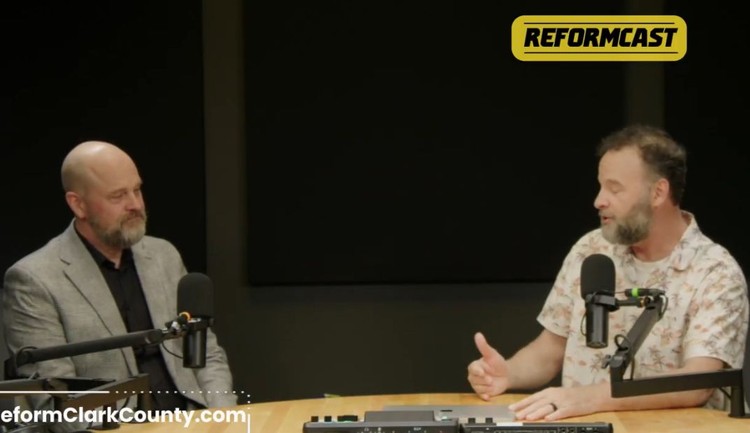
On a more encouraging note, Charter Review Commissioner Peter Silliman appeared on Episode 12 of Reformcast to discuss several common-sense charter amendments he has sponsored. These include increasing budget transparency by moving up the budget presentation timeline to allow for greater public input, giving the County Council its own legislative staff for independent research, and strengthening the legislative branch’s ability to conduct audits and investigate constituent complaints.
Additional proposals, such as a supermajority requirement for levy increases, aim to provide greater accountability and protect taxpayers from easy tax hikes.
Silliman’s efforts represent a much-needed push for real checks and balances in county government. At a time when fiscal restraint seems in short supply, these reforms deserve strong public support.
Clark County taxpayers should pay close attention to both how our money is being spent and who is fighting to make government more transparent, accountable, and responsive.
Check out the latest episode of Reformcast HERE

Also read:
- Opinion: Were Republican voters just sleeping during the August primary election?
 CCRP Chairman Matt Bumala says 60% of primary no-shows in the 17th and 18th districts were Republicans.
 - Opinion: WA Cares’ launch showcased care WA Cares did not provide
 Gov. Ferguson showcased a caregiving arrangement at the WA Cares launch that the program had not paid for a single day of.
 - Auditor, auditor candidate address scrutiny over job title
 Greg Kimsey says roughly 40 county employees hold the deputy county auditor designation Kelly used in his campaign.
 - Opinion: Is Mitchell Kelly misleading voters with his ‘deputy auditor’ claim?
 Clark County HR records show no position called “Deputy County Auditor” has ever existed, Anderson argues.
 - Opinion: Democrats rig the ballot to save their income tax
 Churchill argues the ballot disclosure warning voters of education cuts describes revenue never collected and not yet allocated.
 wpDiscuz