



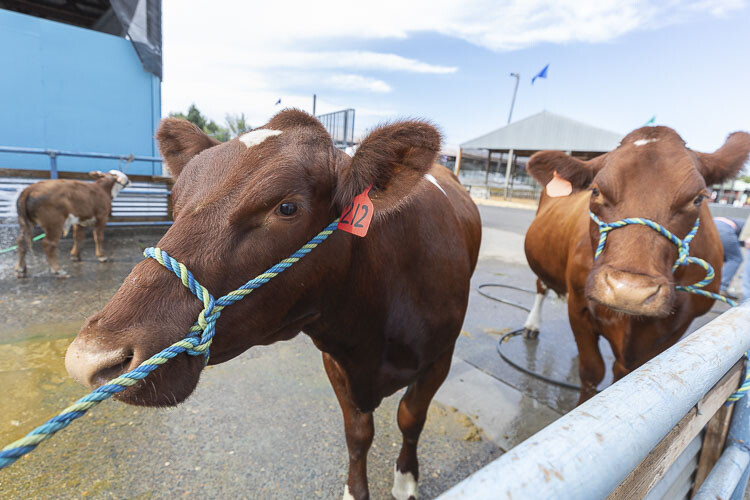
Pam Lewison of the Washington Policy Center points out that not only does it get you much closer to where your food comes from, it helps a young person in your community
Pam Lewison
Washington Policy Center
Washington state is home to 65 fairs featuring everything from livestock and horse events to “still life” entries like photography and fresh vegetable displays. The bounty on display throughout our state is remarkable.
August and September are when the bulk of our county and state fairs are hosted. These fairs are an ideal time to consider purchasing locally raised meat.
Many consumers are concerned about how their meat is raised and by whom. County and state fairs give consumers a direct conduit to the person who raised the animals that will ultimately grace their tables and the added benefit of supporting a young person’s aspirations.
Many of our county and state fairs provide young exhibitors the opportunity to sell their livestock in a live auction during the event. The sale does two things: helps the exhibitor raise money for the next year, college, or some other aspirational investment, and potentially provides the buyer with locally raised meat if they wish to keep the animal.
But, as a buyer, what are you getting for your money? If you’re new to buying live animals for meat, it might seem like a great deal of meat coming your way.
Cattle are a good example because they are the largest livestock animal that can be purchased at a county or state fair and processed for meat.
Fairs often have a minimum and maximum weight requirement for animals being checked in for show and sale. An animal that does not meet the minimum weight requirement (in many cases at least 1,100 pounds) is not considered a “market weight.” Animals that exceed the maximum weight requirement are accepted but exhibitors will not be paid for the excess weight.
To help gauge what a buyer might receive when buying a typical steer from a county or state fair, a 1,400-pound steer will be considered the example. If you purchase a 1,400-pound live steer, you can expect to receive about 570 pounds of frozen, packaged meat from a butcher, or enough to fill a large stand-up freezer. For a more detailed breakdown of the math, check out this write-up from Drovers.
Farmers have developed a system of “waste not, want not” in our food system. The life of an animal is respected from start to finish with every part of an animal being used.
After meat has been harvested, hide, bone, fat, and organs all find their way into our supply chain. Cattle by-products can be found in adhesives, inks, laboratory research materials, plastics, fertilizers, charcoal, tennis racquets, crayons, wallpaper, matches, medicines, textiles, and more.
There are, of course, other things to consider when purchasing a live animal – the upfront cost, finding a butcher, freezer space, to name a few – but it may be an investment worth the logistics. Often, people at the fair can provide references. Not only does it get you much closer to where your food comes from, it helps a young person in your community realize the goal of completing their livestock project for the year.
Pam Lewison is the director of the Center for Agriculture at the Washington Policy Center.

Also read:
- Opinion: The growing gap between public voice and political power
 Todd Myers describes how large-scale protest and sign-ins often fail to sway state leaders, and argues authentic influence is most likely found through local action.
 - Opinion: Who is winning the race for affordable power?
 Hydroelectric power keeps Washington competitive, but new laws and carbon pricing are driving up electricity costs for residents each year.
 - Opinion: Half the road, full stop – Understanding pedestrian right-of-way
 Doug Dahl explains how Washington’s law requires drivers to stop when a pedestrian is within one lane of their half of the road, not just when directly in front.
 - Opinion: The state’s RFK-proofing bill comes with a cost
 Mandates like HB 2242 can lead to higher premiums as insurance companies absorb costs for new preventive services, affecting affordability statewide.
 - Opinion: What is the cost of a bridge?
 John Ley argues the I-5 Bridge replacement’s soaring cost stems from costly extras like light rail, noting other states deliver larger, toll-free bridges for much less.
