



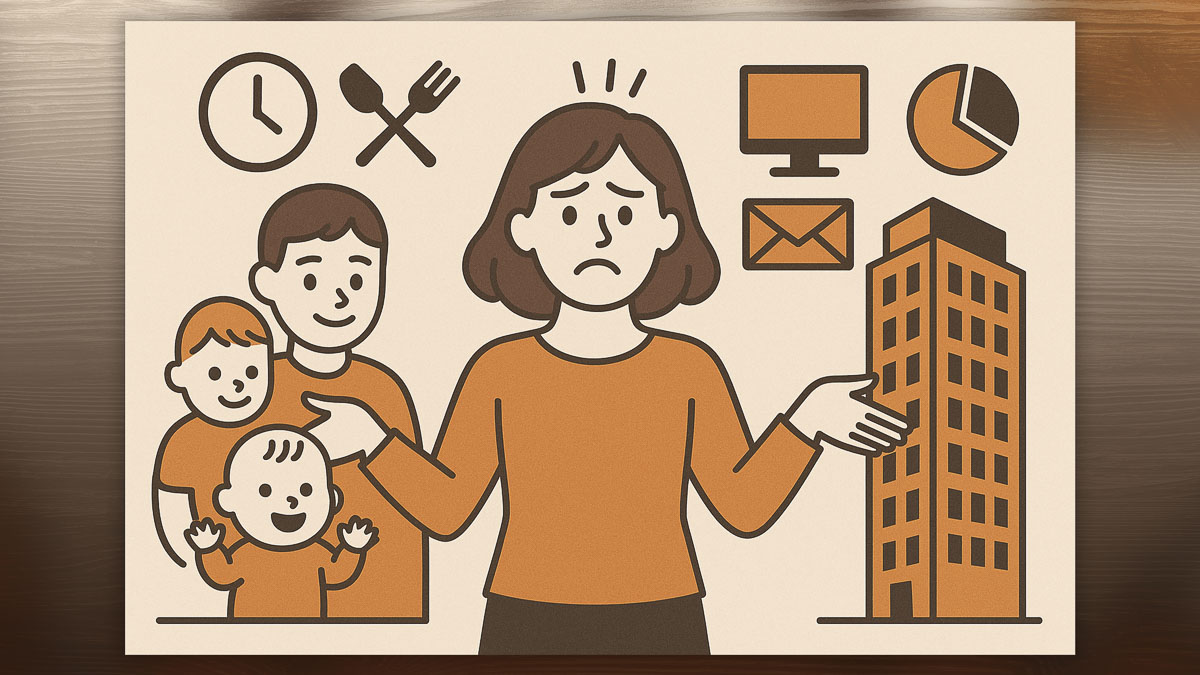
Elizabeth New (Hovde) wants a state in which it is easier for families to decide what works best — dual incomes, one income, a mix of incomes or daycare — without being boxed in by government-driven costs and tax burdens that make two incomes feel mandatory
Elizabeth New (Hovde)
Washington Policy Center
A headline in The Seattle Times says, “Mothers are leaving the workforce, erasing pandemic gain.” The story, written by the economics correspondent at The Washington Post, has been making the rounds. It highlights that the share of working mothers with young children fell nearly three percentage points in the first half of 2025, according to an analysis by Misty Heggeness, a University of Kansas professor and former Census Bureau economist.

The author of the story about Heggeness’s analysis opines, “The drop has been enough to wipe out many of the gains made by working mothers after the pandemic, when remote work arrangements and flexible schedules lured many back to the labor force.” She quotes Heggeness likening current work trends to the “Barbie” movie, saying, “It’s clear that we’re backsliding in the Ken-ergy economy, that the return-to-office chest pounding is having a real ripple effect.”
The storyline is familiar: Mothers leaving the workforce equals lost progress and suggests anti-women business practices. But does it?
Other possibilities
Some mothers report they happily make work-at-home their main gig, prioritizing child-rearing over outside careers. Childhood is short, after all, and school years start by age 5.
For other parents, the hard math of child care is a major player in the decision: In Washington state, for example, infant care in a day-care center now averages more than $21,000 a year, Axios Seattle reported in May. That’s not a line item — it’s a mortgage. Washington state also now has the highest price of gas in the nation due to various policy decisions, making commuting more expensive. Food costs add to the strain. Having a parent at home to plan meals and manage the household can save money.
Faced with these costs, it isn’t irrational when one parent — mom or dad — puts paid work on hold for a season. It’s practical.
There is also more to know before declaring this shift lost progress.
The mean age for first-time mothers continues to rise, which means families may be better prepared financially to absorb time out of the workforce. More fathers have stepped into at-home roles, a trend that has grown steadily over decades. And as Pew Research finds, women now comprise 35% of workers in the nation’s 10 highest-paying occupations — up from just 13% in 1980. Greater success for women in the workplace could itself make more space for dads to stay home. That doesn’t sound like backsliding.
Whatever the reason for the recent dip, having a parent — mom or dad — at home is often progress for children, parents and communities. It should be seen as a strength, not a setback.
Policy debates often ignore the benefits of at-home parents, with many treating labor-force participation as the ultimate measure of progress. The real goal should be more choice.
Dual careers and incomes are ideal for some parents of young children, but for many, “progress” has taken a toll. I’ve known women who were continually torn that they saw their children for just an hour or two each day.
In addition to lower tax burdens, more employers should explore offering new parents the opportunity to work 20 to 30 hours instead of 40+, when possible. That would allow parents to share the responsibility of child-rearing while not putting their career years on full pause, better protecting their future earning potential. Surveys by the Society for Human Resource Management show flexible scheduling and family benefits are already becoming mainstream, with 70% of employers offering some form of flexible work in 2022. That’s good progress — and it shows business can be part of the solution.
I want a state in which it is easier for families to decide what works best — dual incomes, one income, a mix of incomes or daycare — without being boxed in by government-driven costs and tax burdens that make two incomes feel mandatory. Single parents, especially, need more affordable child care with fewer government regulations and relief from worker penalties, such as payroll taxes for programs they may never use.
Be careful of headlines that call parents stepping back from paid work lost progress. They’re missing the real story: Progress is having more choice over what’s best for a family.
Elizabeth New (Hovde) is a policy analyst and the director of the Centers for Health Care and Worker Rights at the Washington Policy Center. She is a Clark County resident.

Also read:
- Opinion: Stalin would be proud – Clark County Socialists gathered for ‘No Kings’
 Reform Clark County’s Rob Anderson criticizes local and national groups for organizing protests that featured Auditor Greg Kimsey as a keynote, raising concerns about public trust and political partisanship.
 - Letter: Vancouver Mayor Anne McEnerny-Ogle makes several serious and incorrect engineering statements
 Bob Ortblad critiques engineering claims by Vancouver Mayor Anne McEnerny-Ogle, highlighting cost and safety advantages of an immersed tunnel for the I-5 crossing.
 - Opinion: The beginning of the end of anchor babies
 Lars Larson argues the Constitution excludes children born to non-legal residents, as the Supreme Court debates birthright citizenship and public opinion data shows limited support.
 - Opinion: Defend bail now or face more chaos on our streets
 A proposed Washington court rule would cap bail for most misdemeanors and allow defendants to bypass bondsmen, raising concerns about accountability and public safety.
 - Opinion: Some worker rights get a poster, others get fine print
 Elizabeth New questions why Washington state highlights some workplace protections while Janus First Amendment rights for public employees remain hidden in official materials.
