



Jason Mercier of the Washington Policy Center believes it is past time for Washington state officials to prioritize tax relief
Jason Mercier

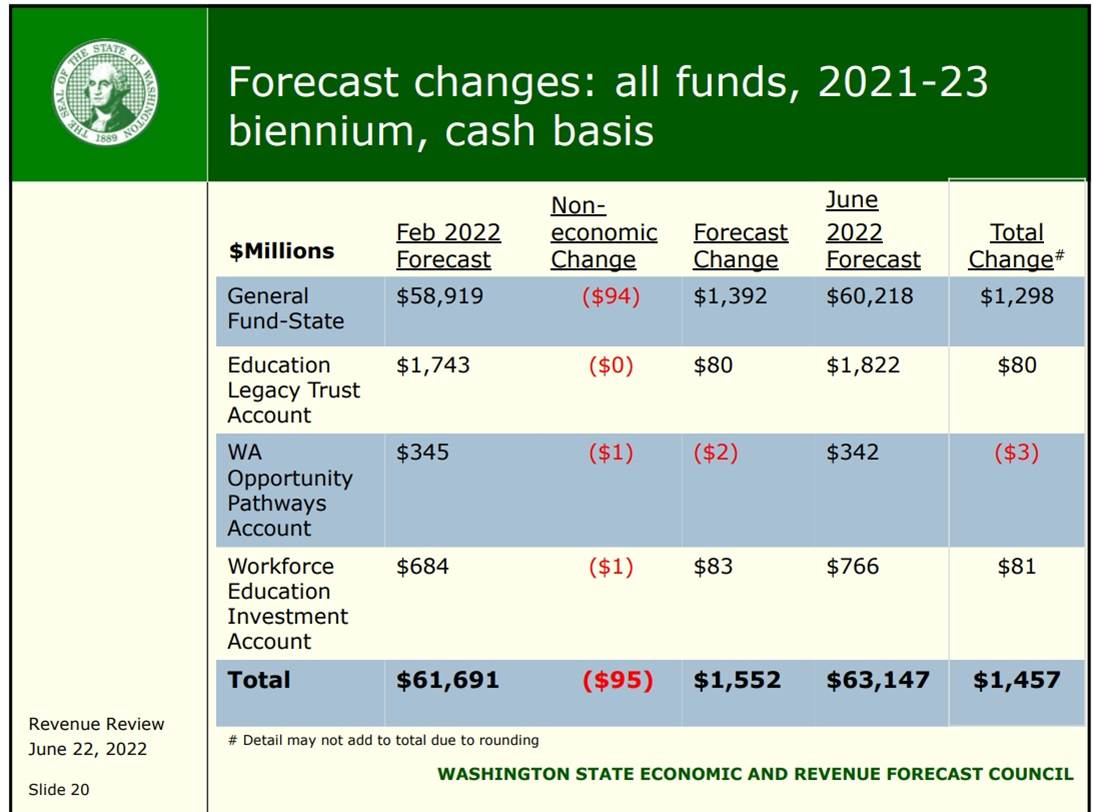
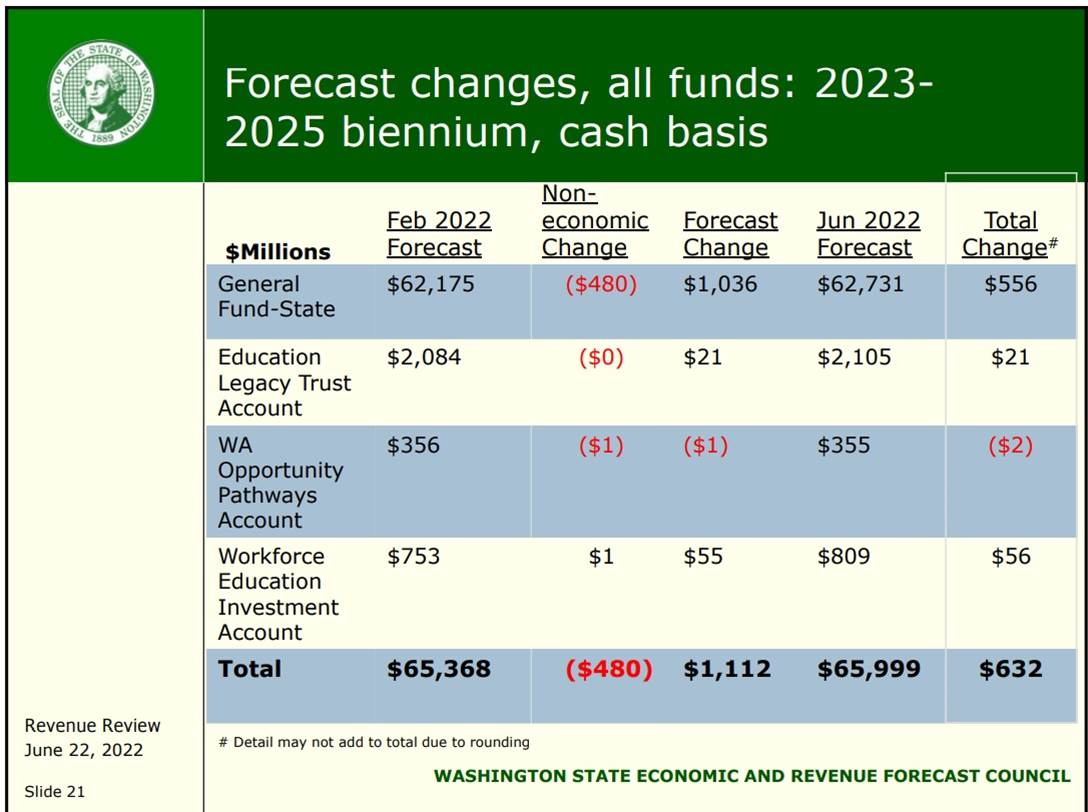
Earlier this year the governor and Washington State Legislature prioritized spending increases with the state’s record revenue growth. With Washingtonians continuing to be crushed by record inflation, state officials should now finally embrace tax relief with today’s $1.5 billion increase in the June Revenue Forecast. Other public officials across the country, from the President of the United States to governors and lawmakers in other states, have seen the need to prioritize tax relief. It is past time for Washington state officials to do the same.
Here are the projected revenue increases in the June Revenue Forecast:
Steve Lerch, executive director of the Economic and Revenue Forecast Council, said about the forecast:
“Continued strong revenue collections and high inflation have again resulted in increases in the revenue forecast.”
Will this $1.5 billion increase in revenue mean a change of heart from the Governor on tax relief? His comments to date haven’t been encouraging. Explaining why he didn’t support broad-based tax relief before the 2022 session started, Governor Inslee said:
“I’m not sure in the middle of a pandemic, in the middle of a mental health crisis, in the middle of a homelessness crisis, in the middle of an educational crisis caused by our kids’ learning loss during COVID, that it’s really the right moment to be doing big tax cuts.”
Asked last month if a strong June revenue forecast could change his mind about tax relief, the Governor said (27:50 mark):
“The question is would the revenue forecast ever to make this so that there were more dollars than we needed for our children and their mental health and housing, I would be very surprised if the revenue forecast would be of that dimension. I would never eliminate a possibility, but I’d be very surprised.”
Many of the Governor’s Democratic colleagues, however, have taken a very different approach when it comes to tax relief to help with inflation. For example, in California and New York:
- New York: “Fuel prices have surged in recent months, hurting working families and small businesses the most, and it is crucial that we provide New Yorkers relief.” – Governor Hochul
- California: “My interest is to get the money out as quickly as possible. People are feeling deep stress, deep anxiety.” – Governor Newsom talking about gas tax rebates
State officials now have an additional $1.5 billion to finally prioritize tax relief to help Washingtonians mitigate some of the impacts of record inflation. Failing to do so will make it clear that taxpayers are merely viewed as an ATM for the politicians’ spending agendas, rather than being deemed worthy by their public servants of keeping more of their own money to meet their needs in the face of rapidly rising prices.
Jason Mercier is the director of the Center for Government Reform at the Washington Policy Center.

Also read:
- Letter: ‘This is the worst thing that ever happened to the region’
 A Hayden Island resident Sam Churchill is criticized in a letter calling the $14 billion Interstate Bridge Replacement project a “boondoggle” that destroys local businesses.
 - Opinion: Sheriffs fight back
 Four county sheriffs are suing to block a new law giving a governor-appointed board power to decertify and remove sheriffs, bypassing voter oversight in Washington.
 - Opinion: The growing gap between public voice and political power
 Todd Myers describes how large-scale protest and sign-ins often fail to sway state leaders, and argues authentic influence is most likely found through local action.
 - Opinion: Who is winning the race for affordable power?
 Hydroelectric power keeps Washington competitive, but new laws and carbon pricing are driving up electricity costs for residents each year.
 - Opinion: Half the road, full stop – Understanding pedestrian right-of-way
 Doug Dahl explains how Washington’s law requires drivers to stop when a pedestrian is within one lane of their half of the road, not just when directly in front.
