


🎧 What Made America Great — A Letter From La Center
Tim Petta asks the community to give Camden and Mac Spiller a chance
Editor’s note: Opinions expressed in this letter to the editor are those of the author alone and may not reflect the editorial position of ClarkCountyToday.com
As we look forward to celebrating the 250th birthday of our great nation, consider what made America great, and what lessons can we learn? The Second Industrial Revolution in the early 1900’s and the men behind it paints a picture of what fundamentally changed America. Some men during this era, JP Morgan, Cornelius Vanderbilt, Andrew Carnegie, Henry Ford, and John Rockefeller in particular had a significant part in making America the strongest industrial nation and most powerful economic engine in the world. It would be wise to observe their practices, learn from them, and perhaps emulate them in part to ensure long-term stability of our great nation and our local communities. These men combined to provide jobs and incomes to nearly 300,000 people and thereby their families, who in turn transformed communities with economic reinvestment. Society flourished. Communities were transformed from agrarian lifestyles to ‘modern’ lifestyles, where many were able to enjoy life that they never had before.
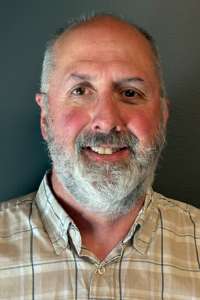
Tim Petta
These men gave philanthropically hundreds of millions of dollars over the course of their lives, freely giving to improve the society and the communities in which they lived and worked. They established giant industries that all still stand today in some form, creating lasting opportunities for generations. Were they liked by all? Not at all. But their vision to see through it and persevere in doing the ‘right thing’ is a vision we must support and embrace.
Something seems to have been lost in time, though. Industry leaders have become selfish. Profit and shareholders have become the driver at the expense of the employees in many cases. Philanthropy has decreased. Personal holdings and titles of “wealthiest…” have become the focus. People have become cynical, and maybe rightly so, of successful industries and men who drive them.
When a man comes along and emulates what the Great Industrialists did in some way, creates profit from successful business ventures, provides living wage work for many, and reinvests in the communities in which he and his employees live and work in order to make them better places, is that not a good thing? Does not everyone in some way benefit from his kindness and generosity? This is happening in Battle Ground, with Camden and Mac Spiller, visionaries committed to improving the community in which they live and work. There seems to be quite a bit of support for them, but also some hatred for what they stand for. Give them a chance. There is quite a bit of evidence that what they pursue is good for all involved.
Final thought: Four of the five men listed above, Morgan, Vanderbilt, Ford, and Rockefeller called themselves Christians. Andrew Carnegie did not call himself Christian, but was known to live by the idea that “Material prosperity is helping to make the national character sweeter, more joyous, more unselfish, more Christ-like”*. By 1919, he had divested more than 95% of his fortune to help others*. Two of these men, Carnegie and Ford, held print media as part of their holdings. While not everyone may agree with their religious beliefs, or those of successful entrepreneurs like Camden and Mac Spiller, there is solid historical evidence that entire societies and communities benefit from their efforts. As we reflect on what made America great for the first 250 years, let’s embrace that same idea to spur community success for a long time to come.
*University of Houston Digital History
Tim Petta
La Center
Also read:
- Cost to battle 20 wildfires in WA has topped $200M
 Twenty wildfires have cost Washington $207M in one month, more than two-thirds of what DNR spent all last fiscal year.
 - Former State Rep. Liz Pike provides update on husband Neil Cahoon
 Neil Cahoon, a Camas resident, has undergone multiple surgeries including five on Aug. 15 after the Aug. 10 crash near La Center’s Daybreak Airport.
 - Auditor, auditor candidate address scrutiny over job title
 Greg Kimsey says roughly 40 county employees hold the deputy county auditor designation Kelly used in his campaign.
 - Ridgefield Waterfront plans meet resistance: Community voices weigh in
 Residents opposing Ridgefield’s waterfront development cite scale, wildlife impact, and inadequate boat launch parking as key concerns.
 - Gunfire at Hockinson Park leaves one dead; BGHS graduate, UW baseball signee charged with manslaughter
 Trent Richardson, 18, died from a gunshot wound at Hockinson Meadows Community Park; James Gill III charged with second-degree manslaughter.
 wpDiscuz