
Summer Sorenson
for The Reflector Newspaper
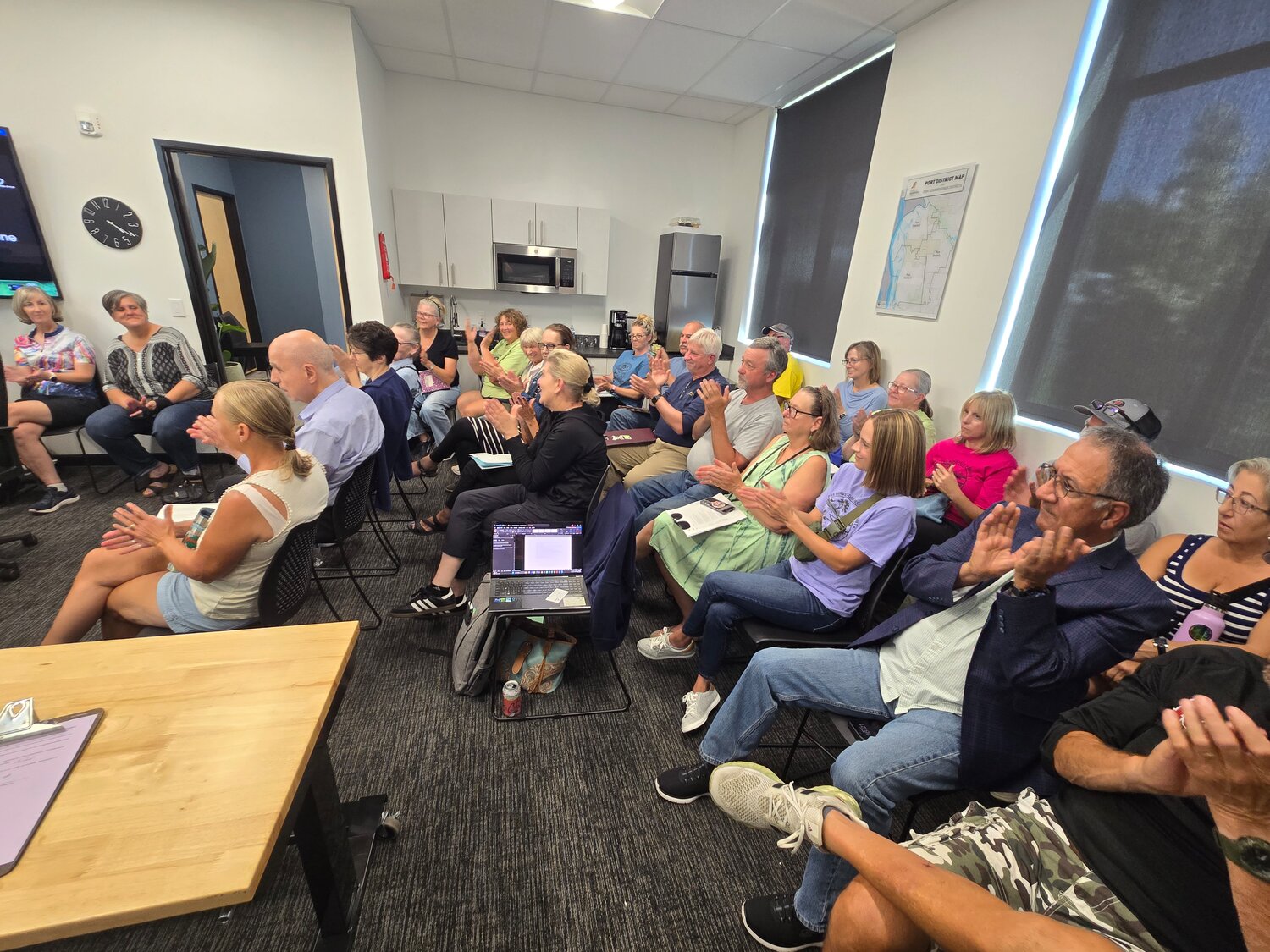
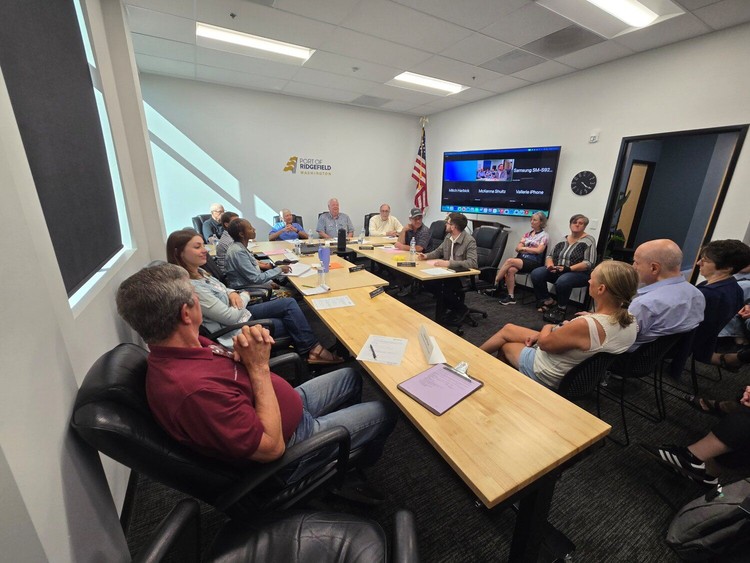
An Aug. 12 Port of Ridgefield Commission meeting had a strong turnout of citizens showing up to voice their opposition to the proposed waterfront development.
Of the approximately 30 extra seats in the room, all were filled, with several sitting in the hallway outside. The meeting began and ended with public comments, and the majority of comments were objections to the development.
This article in the series about waterfront development aims to document the concerns of various Ridgefield residents The Reflector has spoken with about the issue. Resident concerns range from the scale of the development, to the type of buildings planned, environmental and traffic impact, parking, river and boat launch access, and the port’s communication surrounding the process.
The Reflector sought input from multiple residents. Among them were Robynne Knight and Wendy McIntire, who spoke on behalf of the Preserve Ridgefield Waterfront (PRW) group. PRW has circulated a petition requesting a revision to the confirmed phase 1 elements of the development, which includes a 9-acre public park, a 58-room boutique hotel, an office building of approximately 25,000 square feet, parking, a mixed-use building and a residential building, as reported in the first article in this series. At press time, the petition had garnered 3,446 signatures.
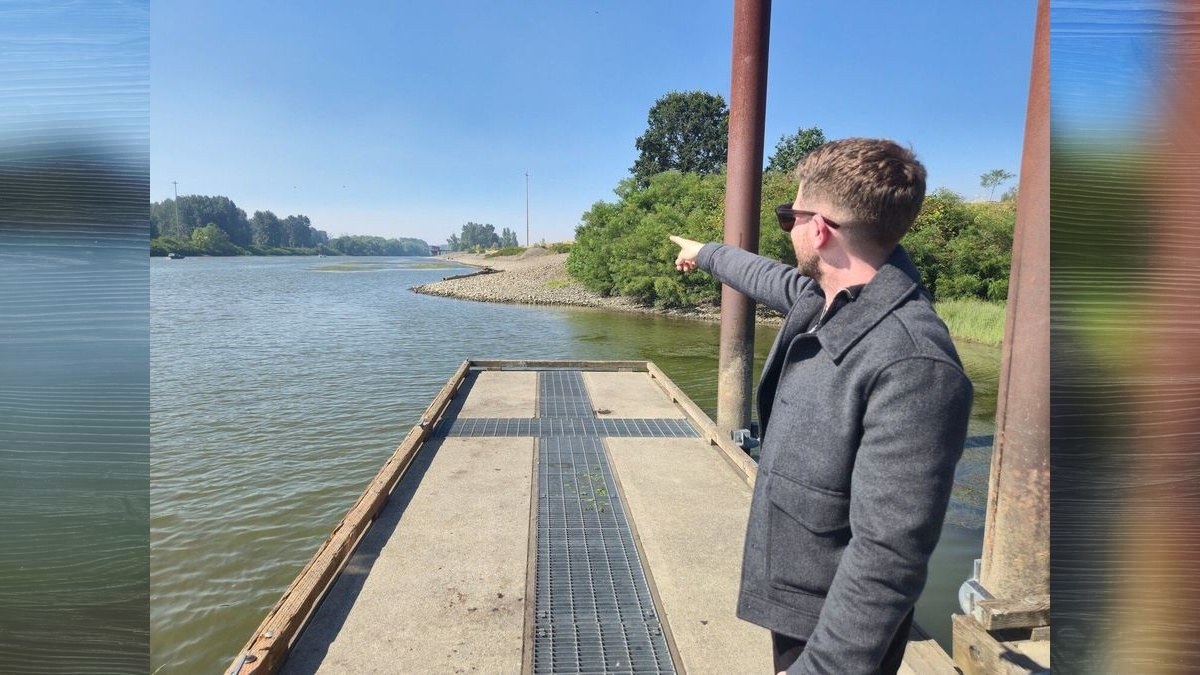
Knight and McIntire say their objection isn’t to the development itself, but to its scale. Knight, who has lived in Ridgefield since 2020, said she'd like to see more protected park space and buildings limited to one or two stories rather than the six or seven she believes are planned. McIntire, an eight-year resident, pointed to existing boat launch parking — currently 35 shared spots, by her account — as already inadequate for boaters and fishers, concerns she says the port's plans don't meaningfully address. Both raised the site's proximity to the Ridgefield National Wildlife Refuge, saying increased lighting and building height could push birds — including species sensitive to human activity — deeper into the refuge's interior, away from the waterfront where the community currently enjoys them.
McIntire said she'd support a smaller-scale build-out modeled on developments like Kalama's waterfront — small business markets and restaurants without residential housing. They cite the smaller-scale hotel in Kalama as more favorable than the proposed 58 rooms in Ridgefield.
Knight and McIntire also said this summer's community engagement period has felt less like genuine input-gathering and more like the port building support for decisions it had already made, pointing to the port's June 17 meeting — where Executive Director Ethan Perry presented Phase 1 as largely set before public comment began — as the moment that impression solidified.
Additional community voices
Connor Webb, a Ridgefield resident for over 20 years who produces YouTube videos about local news such as the waterfront development, said, “The renderings from April that the port put out seem to not line up with what the residents of Ridgefield are wanting. These plans seem to be too much for what the property looks to be able to hold with the wildlife refuge to the north and south. With the accessibility to the waterfront project going through downtown and Pioneer, it really seems like the port is not actually taking into account the people's opinion.”
“At one of the meetings I was at this summer, they told the room that they would be holding off on any plans for the rest of the summer to listen to the opinion of the people, and their Memorandum of Understanding (MOU) with the developer was extended a year (the anticipated timeline would be pushed back a year),” said Webb. “They said that they would not be moving forward on any development plans or agreements through the summer. On July 3 they sent out an email stating that they've already decided on some key items. They were really just asking for the opinion from the people on smaller ticket items, not actually this scope and scale of what is going to be built down there.”
Ethan Perry of the Port of Ridgefield did confirm that timeline, stating: “The port did amend its MOU timeline with Palindrome this summer, both to gather more community input and to stay in compliance with the agreement, since it had become clear the original deadlines would not be met. Phase I's broad framework reflects five years of public input, professional expertise, and market demand and has been confirmed. The Port continues to seek input on character and design, business and service preferences, and related details.”
The stated five-year period includes a port-issued survey from 2022 that sought to gather public feedback on elements the community wished to see in the forthcoming development.
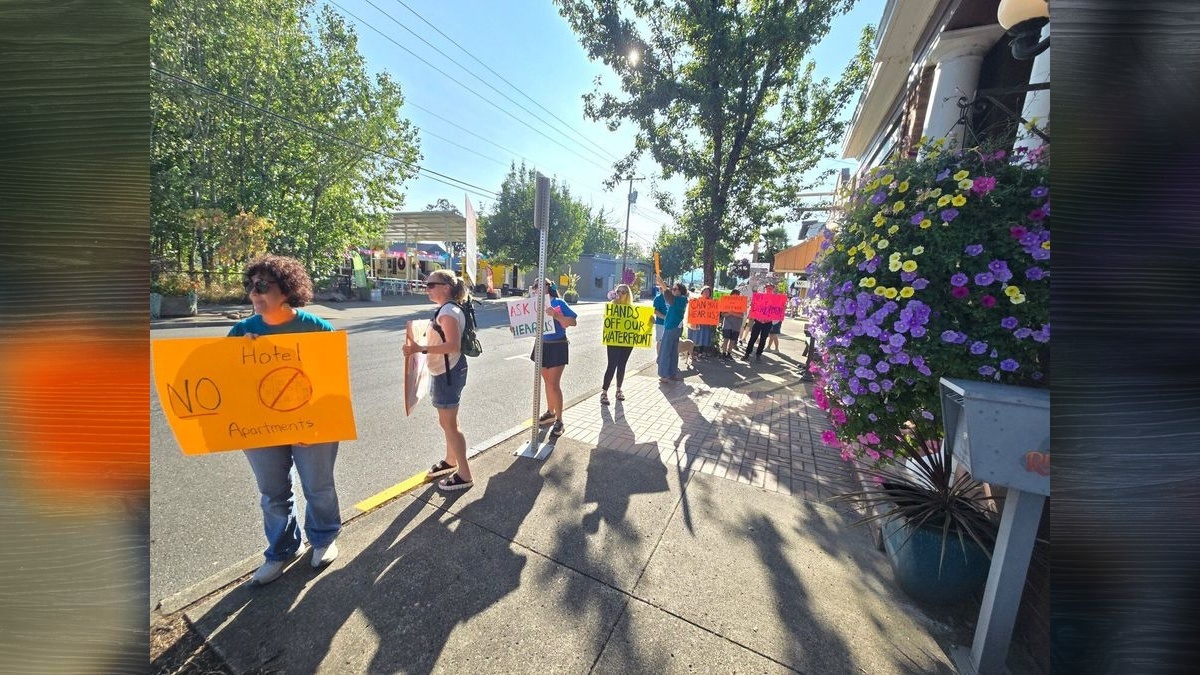
Knight and McIntire say the Port's current concept doesn't reflect what residents actually told it in the 2022 waterfront survey. Knight, who says PRW pulled the survey's public records, described a forced-ranking format — respondents had to rank uses like hotel, residential, and commercial from most to least preferred — that she says obscured the actual preference: recreational and public-access use ranked highest among the roughly 1,500 respondents, with residential ranking least favorable. McIntire said the port has cited that same survey to justify the current concept, calling the characterization misleading. She pointed to roughly 700 public comments as evidence residents didn't ask for what's now being proposed. The Reflector asked the port for comment on a number of items, including a response to the 2022 survey characterization. It did not receive a response to that item.
Aaron Nelson, a resident who launches his boat from Ridgefield for local fishing, stated this concern: “There is already tight parking during open fishing season. If you develop the waterfront to bring more traffic while simultaneously decreasing the boat trailer parking it will make it even more inaccessible to the local fishers.”
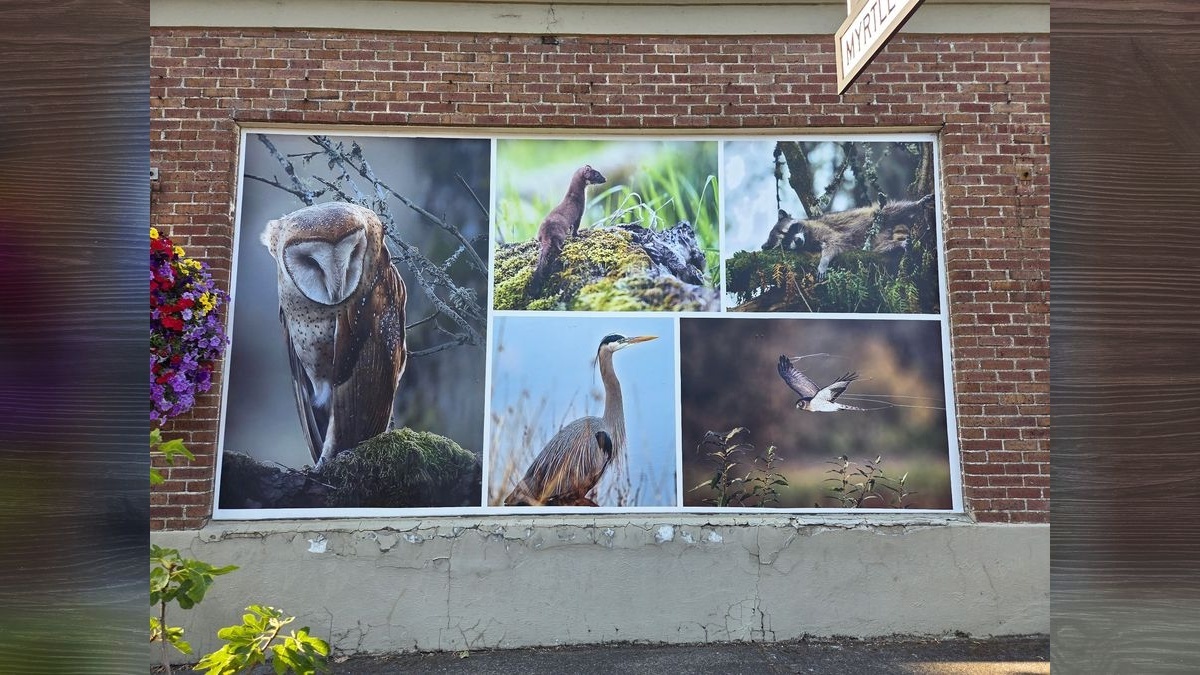
Nelson and his wife, Amanda, also pointed to wildlife impact: “Multistory buildings and increased lighting will not be good for the refuge because of the changes in bird flight patterns. Some species of ducks are very wary of humans and buildings. This will affect the bird watching and duck hunting opportunities in Ridgefield. An over-commercialized waterfront doesn’t align with the values of natural open spaces and small town feel.”
Regarding resident concerns about wildlife impact, Perry stated in an email: “The port has met with U.S. Fish and Wildlife Service and continues to coordinate with them ahead of the formal SEPA process, along with the migratory bird department and the Cowlitz Indian Tribe's Cultural Resources team.”
In the process of gathering community feedback, this reporter notes that at press time, she could not source a neutral or pro-development voice willing to speak on the record.
Proposed compromises and next steps
Those in opposition to the development as it stands still see a possible compromise. Webb said, “I'd like the port to announce that they are scrapping the current plans they have and will be pausing to hear from the community on what the people of Ridgefield and those who actively use the waterfront would like. I'd like there to be three renderings of different levels of scale created for the site, and a Ridgefield wide poll to be done based solely off those designs.”
Nelson added, “Ridgefield could use a cleaner, more family friendly access to the waterfront, but not at the expense of increased traffic and massive retail development. Creating retail and housing combined units could be one way to mitigate this by allowing small business owners to live and work in the same place and thereby be responsible and committed to a waterfront community.”
Knight said she would like to see more protected park land and a lower density development. McIntire said an enhanced boat launch with increased access.
Perry’s response to that item, in an emailed statement: “The feasibility study grant application on launch and queuing capacity is still in progress, with submission planned for September. Under consideration are reconfigured parking, an extended launch for more queuing space, and additional day dock space.”
The current port survey closed Aug. 17. The port will now review community feedback gathered during the summer. This fall, a meeting will be held to share their findings and next steps with the community.
This report was first published by The Reflector Newspaper.
Comments
Loading comments…