


Clark County resident Lilian Tsi Stielstra shares her personal health experiences and how they relate to the need to implement clear, simple nutrition labels on the front of food products
By Lilian Tsi Stielstra
Last fall, I participated in a national forum urging the Food and Drug Administration (FDA) to implement clear, simple nutrition labels on the front of food products to let people know what’s healthy and what’s not.

It was a far cry from 2010, when I was in a hospital bed following a stroke — I was overweight, didn’t exercise and had high blood pressure and high cholesterol — and had a neurologist tell me: “You know, you’re 46 years old. I really shouldn’t even be seeing someone like you.”
But the fact that a neurologist was seeing me meant two things. First, I knew very little about good nutrition. And second, our nation didn’t then — and doesn’t now — do nearly enough to help people make healthy eating choices.
Front-of-pack labeling can help on both counts in a big way. The FDA is poised to release proposed rules this month that would finally require it. I urge the agency to follow through.
Life expectancy in Clark County is higher than the national average. But as my own experience makes clear, even our community is not immune from the high rates of chronic illness and disease that plague our country and often stem at least in part from unhealthy eating.
Obesity afflicts nearly 1/3 of Clark County adults. Nearly 1 in 10 county residents are food insecure. Four percent of residents are both low-income and lack access to healthy foods.
Front-of-pack nutrition labeling won’t solve all of these problems. But it would be a really helpful and effective place to start.
The current Nutrition Facts label on food packages provides consumers with information on things like calories, saturated fat, sodium and sugar. Studies show it helps the people who use it make healthier choices. But the problem is that most people don’t use it.
The Nutrition Facts are on the back of packages, not the front, so it’s not readily visible. But even if you do look at it, all those numbers and percentages are really complicated; it can take time and an advanced math degree to understand it all.
As I shared last fall with the FDA: “Imagine the mother working with two toddlers in the shopping cart standing at the supermarket. You are not going to check the four different types of juice packets to see which one has less sugar.”
My view: let’s literally take the math out of the equation. Instead of a spreadsheet on the back, front-of-pack labels — think letter grades, stoplight colors or designating high, medium or low levels of specific nutrients — provide instant health information right up front.
Many countries have already implemented those kinds of approaches, and the impact is clear: consumers make healthier purchases and food manufacturers even make healthier products.
FDA has been studying front-of-pack labeling for years, and it’s exciting that a proposed rule is close at hand. One recent national survey found that 75% of U.S. consumers — including 80% of those with children in their households — support front-of-pack labeling. There’s simply no reason why the United States shouldn’t adopt a solution so effective and with such high support.
My stroke was the wakeup call I needed to get my life in order. But it shouldn’t take a near death experience for anyone to learn the importance of good nutrition. Front-of-pack labeling would empower people in Clark County and every community to make nutrition a priority. That would be a stroke of good fortune for us all.
Lilian Tsi Stielstra, a Clark County resident, is an American Heart Association volunteer, National Go Red for Women spokesperson and stroke survivor.

Also read:
- Opinion: Were Republican voters just sleeping during the August primary election?
 CCRP Chairman Matt Bumala says 60% of primary no-shows in the 17th and 18th districts were Republicans.
 - Opinion: WA Cares’ launch showcased care WA Cares did not provide
 Gov. Ferguson showcased a caregiving arrangement at the WA Cares launch that the program had not paid for a single day of.
 - Opinion: Portland’s War on Cars Part 4 – A smarter automobile strategy to end gridlock
 O’Toole argues fuel wasted in Portland-area congestion has sextupled since 1982, generating 250,000 tons of extra greenhouse gases annually.
 - Opinion: The Tooth Fairy’s secrets to making brushing & flossing magical
 Delta Dental of Washington’s Tooth Fairy Experience offers free resources to help children build lifelong brushing and flossing habits.
 - Opinion: Transit ridership trends are dismal but regional plans are oblivious
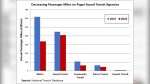 Puget Sound transit passenger-miles fell 31% from 2015 to 2024 despite a half-million-resident population increase.