


Vancouver resident Peter Bracchi writes about a long-overdue course correction and a proud announcement that the United States is returning to a clear, interest-based strategy rooted in strength, sovereignty, and common sense
Editor’s note: Opinions expressed in this letter to the editor are those of the author alone and may not reflect the editorial position of ClarkCountyToday.com
I want to publicly welcome — and strongly support — the White House’s 2025 National Security Strategy. It is more than a policy paper. It is a long-overdue course correction and a proud announcement that the United States is returning to a clear, interest-based strategy rooted in strength, sovereignty, and common sense.

For years, American foreign policy too often felt like a blank check: endless missions, vague goals, and “commitments” that quietly became permanent. This strategy breaks that pattern by doing what strategy is supposed to do — prioritize. It explicitly argues that prior post – Cold War approaches became unfocused lists of objectives, and that a serious national strategy must “evaluate, sort, and prioritize.”
The document’s message is unmistakable: America will defend its vital interests, but it will not carry the entire world on its shoulders. The Strategy states, “the days of the United States propping up the entire world order like Atlas are over,” and it calls for capable allies to assume “primary responsibility” for their regions. That is not weakness. It is leadership with boundaries — something our troops, taxpayers, and families have deserved for a long time.
Just as important, the Strategy recognizes that economic power is national power. It ties national security to rebuilding U.S. industrial capacity, securing supply chains, and restoring energy and technological strength. It is refreshing to see a national security document speak plainly about the real-world foundations of strength — production, infrastructure, and the ability to sustain deterrence, not just slogans.
Regionally, the direction is clear and sensible. The Strategy elevates the Western Hemisphere as a top priority — addressing border security, transnational crime, and influence from hostile powers — because a nation that cannot secure its own neighborhood is not fully sovereign. It also focuses on preventing major war in the Indo-Pacific, where the economic and military balance of the future will be decided, while encouraging Europe to take more responsibility for Europe’s defense.
Finally, I support the Strategy’s intent to avoid another generation of costly, open-ended nation-building — especially in the Middle East — while still protecting core interests like freedom of navigation and counterterrorism. America should be strong enough to deter threats and decisive enough to end missions that have no clear end.
This is a proud announcement of national direction: a stronger America at home, a clearer purpose abroad, allies who share the burden, and a foreign policy that serves the American people first. I encourage readers to judge it for themselves. The full Strategy is available here:
https://www.whitehouse.gov/wp-content/uploads/2025/12/2025-National-Security-Strategy.pdf
Peter Bracchi
Vancouver

Also read:
- Opinion: Were Republican voters just sleeping during the August primary election?
 CCRP Chairman Matt Bumala says 60% of primary no-shows in the 17th and 18th districts were Republicans.
 - Opinion: WA Cares’ launch showcased care WA Cares did not provide
 Gov. Ferguson showcased a caregiving arrangement at the WA Cares launch that the program had not paid for a single day of.
 - Opinion: Portland’s War on Cars Part 4 – A smarter automobile strategy to end gridlock
 O’Toole argues fuel wasted in Portland-area congestion has sextupled since 1982, generating 250,000 tons of extra greenhouse gases annually.
 - Opinion: The Tooth Fairy’s secrets to making brushing & flossing magical
 Delta Dental of Washington’s Tooth Fairy Experience offers free resources to help children build lifelong brushing and flossing habits.
 - Opinion: Transit ridership trends are dismal but regional plans are oblivious
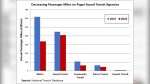 Puget Sound transit passenger-miles fell 31% from 2015 to 2024 despite a half-million-resident population increase.