


🎧 Trustee or Delegate? The Question Behind Every Vote
Tony Teso discusses the question of whether people should rule directly through their agents or by choosing trustworthy decision-makers
Editor’s note: Opinions expressed in this letter to the editor are those of the author alone and may not reflect the editorial position of ClarkCountyToday.com
One of the most important ideas in political theory for figuring out what a representative owes the people who elected them is the trustee – delegate distinction.

Tony Teso
The delegate model says that a representative should carry out the wishes of their people. Representatives’ personal views are not important; their job is to find out what their constituents want and decide accordingly. Like an agent carrying out orders, this view sees the representative as something like an agent; legitimacy comes from loyalty to what the constituent wants. The appeal is democratic responsiveness: the will of the people is directly turned into law, and lawmakers can’t put their tastes ahead of the will of the people.
The trustee model, by contrast, holds that people choose an agent to make their own decisions. People vote for someone they believe will consider the issues, look at the facts, and make decisions that are best for everyone, even if those decisions go against what is popular at the time. In his 1774 Speech to the Electors of Bristol, Burke takes this stance: he tells the voters that they deserve his hard work and his judgment and that he fails them instead of serving them if he gives up his judgment to do what they say. Burke saw the legislature as a group of people who consider what’s best for the whole country, not a market where local dealers are bound by contracts.
Each model has flaws that make it unique. The pure delegate runs the risk of being naive and manipulative, such as making bad decisions based on polls or withholding information from voters. It also struggles when constituents are divided, unaware of the situation, or have their direct interests in conflict with the national interest. The pure trustee runs the risk of being overbearing and not being held accountable. A representative can pass off self-interest, loyalty to a group, or simple error as “independent judgment,” and voters won’t be able to do much about it until the next election.
Political scientists have improved the changes. According to Eulaw and others, the “politico” model describes representatives who switch between the two roles depending on the issue. They act as a delegate on issues that voters care deeply about and as a trustee on issues that are more technical or don’t receive as much attention. Hannah Pitkin’s important analysis in The Concept of Representation shows the difference between acting in someone’s interest and acting on their expressed wishes. This analysis shows that the two models can be different: you can serve someone’s interest against their stated preference or follow their preference against their interest.
Most figures in real life are a combination of both. The mix is determined by the type of problem, the strength of party discipline, the number of safe seats vs. competitive seats, and how noticeable a vote is to constituents. The conflict between the two is not so much a problem that needs fixing as it is a permanent part of representation itself. This question takes the form of whether people should rule directly through their agents or by choosing trustworthy decision-makers.
Tony Teso
Camas

Also read:
- Opinion: Were Republican voters just sleeping during the August primary election?
 CCRP Chairman Matt Bumala says 60% of primary no-shows in the 17th and 18th districts were Republicans.
 - Opinion: WA Cares’ launch showcased care WA Cares did not provide
 Gov. Ferguson showcased a caregiving arrangement at the WA Cares launch that the program had not paid for a single day of.
 - Opinion: Portland’s War on Cars Part 4 – A smarter automobile strategy to end gridlock
 O’Toole argues fuel wasted in Portland-area congestion has sextupled since 1982, generating 250,000 tons of extra greenhouse gases annually.
 - Opinion: The Tooth Fairy’s secrets to making brushing & flossing magical
 Delta Dental of Washington’s Tooth Fairy Experience offers free resources to help children build lifelong brushing and flossing habits.
 - Opinion: Transit ridership trends are dismal but regional plans are oblivious
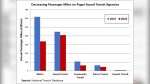 Puget Sound transit passenger-miles fell 31% from 2015 to 2024 despite a half-million-resident population increase.