



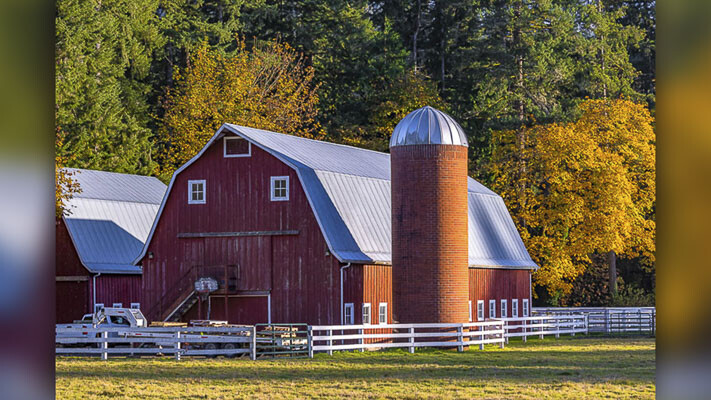
The BLM manages approximately 10 percent of the landmass in the United States with much of those holdings in the West
Pam Lewison
Washington Policy Center
Balanced use of public lands has been a contentious issue in the western United States for many years. A rule proposed by the Bureau of Land Management (BLM) would limit recreation and grazing on land previously considered public by creating a framework for “conservation leases.”

The BLM manages approximately 10 percent of the landmass in the United States with much of those holdings in the West. BLM’s new director, Tracy Stone-Manning, appears to be seeking a means to circumvent Congress by proposing the change to BLM land use policy through rulemaking despite a long-standing Congressional policy already being in place.
The proposed rule, would prioritize protection of “intact landscapes, restore degraded habitat, and make wise management decisions” by applying “land health standards to all BLM-managed public lands and uses,” arguing that “conservation is a use within the Federal Land Policy and Management Act’s multiple-use framework.” In other words, the BLM will choose to favor a restrictive approach to public land use moving forward.
According to the BLM summary the goal of the proposed rule is to “preserve Areas of Critical Environmental Concern,” promote conservation, and mitigate the effects of climate change on the landscape.
The pivot in management is particularly troubling for livestock grazers in the west. The BLM has 155 million acres of grazing land with approximately 18,000 permits with more than 21,000 grazing allotments or areas. Permits are typically issued for a period of 10 years and renewed at the discretion of the agency.
It is not hard to imagine a grazing permit ending and, under the proposed rule, the goal posts for meeting the terms of a new permit being moved, or the permit being removed entirely in favor of a conservation lease.
In addition to the economic benefits, research shows that grazing livestock on rangeland is beneficial for numerous reasons including soil aeration, wildfire prevention, and support of natural flora and fauna turnover. Despite that, livestock grazing has long been vilified by people who believe it is a detriment to the health of ecosystems.
In 1976, the Federal Land Policy and Management Act directed BLM to establish a pattern of “multiple use” for public land that included everything from conservation to grazing allotments, hunting to hiking trails, energy development and generation to timber harvests, all to “best meet the needs of the people.”
By creating a conservation lease “framework,” the agency is looking to close land previously open to the public for use and earmarking it for a single use.
Circumventing the will of Congress and the Federal Land Policy and Management Act by “reinterpreting” its meaning is not the answer. Carving out large swaths of land meant for multiple uses, jeopardizes not only access for livestock grazers but for anyone with an interest in seeing the beauty of our preserved natural landscapes.
There is the potential that wilderness lands like Hells Canyon, the Owyhee Wilderness Areas, the Vermilion Cliffs, would be considered Areas of Critical Environmental Concern and closed to the public. If we cut off our ability to see beauty in the natural world around us, we cut off a generation of young people from seeing the value in saving those lands.
Pam Lewison is the director for the Center of Agriculture at the Washington Policy Center.

Also read:
- Letter: Freeze the scope and build the bridge
 Vancouver resident calls for project discipline after 22 years of planning and nearly half a billion in costs.
 - Opinion: Public workers’ First Amendment rights are getting attention – in Idaho, not Washington
 Idaho moves to stop public schools from collecting union dues through government payroll while Washington continues favoring unions over worker choice.
 - Opinion: Lawsuit filed against the unconstitutional income tax in Washington state
 Former Attorney General Rob McKenna and Supreme Court Justice Phil Talmadge challenge the 9.9% income tax in Klickitat Superior Court.
 - Letter: ‘Oregon and Washington aren’t refusing to clean their rolls — they’re contesting federal jurisdiction and timing’
 Camas resident challenges Lars Larson’s fraud claims, explaining legal disputes over federal jurisdiction.
 - Opinion: ‘When are we going to get the full and complete details of the Interstate Bridge Replacement Program’s I-5 Bridge replacement project?’
 IBR team buried key details about light rail ending at waterfront with massive elevator system required.
 wpDiscuz
