


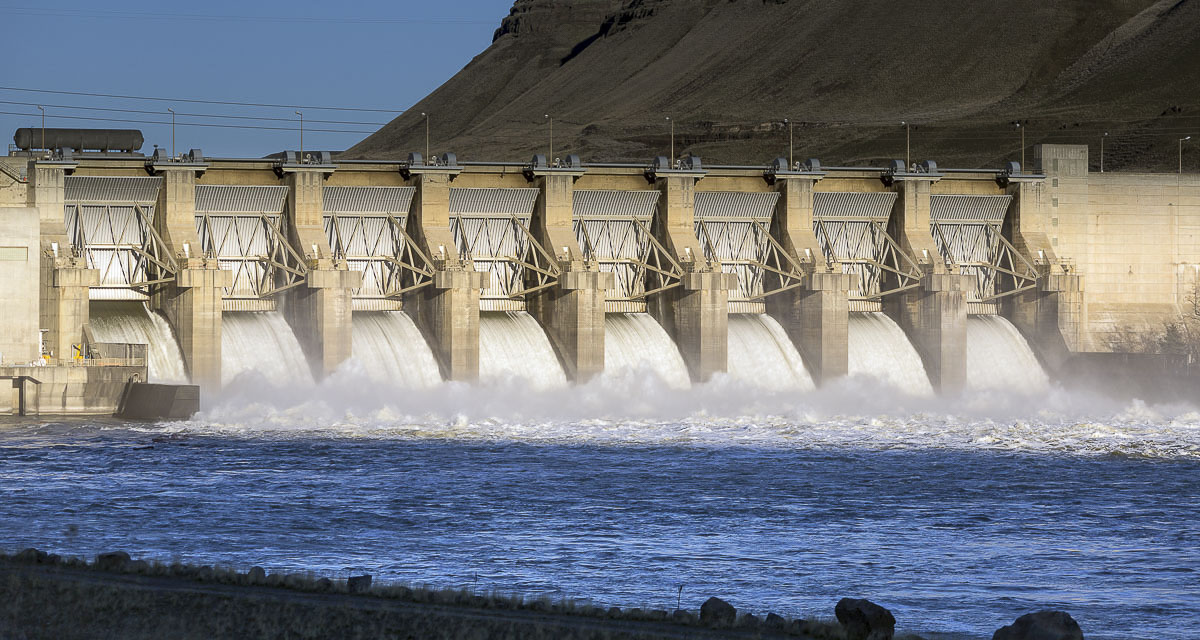
The Washington Policy Center estimated that Washington ratepayers could see their electricity bills rise by about $330 annually through 2050 if the four dams went away
Tim Clouser
The Center Square Washington
Despite President Donald Trump revoking a Biden-era agreement that would have laid out a path to breaching the four lower Snake River dams, the Washington State Department of Transportation is building “alternative future” scenarios that could cost taxpayers billions of dollars.
The plans are part of an independent study commissioned by the Legislature at the direction of former Gov. Jay Inslee. The $4 million project started in 2023 with a final report due by December 2026. The state’s Joint Transportation Committee received an update on the study’s progress so far on Thursday.
The meeting centered on transportation impacts tied to breaching the four hydroelectric dams, which provide enough power for more than 800,000 homes. While the dams disrupt the river’s natural flow to the dismay of several Native American tribes, they also provide a vital route for transporting goods across the state.
“We look at it with and without dams, and we see how the transportation alters,” Project Manager Dike Ahanotu said Thursday during a meeting in Spokane. “So, for example, a truck that’s going down to a river port today would instead be going either to a rail terminal or it’ll be going to a downstream barge.”
According to the federal government, estimates from 2016 put the cost of breaching the four dams at $1.3 billion to $2.6 billion. It would cost another $274 million to $372 million annually to replace the clean energy generated by the dams, resulting in a significant increase in carbon dioxide emissions.
However, inflation has increased by roughly 35% since those estimates came out. According to a 2022 study from the Washington Policy Center, replacing that renewable energy with wind, solar and battery storage could now cost $34.3 billion; replacing that with natural gas would reduce costs by $24 billion.
Those costs don’t account for the impacts on the wheat industry and others that rely on the dams as a transportation route across the state. The project team spoke at length on Thursday about generating cost estimates, but didn’t state how significant those would be, as they will appear in the final report.
The scenarios presented on Thursday consider building new/improved train terminals near Lewiston, Endicott, Central Ferry, Lyons Ferry, Dayton, Fallon, Wilma, and Kahlotus. Some scenarios include two or three terminals with new tracks, with one including seven terminals, three of which would be new.
“The expectation that modeling activities by the WSDOT-led team would be of the highest quality and applicability was predicated on the large availability of resources allocated to that effort,” according to Washington State University’s independent review dated July 10. “That expectation has not been met.”
Eric Jessup, a research professor at WSU’s School of Economic Sciences, said Thursday that railroads are catching up with river travel in terms of energy efficiency due to how many cars can attach to a train; however, using the river to transport goods across the region is still the most cost-effective way to do so.
WSU’s independent review flagged issues with the routes WSDOT identified, calling some of the plans “unrealistic.” The review says WSDOT has made improvements since, but identified a “steep learning curve for the entire WSDOT effort,” raising concerns around the cost estimates for the infrastructure.
The potential shift to railroads and to moving goods along highways also poses preservation costs that the state must take into account. If costs rise higher than anticipated, farmers could see their net margins fall, resulting in declining property values and tax bases, with an increased demand for relief.
Casey Chumrau, CEO of the Washington Grain Commission, told Congress last year it would take over 113,000 more semi-trailers annually to replace the 103 million bushels shipped on the river each year.
“If the dams go away, from a transportation standpoint, that whole system — even those people that don’t use the barges today — are going to be impacted,” Study lead Jim Mahugh said Thursday. “It’s going to change how the rails must be utilized. It’s going to change how the roads lie, and we only have so much trucks, we only have so much rail, and we’re going to take time to effectively readjust.”
While WSDOT’s report is due in December 2026, breaching the four lower Snake River dams requires congressional approval. The Biden administration signed an agreement in 2023 to restore the natural flow and salmon populations with $1 billion in federal funding over 10 years, but Trump pulled out.
Last June, he signed an order revoking Biden’s agreement and directed federal agencies to unwind the commitments that could lead to the destruction of the dams. U.S. Rep. Dan Newhouse, R-Wash., has also introduced legislation in Congress to protect the four dams and the hydropower they generate.
According to the U.S. Energy Information Administration, Washington generates more electricity from hydropower than any other state, producing 25% of all hydroelectric power nationwide in 2024.
The Washington Policy Center estimated that Washington ratepayers could see their electricity bills rise by about $330 annually through 2050 if the four dams went away. That may seem unlikely with Trump in office and a Republican majority in Congress, but the proposal could return under future administrations.
“The Lower Snake River dams are the foundation of our region’s energy security and are vital to deliver agriculture exports to foreign markets,” Newhouse said in March. “Without the dams, our region would suffer severe economic consequences and rolling blackouts during times of extreme weather.”
This report was first published by The Center Square Washington.
Also read:
- Opinion: Were Republican voters just sleeping during the August primary election?
 CCRP Chairman Matt Bumala says 60% of primary no-shows in the 17th and 18th districts were Republicans.
 - High school football: New coach prepares for long-term success at Prairie High School
 James Young-Lewis, a Clark County native who graduated from Evergreen in 2009, became Prairie’s head coach in May after working as an assistant coach across various programs since 2015, joining Prairie’s staff in 2024.
 - Cost to battle 20 wildfires in WA has topped $200M
 Twenty wildfires have cost Washington $207M in one month, more than two-thirds of what DNR spent all last fiscal year.
 - Opinion: WA Cares’ launch showcased care WA Cares did not provide
 Gov. Ferguson showcased a caregiving arrangement at the WA Cares launch that the program had not paid for a single day of.
 - Former State Rep. Liz Pike provides update on husband Neil Cahoon
 Neil Cahoon, a Camas resident, has undergone multiple surgeries including five on Aug. 15 after the Aug. 10 crash near La Center’s Daybreak Airport.
 - Opinion: Portland’s War on Cars Part 4 – A smarter automobile strategy to end gridlock
 O’Toole argues fuel wasted in Portland-area congestion has sextupled since 1982, generating 250,000 tons of extra greenhouse gases annually.
 - $1,000 first prize for Camas Plein Air Art Event honoring Marquita Call on Sept. 26
 Plein air artists compete Sept. 26 in Camas for $1,000 first prize honoring gallery founder Marquita Call.