



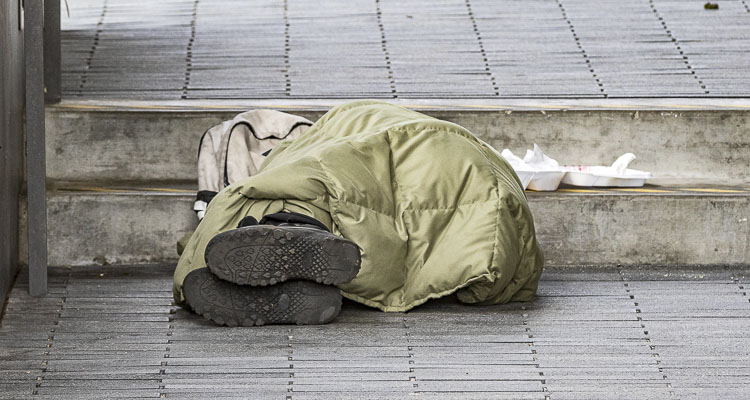
Council for the Homeless to hold webinar next week to discuss findings of its annual report
It takes weeks of planning, even months, to capture the one day report on the state of homelessness in Clark County.
There is a day, every year, when communities across the nation attempt to take a snapshot of the population of those experiencing homelessness.
There is also an annual report.
In Clark County, it is the Council for the Homeless that compiles the information, provides those reports to partners and government agencies, and makes recommendations based on those numbers.
“Housing is a human need, and everyone needs a home,” said Charlene Welch, development and communications director of the Council for the Homeless.
There are more than 30 partners in the region that input their data into the Homeless Management Information System. Shelters. Churches. Veterans groups. And more. The Council is the hub of data collecting, taking the numbers and giving everyone in the battle a glimpse at the issues.
“We are stronger when we coordinate and we don’t duplicate resources,” Welch said. “We might have disagreements about how to allocate funding or this approach versus that approach, but if we can keep the conversations going … The heart of the community is really there.”
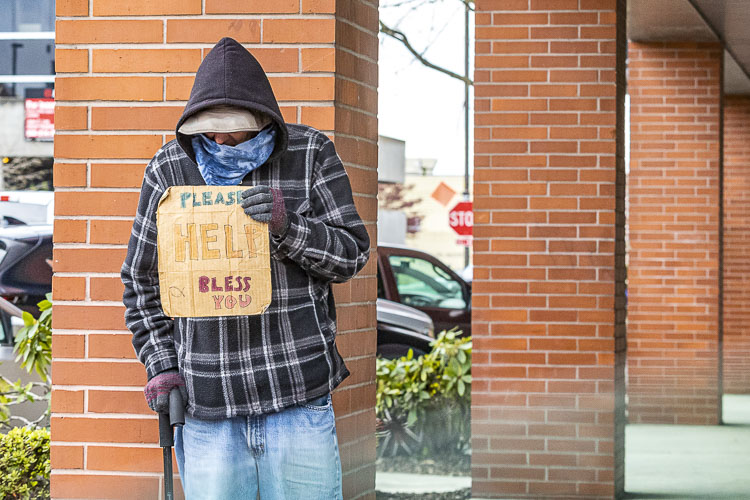
Sunny Wonder, the department’s deputy director, echoed those thoughts.
“We have so many people who care so deeply about this,” she said. “We have so many people who are willing to engage with these numbers and willing to engage with creative thinking.”
This year’s Point in Time count was conducted in February. (Usually, the one-day count is held in January. It was pushed back a month in the pandemic.)
On Feb. 24, 2022, there were close to 1,200 people in Clark County experiencing homelessness. There were 625 unsheltered, 389 in emergency shelters, and 183 in transitional shelters
“The Point in Time count is our best effort to try to count everybody in one day,” said HMIS administrator Dale Whitley. “PIT count is always a best effort. No PIT count coordinator can say they counted every single person. I like to define it as we know there were at least this many people on that day that we were able to count.”
The shelters throughout the county give their reports, plus there are street count teams that are sent out across the county to known places where people are living outside.
As far as the annual report, the 2021 numbers are in, as well. In all, 6,285 people from 4,036 households in Clark County experienced homelessness at any point during 2021. Of those, 61 percent described themselves as newly homeless, 40 percent identify as Black, Indigenous, or People of Color, and 27 percent are children under the age of 18.
The numbers help authorities ask more questions.
“Who makes up the homeless population?” Welch asked. “It’s seniors. Families. Adults with no kids. Teenagers who are on their own without an adult. Where can we put the resources? How do we advocate for more resources? Part of what the data helps us do is identify where the gaps are in the system.”
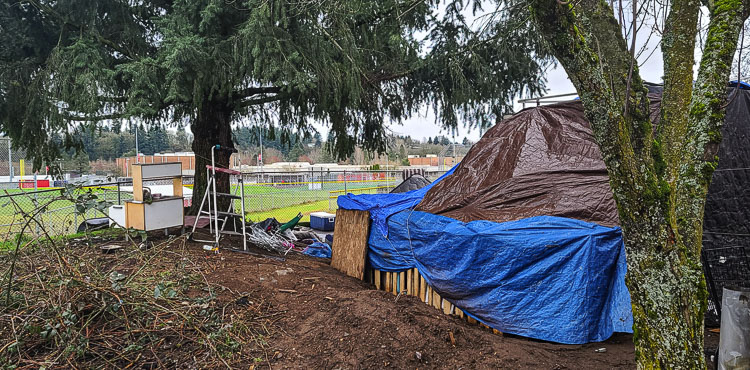
Just a couple years ago, there were six outreach workers in the community. The numbers demanded more help was needed. Today, there are 30.
“Obviously homelessness is very visible in our community right now,” Welch said. “One of the things we are focused on as a community is what we call coordinated outreach. That is where we have specially trained staff … who are consistently going out into those encampments and building trusting relationships with the people who live there.”
It takes time, but eventually, the goal is to bring those people into the system in hopes of escaping homelessness.
“One thing about homelessness is the solutions are not one-size-fits-all,” Welch said. “Some might need just a little bit of help. Some people are going to need help for the rest of their lives. The homeless system and all the partners that make it up are plugged in at every different stage along that continuum of need with different programs and with different resources.”
Included in the partnership are city and county leaders. The Council for the Homeless has representation on ECHO — Ending Community Homelessness Organization — which includes leaders from the county, as well as the cities of Vancouver, Camas, Battle Ground, La Center, Ridgefield, and Washougal.
“We serve as bringing the data, sharing with them what is happening in their communities, what programs are being effective, which practices are being effective around the country,” Welch said. “We’re bringing recommendations for them to consider.”
The Council for the Homeless is holding a webinar at 5:30 p.m. on July 12 to share results of the 2021 annual report. The link to the webinar is:
https://us06web.zoom.us/webinar/register/WN_mGNbcN55QxGyRNPRBMM-zA
It is the sharing of data that helps find more solutions to a very complex issue. And there is a goal in mind.
“We firmly believe that our community needs to have housing that is available and affordable to people of all income levels, and right now we do not,” Welch said.
“When people have a home in the community, we all win.”
Notes:
The 2021 report on homelessness can be found here: https://www.councilforthehomeless.org/annual-system-data-2021/
The Point in Time count for Feb. 24, 2022 can be found here: https://www.councilforthehomeless.org/point-in-time-count/
Also read:
- POLL: Do you agree with giving a state commission the power to remove an elected sheriff?
 A new poll asks if a state commission—not voters—should have the power to remove an elected sheriff, following concerns raised by Clark County Sheriff John Horch.
 - Opinion: Defending Democracy by denying it?
 Washington voters are blocked from weighing in on new income taxes as state lawmakers and officials bypass public input, drawing criticism from Northwest voices.
 - Camas School District names Ryan Scott as principal of Lacamas Lake Elementary
 Ryan Scott, currently associate principal supporting multiple Camas schools, will become Lacamas Lake Elementary’s new leader following Julie Mueller’s retirement.
 - Ridgefield to host Division I baseball game between UW Huskies and UP Pilots on April 21
 The Ridgefield Outdoor Recreation Complex welcomes two Division I teams this April, offering free entry for local youth players and a rare college matchup in Clark County.
 - Clark County Sheriff shares his concerns with Washington’s new sheriff’s law
 Sheriff John Horch criticizes a new state law allowing a commission to remove elected sheriffs through decertification, arguing it undermines voter authority.
 - VIDEO: Decertified WA sheriffs can now be ousted under controversial new law
 A new Washington law lets an unelected board remove elected sheriffs or police chiefs for misconduct that costs them state certification, raising concerns about free speech and political consequences.
 - Inmate with pending charges in Clark County escapes Western State Hospital
 Joshua Dylan Rice, a Clark County inmate facing robbery and assault charges, escaped Western State Hospital and may have ties to Salmon Creek and North Bend, Oregon.
 wpDiscuz
