



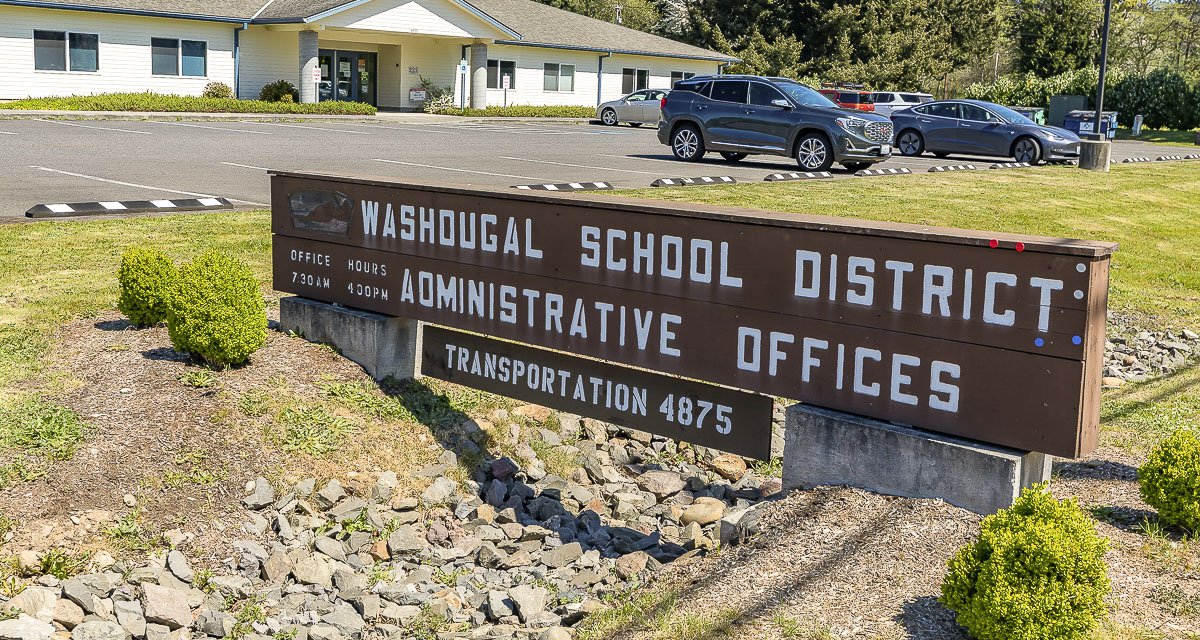
Move expected to save taxpayers around $2 million dollars over the next 10 years
Washougal School District has successfully taken advantage of current low bond interest rates to save taxpayers around $2 million dollars over the next 10 years. A sale of bonds authorized by the Washougal School Board of Directors at the January 28 school board meeting will refinance bonds issued in 2015. The overall borrowing rate for the new bonds sold on March 11 is 3.10%, compared to the rate of 4.87% on the ten-year old bonds.
“This is a great opportunity to save our taxpayers a significant amount of money,” said Superintendent Aaron Hansen. He emphasized that the anticipated savings will go directly to taxpayers by lowering future tax collections. “Refinancing the 2015 bonds does not save the district money, it directly benefits Washougal taxpayers. This money will now stay in our community and local economy, rather than go to pay interest on our bonds.”
Although there has been substantial volatility in the bond market resulting in interest rates swinging over the past two months, the interest rates on these types of bonds are still relatively low compared to historical rates according to Shelese McConnell, the district’s School Finance Director. “We have been monitoring the market closely, hoping to have an opportunity to refinance these bonds. We are very happy to be able to lock-in these savings to the district taxpayers in a difficult market,” said McConnell. “This was our earliest opportunity to refinance these bonds. We may have another opportunity next year to refinance the second half of the voter approved bonds, which were sold in 2016, if rates remain low enough. We are hoping to provide some additional savings, but we’ll have to wait and see,” notes McConnell.
As part of the sale, the district received a strong credit rating of “A1” from Moody’s Investors Service, which helps lower the district’s borrowing costs. Moody’s recognized that the district has been making good progress toward improving finances and restoring financial reserves.
“We appreciate the investments local voters made in our schools when they voted to approve the bonds in 2015,” said Hansen. “This refinancing underscores our commitment to sound financial management of voter-trusted funds.”
Information provided by the Washougal School District.
Also read:
- Opinion: Lawsuit filed against the unconstitutional income tax in Washington state
 Former Attorney General Rob McKenna and Supreme Court Justice Phil Talmadge challenge the 9.9% income tax in Klickitat Superior Court.
 - Vancouver Police investigate domestic violence homicide
 Vancouver Police Major Crimes Unit investigating after woman found dead with knife wounds on NE Oakbrook Circle.
 - Letter: ‘Oregon and Washington aren’t refusing to clean their rolls — they’re contesting federal jurisdiction and timing’
 Camas resident challenges Lars Larson’s fraud claims, explaining legal disputes over federal jurisdiction.
 - County Council to hold hearing on preferred land use alternative for comprehensive plan update
 Clark County Council will select preferred land use alternative from three options studied in environmental review.
 - Opinion: ‘When are we going to get the full and complete details of the Interstate Bridge Replacement Program’s I-5 Bridge replacement project?’
 IBR team buried key details about light rail ending at waterfront with massive elevator system required.
 - POLL: Do you support extending light rail beyond the waterfront to connect with C-TRAN at Library Square?
 Readers can weigh in on Anne McEnerny-Ogle’s proposal to extend light rail beyond the waterfront to Library Square for improved C-TRAN connections.
 - Opinion: Passing a cyclist – Law, myth and a little patience
 Most drivers can’t legally pass cyclists in-lane due to vehicle width versus road measurements.
