



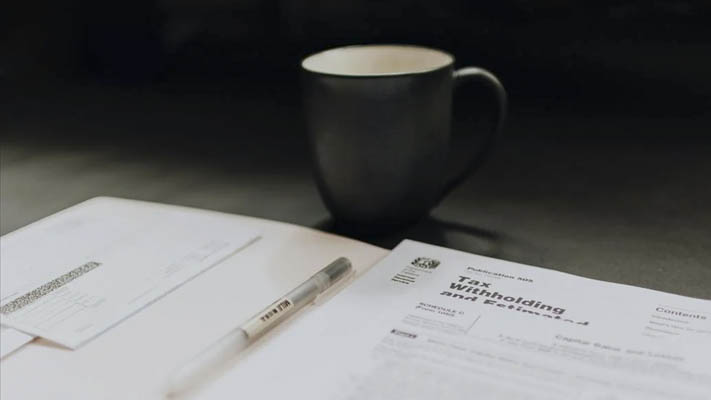
It’s a drop of three spots from last year’s No. 34 ranking
Brett Davis
The Center Square Washington
Washington remained in the lower half of U.S. states in terms of economic outlook, according to a new report that faults the Evergreen State’s high tax burden and rising labor costs for the state’s No. 37 ranking.
That’s a drop of three spots from last year’s No. 34 ranking.
The American Legislative Exchange Council released the 17th edition of its “Rich States, Poor States” report Tuesday. The report ranks states based on “economic outlook” per 15 metrics ranging from rates for personal, corporate, property and sales taxes, to employer costs, including workers’ compensation and minimum wage.
“Each of these factors is influenced directly by state lawmakers through the legislative process,” the report’s authors noted. “Generally speaking, states that spend less – especially on income transfer programs – and states that tax less – particularly on productive activities such as working or investing – experience higher growth rates than states that tax and spend more.”
Washington placed 50th for the presence of a state-level estate tax that ranges from 10% to 20% and applies to estates worth $2.193 million and up.
The state came in at No. 43 for its sales tax burden, calculated at $36.62 per $1,000 of personal income.
The remaining tax burden of $22.42 – calculated by taking tax revenues from state and local taxes excluding personal income, corporate income, property, sales and severance per $1,000 of personal income – saw Washington rank No. 44.
Washington’s $16.28 per hour wage floor, the highest state minimum wage in the nation, earned it 50th in the nation on state minimum wages, according to the report.
The state also lost ground compared to other states for not being a right-to-work state – that is, Washington employers and labor unions are free to negotiate contracts that require union membership.
It wasn’t all bad economic news for Washington.
The state ranked No. 1 in terms of the top marginal personal income tax rate, including local taxes, if any, and any impact of federal deductibility, if allowed. Washington does not have an income tax, but it does have a 7% tax on capital gains above $250,000 in a year for individual taxpayers.
Washington ranked No. 2 in terms of personal income tax progressivity, or change in tax liability per $1,000 of income, and No. 3 in terms of tax expenditure limitations.
Employment Security Department state economist Paul Turek expressed some skepticism about the study.
“Criteria used, however, are highly subjective,” he emailed The Center Square. “Based I presume toward political leaning, it focuses more on tax policies and principles.”
Turek suggested the study should have focused on examining the state’s tax climate.
“Once the tax situation is looked at, tax burdens/structures are probably not as critical as how the revenues are used to support economic growth and employment,” he said. “Washington is viewed as a good state by most for tax burden in that there exists no state income tax and property taxes seem reasonable on a relative basis (See NY and NJ). However sales taxes are applied to make up any revenue shortfall which puts the onus more on the young.”
The study would have benefited “if it had explained why the specific set of criterion was chosen as well as the method used to determine final rankings.”
Turek went on ask, “Was each score in the ranks simply added and averaged? Was a weighted average applied? Again, this is another example of a ‘study’ that suffers when those schooled in the science of research methodology are not employed.”
ALEC describes itself as a “nonpartisan, voluntary organization of state legislators and job creators” dedicated to the principles of limited government, free markets and federalism.
This report was first published by The Center Square Washington.
Also read:
- White House govt. Funding request for 2027 cuts $73 billion
 President Trump’s budget seeks to boost defense funding while cutting $73 billion from agencies like the EPA, NASA, and Agriculture, prompting sharp criticism from Democratic leaders.
 - Heywood asks WA Supreme Court to allow referendum effort on income tax
 Brian Heywood is petitioning the state Supreme Court after the Secretary of State rejected a referendum to repeal Washington’s new 9.9% tax on income over $1 million.
 - Opinion: Half the road, full stop – Understanding pedestrian right-of-way
 Doug Dahl explains how Washington’s law requires drivers to stop when a pedestrian is within one lane of their half of the road, not just when directly in front.
 - Clark County seeks volunteer for Law and Justice Council
 Applicants with experience in mental health services are encouraged to help guide Clark County’s coordination of local criminal justice and corrections planning.
 - VIDEO: Families at center of WA transgender sports debate face-to-face with OSPI
 Two Washington high school students and their parents met with Superintendent Chris Reykdal to discuss concerns about sports policies after one student faced an investigation for harassment.
 - As Washington lawmakers punt on school cellphone ban, some want more action
 At Robert Eagle Staff Middle School, all-day phone removal led to fewer conflicts and more student engagement, but some parents and lawmakers argue a ban should not be imposed statewide.
 - Opinion: The state’s RFK-proofing bill comes with a cost
 Mandates like HB 2242 can lead to higher premiums as insurance companies absorb costs for new preventive services, affecting affordability statewide.
 wpDiscuz
