



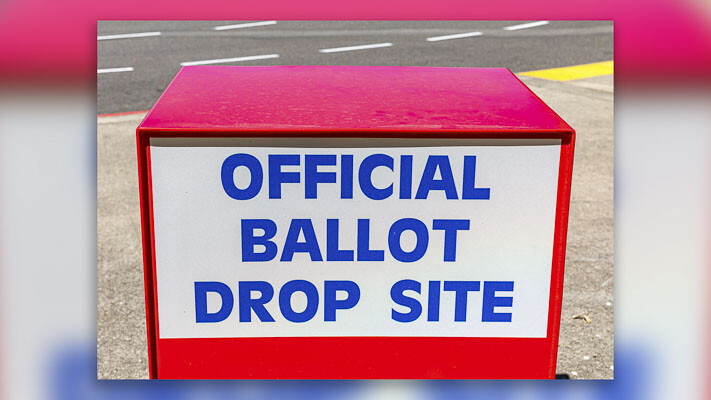
Senate Bill 5082, which passed Wednesday with a 30-18 vote, would do away with the non-binding measures meant to gauge voter opinion on tax increases passed by the Legislature
Brett Davis
The Center Square Washington
The Washington State Senate has passed a bill that would eliminate advisory votes from the ballot. The legislation now heads to the House of Representatives for consideration.
Senate Bill 5082, which passed Wednesday with a 30-18 vote, would do away with the non binding measures meant to gauge voter opinion on tax increases passed by the Legislature.
Advisory votes made their way onto Washington state ballots after voters approved Initiative 960 – courtesy of anti-tax activist Tim Eyman – in 2007. The initiative requires any tax increase proposed in the Legislature be passed with a two-thirds majority in both chambers, among other provisions.
A state Supreme Court ruling later gutted I-960 with the exception of two provisions still codified in state law today. One requires the state to hold advisory votes on all tax increases not approved by voters. The other requires the state to make public how each member of the legislature voted on a bill that increases taxes or fees.
SB 5082 would require creation of a public website with summaries of operating, capital, and transportation budgets; graphs of state budgeted expenditures by object for the most recent biennium; and charts detailing local and state expenditures.
Sen. Patty Kuderer, D-Bellevue, prime sponsor of the bill, says advisory votes are expensive and deceptive.
“In a state that leads the nation in voting accessibility and election integrity, it baffles me that we still waste millions of dollars on a corrupt act of voter suppression like advisory votes,” she said before the Senate, according to a news release.
“These non-binding, vote-imposters pollute our ballots with anti-tax propaganda specifically designed to instill distrust in government – and they do it on our most fundamental sanctuary of democracy, the ballot,” Kuderer continued. “They are fraudulent because they use loaded, misleading language, meant to push private interests and to influence rather than measure public opinion. We need real tools for making the Legislature’s work more transparent, not political rhetoric.”
Jason Mercier, government reform head at the free market Washington Policy Center think tank, says the role of advisory votes has been diminished by the decision of the state’s highest court getting rid of the legislative supermajority vote requirement for tax increases.
“Once the court removed the repeatedly voter-approved 2/3 for taxes restriction these advisory vote measures became disconnected from the original purpose,” he explained in an email to The Center Square. “In the past the Legislature would ‘suspend’ the 2/3 for taxes and then use a simple majority vote to impose a tax increase. Having the advisory votes in place was a way to require strong public exposure of any taxes raised while doing this.”
The result, in Mercier’s estimation, has not been positive.
“Dozens of taxes have been passed without a 2/3 vote since the court removed this voter-approved requirement, and the Legislature has ignored the result of every tax advisory vote since that recommended a repeal of the tax increase,” he said. “I can understand the voter frustration of engaging in an advisory vote only to see it ignored.”
There is a better way to go, according to Mercier.
“If the Legislature really cares about respecting democracy and the will of the people, it will forward voters a constitutional amendment to restore the supermajority vote requirement for tax increases,” he said. “Based on the repeated voter-approval of prior tax restriction proposals, it isn’t hard to guess what the outcome of that vote would be.”
House Joint Resolution 4202, a constitutional amendment that requires any tax increases enacted by legislators to be referred to the people at the next general election, has been introduced this session.
Andrew Villeneuve, founder and executive director of the Northwest Progressive Institute, thinks doing away with advisory votes is a good idea.
“This legislation is a huge win for voters and taxpayers,” he said via email. “It’s heartening to see it pass with bipartisan support and get prioritized for action so early in the 2023 legislative session.”
Villeneuve says his organization’s polling over the years indicates a plurality of people favor eliminating advisory votes they describe as “confusing, meaningless, pointless, and wasteful.”
This has a detrimental impact on voting, he noted.
“Research has shown that more complex ballots make voting more difficult, contributing to studied phenomena such as roll-off, which refers to when voters quit voting on issues, or inattention, when voters engage randomly rather than deliberately, or drop out, which is what it sounds like… voters quit voting altogether,” Villeneuve said. “By removing an unnecessary obstacle to completing the ballot, we will make it easier to vote in Washington, which will be very good for our democracy.”
He went on to say, “The ballot is sacred, and everything that we vote on should matter. The ballot is not an appropriate place for advertising or opinion polling.”
This report was first published by The Center Square Washington.
Also read:
- VIDEO: Rejected – WA SOS will not process referendum to repeal income tax law
 State officials stopped Let’s Go Washington’s referendum to overturn the new tax, citing constitutional limits. Legal and political battles, including a Supreme Court challenge, are expected next.
 - Washington’s studded tire deadline is March 31
 Drivers must remove studded tires by March 31 or face a $137 fine, with WSDOT urging early action due to busy service centers and no planned deadline extension.
 - Community in Action: Police cruisers ‘crammed’ with snacks to benefit local students
 Nearly 8,500 snacks filled police cruisers at Fred Meyer as the community rallied to stock high school pantries and build new relationships.
 - Southwest Washington lawmakers to hold a series of town hall meetings throughout the 17th Legislative District
 Sen. Paul Harris, Rep. Kevin Waters, and Rep. David Stuebe will answer questions and discuss the state’s expanded operating budget and newly passed income tax at five April town halls.
 - Can your wellness routine be harming your teeth?
 Dental enamel can’t regenerate once damaged, but steps like using a straw, rinsing with water, and choosing fluoride toothpaste can help protect your teeth from acidic beverages.
 - Vancouver Police investigate attempted murder
 A 29-year-old man suffered critical injuries in a stabbing incident on NE 12th Street, with the alleged assailant Jason Johnson now facing multiple felony charges after release from medical care.
 - Project 42: It is an income tax, not a millionaire’s tax
 Project 42 co-founder Dann Mead Smith urged Clark County residents to organize against the new income tax law, emphasizing it can be expanded to reach more than just millionaires.
 wpDiscuz
