


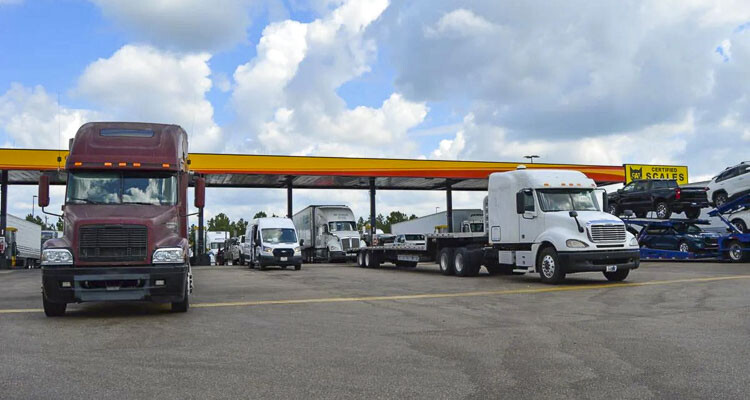
The program would apply to light and heavy duty vehicles that weigh 8,500 lbs. or more, and would include both on and off-road vehicles
TJ Martinell
The Center Square Washington
Washington taxpayers could pay as much as $120,000 per vehicle on electric heavy duty truck subsidies as part of a planned state voucher program intended to transition the transportation sector away from fossil fuels.
The program is not only intended to mimic California’s Hybrid and Zero-Emission Truck and Bus Voucher Incentive Project, but provide enough funding upfront so it can compete for new electric vehicle, or EV, trucks that are currently being sent to California and, in some cases, are built in Washington state.
The program would apply to light and heavy duty vehicles that weigh 8,500 lbs. or more, and would include both on and off-road vehicles such as large forklifts, terminal tractors, and commercial harbor crafts.
During a Thursday presentation to the state Joint Transportation Committee, Tom Brotherton with CALSTART told legislators that the program would function like a voucher program in that the money would be made available for each vehicle subsidized.
CALSTART is a nonprofit organization focused on the clean transportation industry.
Brotherton said that due to how long it can take for a vehicle to be built, the voucher system is something private companies participating in the program “can count on,” as opposed to purchasing the vehicle and then applying for a subsidy.
The subsidies would range depending on the type of vehicle. A vehicle meeting the minimum weight requirements would be eligible for $7,500, while the Class 8 or heavy duty trucks could receive up to $120,000.
At the same time, Brotherton told the committee that the state would also need to build the infrastructure necessary for EV trucks to be able to operate in the state. The program offers incentives for installing chargers, but Brotherton said that is only available to entities that have purchased an EV truck.
However, the program raised concerns among some committee members, including Sen. Jeff Wilson, R-Longview, who expressed worries over the creation of a “false market” in which subsidized EV trucks could then be resold. According to Brotherton, entities receiving a subsidy would be required to keep the EV for three years and have it registered in Washington state.
Yet, Wilson asked, “Who is going to watchdog that?”
Sen. Curtis King, R-Yakima, also expressed concern about heavy duty truck batteries, noting that cold weather temperatures could cause performance issues or require facilities to keep those vehicles warm.
“In eastern Washington that’s part of what you may have to look at in order to be able to get these vehicles started,” he said. “It’s not as simple as we want to make it sound sometimes.”
The Washington Electric Vehicle Council has recommended a similar program for regular vehicles as part of its transportation electrification strategy that would provide $5,000 in “incentives” for EVs through the state Department of Commerce.
This report was first published by The Center Square Washington.
Also read:
- Save Vancouver Streets will make its argument before Washington State Court of Appeals
 Save Vancouver Streets will argue before the WA Court of Appeals on Sept. 11 after collecting 6,500 signatures.
 - Opinion: Portland’s War on Cars Part 4 – A smarter automobile strategy to end gridlock
 O’Toole argues fuel wasted in Portland-area congestion has sextupled since 1982, generating 250,000 tons of extra greenhouse gases annually.
 - Opinion: Transit ridership trends are dismal but regional plans are oblivious
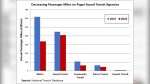 Puget Sound transit passenger-miles fell 31% from 2015 to 2024 despite a half-million-resident population increase.
 - Interstate Bridge Replacement Program seeks qualified firms for bridge replacement contract
 The CRBR project is backed by $5.7 billion from state funds, federal grants, and future tolling.
 - Opinion: Bankrupt – A $3.5 billion Rose Quarter Freeway widening project
 Joe Cortright argues ODOT’s Rose Quarter project has grown from a $450M approval to a $3.5B estimate, with a $2B funding gap.
 wpDiscuz