



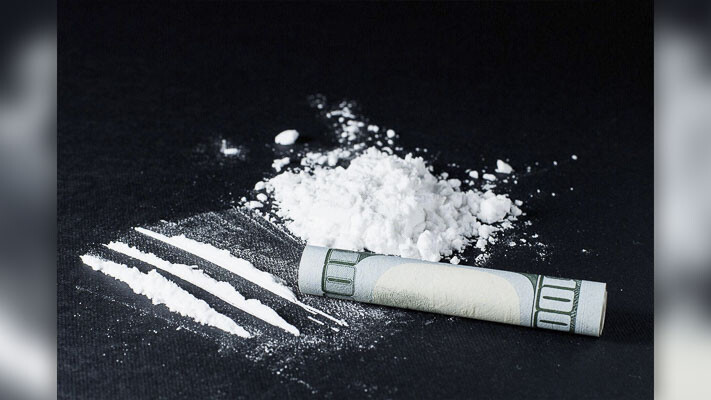
Photo courtesy Valeri Dex/Shutterstock
The odds of a special session appeared to increase based on recent comments from Gov. Jay Inslee and some Republican lawmakers
Brett Davis
The Center Square Washington
The failure by lawmakers this session to pass a bill to create a solution to a state Supreme Court decision that essentially decriminalized possession of controlled substances raised the possibility of a special session for the Washington State Legislature to resolve the issue.
Per the state constitution, the governor can call legislators in for a special session for a 30-day period. Legislators can call themselves into special session with a two-thirds vote of both the House of Representatives and the Senate.
The odds of a special session appeared to increase based on recent comments from Gov. Jay Inslee and some Republican lawmakers, only days after Sunday’s conclusion of the 105-day regular session.
“The latest is I’ve been talking to leadership of all the four caucuses, Democrats and Republicans,” Inslee said at the end of a Thursday morning bill signing ceremony in Seattle. “There are vigorous discussions underway to get the requisite votes to get the bill out.”
The bill in question is Senate Bill 5536 that would have made the crime a misdemeanor, but it failed to pass before the end of session.
“We have talked about having a special session,” Inslee said. “It is my hope that we can do that in May. In the next few days we’re going to try to nail down a date.”
It’s imperative that lawmakers pass the bill, according to the governor.
“We need the Legislature to take action,” Inslee said. “We should not be in a situation where cities act in sporadic and non-parallel form, so we are looking forward to these further discussions. It needs to bear fruit. The Legislature needs to produce a bill on this, so we have a consistent Washington state standard.”
In February 2021, the state’s highest court struck down the statute that made possession of a controlled substance a felony punishable by up to five years in prison. The court ruled the statute unconstitutional because it allowed people to be convicted of possession even when they didn’t realize they had drugs in their possession
The ruling came in the case of a Spokane woman, Shannon Blake, who had received a pair of jeans from a friend with a small bag of methamphetamine in a pocket.
In April 2021, the state Supreme Court rejected a request from the state to reconsider the ruling. Later that month, the Legislature passed Senate Bill 5476, reclassifying drug possession as a gross misdemeanor with fines up to $125. Per the bill, first and second-time convictions that occurred before the ruling would be vacated in retrial and defendants referred to treatment programs.
Inslee signed SB 5476 into law the following month, vetoing a portion of the bill that would have created a state fund to reimburse local governments and individuals who incur legal fees resulting from resentencing under the court’s decision.
The bill’s drug possession provisions expire on July 1, necessitating a more permanent legislative fix that eluded lawmakers this session.
“I think there’s a chance there will be a special session,” Rep. J.T. Wilcox, R-Yelm, who over the weekend stepped down as House Republican leader, told The Center Square on Wednesday afternoon.
Sen. John Braun, R-Centralia, attached some odds to the convening of a special session.
“I think it’s 50-50, maybe 60-40,” the Senate Republican leader said. “It’s still in the middle and I think the longer you go, the further along cities and counties get and say, ‘Look, we’re going to handle this ourselves,’ the harder it is.”
He added, “And the longer you go and the more comfortable cities and counties get, the more difficult it’s going to get for me to get Republicans to come back and say, ‘Okay, we’re still willing to help,’ especially with the governor doing the things he’s doing.”
Braun said the governor was not involved in negotiations to get a fix passed in the Legislature and took umbrage at Inslee blaming Republicans for failure to pass SB 5536 during a Sunday press conference.
“I was actually pitching this to [Senate Majority Leader] Andy Billig Monday,” Braun said. “If we’re going to do a special session, given the action of the governor, we ought to call it ourselves and just do it without him.”
This report was first published by The Center Square Washington.
Also read:
- Letter: It’s time to protect student choice in Washington classrooms
 Vancouver resident calls for laws protecting students who opt out of animal dissection in science classes.
 - Late-night house fire prompts pet rescue effort
 Firefighters rescued four pets from burning Vancouver home but three animals died despite lifesaving efforts.
 - Opinion: Washington’s broken trust
 Dave Upthegrove’s 80,000-acre forest ban is forcing rural school districts into state financial control and massive teacher layoffs.
 - Opinion: Cue the revenuers
 State hiring 300 tax collectors this summer even though income tax revenue won’t arrive until 2029.
 - Opinion: Everything about TriMet screams ‘poor management’
 Rep. John Ley examines TriMet’s $850 million operating loss and 75% cost increase for MAX light rail service.
 - Vancouver City Council approves resolution asking IBR to extend light rail to Library Square
 Council wants light rail extended beyond waterfront to connect with C-TRAN at Library Square station.
 - KinderCare Learning Center set to open center in Battle Ground
 State Representatives McClintock and Ley will speak at the 11 a.m. ribbon-cutting ceremony on April 18.
