



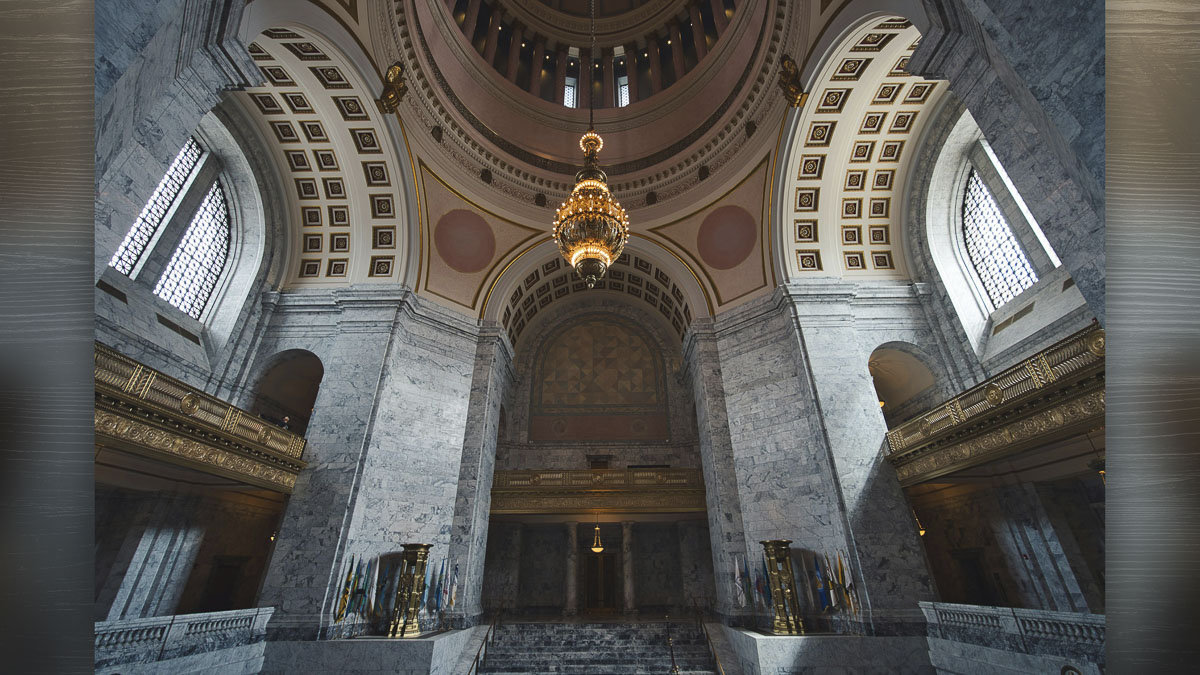
Since March 2020, the state has distributed around $10.9 billion in COVID-19 relief, but there’s not much left or time to spend it
Tim Clouser
The Center Square Washington
As federal COVID-19 pandemic aid dries up and budget deficits mount, cities across the state are asking their legislators to let them tax residents more than the 1% cap on annual property tax increases.
November and December are budget season for a lot of areas, and this year is no different, other than a loss of funding. Since March 2020, the state has distributed around $10.9 billion in COVID-19 relief, but there’s not much left or time to spend it.
The federal government requires local governments to allocate the remaining funds by the end of this year and spend it by the end of 2026, or they could lose the money. Many cities use the one-time funds for new programs and infrastructure, creating sustainability problems as spending peaks.
However, the Association of Washington Cities, which represents nearly all 281 cities and towns across the state, says the 1% limit on annual property tax increases is to blame, not spending.
“The current cap has created a structural deficit in city revenue and expenditure models, leading to artificial restrictions on the use of property taxes to fund community needs,” according to an AWC fact sheet included with its 2025 legislative priorities. “To make ends meet, cities cut services or rely upon more regressive, and less reliable, revenue sources.”
The association and its members are pushing to increase the cap to 3%. Doing so would raise more revenue, but at the expense of taxpayers. Under a 3% cap, local governments could raise their property tax rate by three times as much as they currently do each year without voter approval.
According to Trading Economics, the average U.S. inflation rate since 1914 is around 3.3%, so a 3% cap would be more in line with rising costs. Cities can already levy over the current 1% cap, but only for specific purposes approved by its voters; the same would likely stand under a new limit.
The Legislature initially passed an annual cap on property tax increases in 1973, but it was 6% before it was reduced to what it is now in 2001. The request to hike the cap again coincides with the state government expecting to overspend their record-high $72 billion budget by up to $12 billion over the next four years.
“State law requires the … general fund operating budget to be balanced over four years,” according to the Washington State Office of Financial Management, “meaning that the projected cost of maintaining programs and services cannot exceed forecast revenue over that period.”
Local governments are finding themselves in a similar situation, scraping the bottom of the jar for extra funding. At the same time, voters just rejected initiatives that would’ve repealed the state capital gains tax and climate regulations driving up the price of fuel and consumer goods.
According to Smartasset, the median home in King County, the most populous in the state, costs around $601,100, with the median annual property tax payment at $6,328.
Increasing $6,328 by 1% would mean spending around $6,391 next year, but a 3% cap could drive that up to about $6,517. However, AWC contends that increasing the cap would only result in taxpayers spending less than $20 more annually.
According to the Washington State Department of Revenue, current and unpaid property taxes totaled $17.6 billion in 2023.
“Cities have done our best for more than 20 years to serve our residents with this arbitrary 1% limit,” according to the AWC fact sheet, “but we can’t keep going without real harm to our communities.”
This report was first published by The Center Square Washington.
Also read:
- Vancouver Police arrest barricaded man
 Terry Meyers, 58, faces multiple assault charges after pointing firearm at neighbor and barricading himself.
 - 49th Legislative District Democrats share their reasons for backing state income tax at Town Hall
 Three Democrat legislators defended the new income tax affecting only those earning over $1 million annually.
 - Letter: Freeze the scope and build the bridge
 Vancouver resident calls for project discipline after 22 years of planning and nearly half a billion in costs.
 - Ekklesia Theatre presents ‘Every Brilliant Thing’
 Interactive theatre production donates 50% of ticket sales to local counseling services.
 - Opinion: Public workers’ First Amendment rights are getting attention – in Idaho, not Washington
 Idaho moves to stop public schools from collecting union dues through government payroll while Washington continues favoring unions over worker choice.
 - Opinion: Lawsuit filed against the unconstitutional income tax in Washington state
 Former Attorney General Rob McKenna and Supreme Court Justice Phil Talmadge challenge the 9.9% income tax in Klickitat Superior Court.
 - Vancouver Police investigate domestic violence homicide
 Vancouver Police Major Crimes Unit investigating after woman found dead with knife wounds on NE Oakbrook Circle.
 wpDiscuz
