



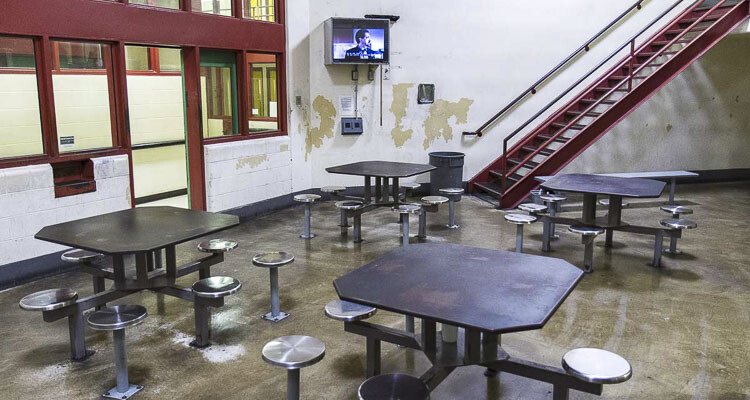
Attorney General Bob Ferguson said that ‘collecting the DNA of thousands of serious offenders will help us solve more cold cases’
TJ Martinell
The Center Square Washington
The Washington Attorney General’s Office announced it has collected the DNA of more than 2,000 violent and sex offenders through a project started four years ago.
Under state law, convicted felons and certain gross misdemeanor offenders must provide a DNA sample. The AGO works with local law enforcement to obtain DNA from offenders who owe a sample but fail to provide it, as there is no centralized system or process. According to the AGO, there are thousands of offenders are living in the state who owe a DNA sample but have not provided one.
Of the 2,061 DNA samples submitted in four years to the Combined DNA Index System, or CODIS, since the project started, 76 have resulted in a “hit” where the DNA in the database matches that of an offender.
In a press news release, Attorney General Bob Ferguson said that “collecting the DNA of thousands of serious offenders will help us solve more cold cases. This work makes communities safer and sends the message that we will use every tool at our disposal to bring justice to survivors and victims of these devastating crimes.”
This session the legislature passed House Bill 1028, which was requested by the AGO. One of its provisions sets up protocols for collecting DNA samples within a certain time period once an offender is convicted, including a court compliance hearing if it is not collected before the offender’s release. The bill was based in part on recommendations made by the AGO’s Sexual Assault Forensic Examination Advisory Group.
In a letter to judges across the state, Ferguson wrote that “my office’s efforts address only part of the problem. We also need to prevent the backlog of offenders who owe a sample from growing by ensuring that offenders submit a sample at or near the time of sentencing.”
This report was first published by The Center Square Washington.
Also read:
- WA and OR scale back I-5 Bridge ambitions as cost balloons
 A $14.4 billion price tag prompts Washington and Oregon leaders to delay portions of the I-5 bridge project and prioritize just the main spans.
 - Opinion: Washington passed an income tax to fund education, then the same majority cut education — and left $700+ million on the table
 State officials passed a new income tax to fund education, then approved over $1 billion in cuts—while forgoing $700 million in annual federal scholarships students could have received.
 - Letter: In defense of Joe Kent, a war hero
 Ozzie Gonzalez shares a firsthand account of his time working for Joe Kent, emphasizing Kent’s military background and principled stance on foreign policy controversies.
 - Opinion: ‘Washington’s majority party is panicking’
 Nancy Churchill argues that controversial state policies, including new taxes, law enforcement changes, and agency power grabs, are generating a wave of backlash in communities across Washington.
 - Letter: ‘Now we have Engineer Bob telling us the I-5 Bridge needs replacing because it is built on shifting sand with wooden structures’
 Amboy resident Thomas Schenk critiques Democrat leadership, tax policies, and the addition of light rail to the I-5 Bridge, while urging Republican voters to participate more in midterm elections.
 - Clark County Baseball presents Baseballism Kickoff this week with action all over the region
 Thirty-six teams from across the Northwest, including two state champs, are competing in free high school baseball tournaments at local turf fields in Vancouver, Camas, and Ridgefield.
 - The I-5 Bridge is vulnerable to collapse, but apparently not that vulnerable
 State leaders and Vancouver’s mayor warn about bridge safety, but insist it’s safe enough for daily use as they focus on moving forward with a costly replacement including light rail—despite decades of public resistance.
