


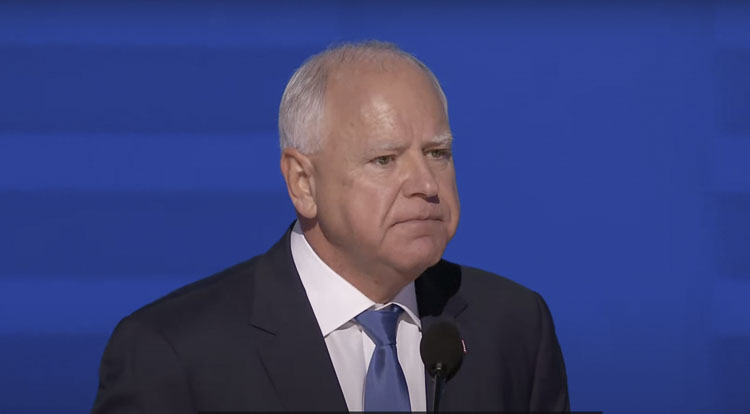
The libertarian Cato Institute released the report, which graded states by spending, revenue and taxes
Casey Harper
The Center Square
A newly released analysis of fiscal policy ranked all 50 states with Iowa Gov. Kim Reynolds’ state coming in first and Democratic Vice Presidential Nominee and Minnesota Gov. Tim Walz in last.
The libertarian Cato Institute released the report, which graded states by spending, revenue and taxes. The top ten states in the rankings starting at the top are Iowa, Nebraska, West Virginia, Arkansas, South Dakota, Montana, Hawaii, Georgia, Idaho, and Vermont.
The bottom ten states, according to the analysis, are New Mexico, Missouri, Oregon, Michigan, Wisconsin, Delaware, Washington, Maine, New York and lastly, Minnesota.
The bottom six states received a grade of “F.”
Walz’ poor rating comes just three weeks before the presidential election where he and his running mate Vice President Kamala Harris are in a nearly tied race with former President Donald Trump and his running mate, Sen. J.D. Vance, R-Ohio.
The report explains the reasoning for Walz’ low score, pointing to a series of tax hikes under his leadership as well as spending increasing by 36% since 2022, from from about $52 billion to nearly $71 billion.
From the report:
In 2019, Walz’s budget would have added ‘$2 billion more in new spending and taxes would increase by $1.3 billion to pay for it, with the rest of the money coming from an existing surplus.’ But he compromised with the legislature, and the final tax increase was about $330 million annually. Walz also pushed for higher gas taxes and higher vehicle fees to raise about $1 billion annually for transportation, but those increases were rejected.
Walz pushed for more tax hikes in 2021. He proposed adding a new individual income tax rate of 10.85 percent above the current top rate of 9.85 percent, a surtax on capital gains and dividends, and a hike to the corporate tax rate from 9.8 percent to 11.25 percent. The proposals—which would have raised about $1.6 billion annually—were rejected by the legislature…
Walz hit the middle class with HF 2887, which raised taxes and fees on vehicles and transportation. The increases included indexing the gas tax for inflation, increasing vehicle registration taxes, raising fees on deliveries, and raising sales taxes in the Twin Cities area.
This report was first published by The Center Square.

Also read:
- Opinion: Were Republican voters just sleeping during the August primary election?
 CCRP Chairman Matt Bumala says 60% of primary no-shows in the 17th and 18th districts were Republicans.
 - Opinion: WA Cares’ launch showcased care WA Cares did not provide
 Gov. Ferguson showcased a caregiving arrangement at the WA Cares launch that the program had not paid for a single day of.
 - Auditor, auditor candidate address scrutiny over job title
 Greg Kimsey says roughly 40 county employees hold the deputy county auditor designation Kelly used in his campaign.
 - Opinion: Is Mitchell Kelly misleading voters with his ‘deputy auditor’ claim?
 Clark County HR records show no position called “Deputy County Auditor” has ever existed, Anderson argues.
 - Opinion: Democrats rig the ballot to save their income tax
 Churchill argues the ballot disclosure warning voters of education cuts describes revenue never collected and not yet allocated.