



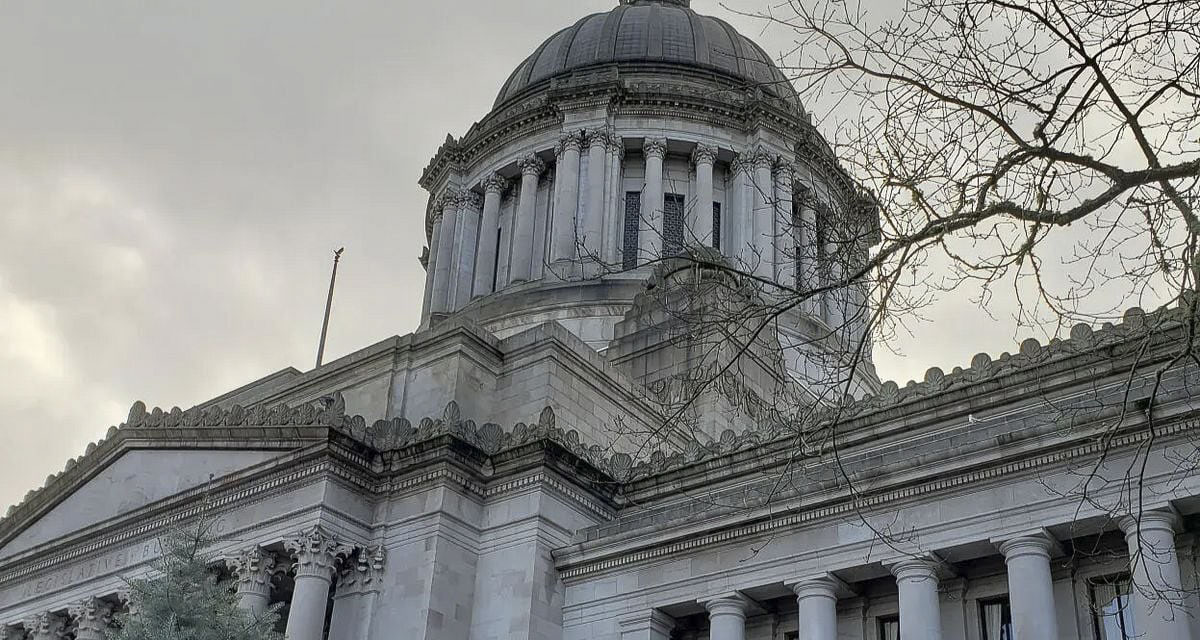
It’s expected to trigger immediate legal challenges and a major ballot initiative campaign if it becomes law
Carleen Johnson
The Center Square Washington
 See Grok’s analysis of this story
Democrats in the Washington State Senate have given final approval to an income tax bill on Wednesday night, clearing a path for it to head for the governor’s desk for his expected signature.
Senate Bill 6346 will put a nearly 10% tax on income north of $1 million a year, or combined household income above that threshold, to fund several programs, provide tax breaks for lower income families and bolster the general fund.
The measure cleared the House of Representatives on Tuesday evening following more than 24 hours of continuous debate.
Eight House Democrats joined all Republicans in opposition to the bill, which passed on a 51-46 vote.
Ahead of final debate on the Senate floor Wednesday, Republicans called for a point of order, raising objections about the scope and object of the bill.
“According to Senate Rule 66, all the things in the bill have to be relevant to the bill as it left the Senate,” said Sen. Chris Gildon, R-Puyallup, in a Wednesday evening interview with The Center Square. “The bill as it left the Senate created an income tax in 2029 and it distributed the revenue and gave a little bit of tax relief in 2029 and 2030, and it had a provision that nullified the act in its entirety if the tax was struck down as unconstitutional.”
Lt. Gov. Denny Heck in his capacity as Senate president ruled against Republicans, which Gildon said was not a huge surprise, though disappointing.
“There were actually two votes that happened,” Gildon said. “One was to either concur or not concur with the changes that were made over in the House. Of course, we voted to not concur, but they passed that anyway.”
Immediately after that came final passage and Gildon explained when they are doing concurrence, members are limited in their remarks to only address changes from the other chamber, which is why there were no passionate arguments on either side before final passage.
“So, the only thing we were allowed to talk about was the changes the House made to the Senate,” Gildon explained. “Any passionate comments against the income tax bill itself could not be made by any members. That would have been outside of the limits of debate for concurrence. We were only allowed to talk about the changes the House made.”
Gildon said Republicans don’t regret the way they went about trying to put down the bill.
“I mean, you couldn’t leave any stone unturned,” he said. “We had to use every bit of options that we had, whether it is parliamentary procedure or whatever it may be. And in this case, we felt there was an outside chance that we could make the argument that some of the changes that the House made were outside the scope of the bill. We felt we could at least make the argument … but the lieutenant governor would have been hard pressed to accept our arguments at that point.”
The final vote in the Senate was 27 to 21, with three Democrats joining all Republicans in opposition.
The bill now heads to the desk of Gov. Bob Ferguson, who has already said he will sign it into law.
It’s expected to trigger immediate legal challenges and a major ballot initiative campaign if it becomes law.
This report was first published by The Center Square Washington.

This independent analysis was created with Grok, an AI model from xAI. It is not written or edited by ClarkCountyToday.com and is provided to help readers evaluate the article’s sourcing and context.
Quick summary
The Washington State Senate gave final approval to Senate Bill 6346 on March 11, 2026, concurring with House changes after extended debate. The bill would impose a 9.9% income tax on household adjusted gross income above $1 million starting in 2028. It now heads to Gov. Bob Ferguson, whose signature is described as expected, while opponents are preparing legal challenges and a ballot initiative effort.
What Grok notices
- Tracks the bill’s procedural arc: the House vote after a marathon debate, followed by a Senate concurrence vote (27–21, as reported) to adopt the House changes and send the measure to the governor.
- Includes comments attributed to Sen. Chris Gildon about how debate was structured and what parliamentary options were used or attempted, reflecting tensions over process.
- Summarizes reported intended uses for new revenue, including a mix of programs, tax breaks, and general-fund-related priorities, highlighting that allocation is a central selling point for supporters and a target for critics.
- Notes political dynamics cited in the story, including bipartisan opposition (with three Democrats joining Republicans) and the role of a necessity clause that blocks a referendum route.
- Points to next-step verification items: the final enrolled bill text, early litigation filings, and the details of any initiative campaign plans as they emerge.
Questions worth asking
- How might revenue projections change if high-earner migration patterns shift or if capital and compensation structures respond to the new tax?
- If constitutional challenges proceed, what timelines could affect implementation between now and the 2028 start date?
- What strategy and funding would opponents need to run a successful statewide signature-gathering campaign for a ballot initiative?
- How do the final House amendments (and any compromises) change the bill compared with its earlier Senate form?
- What long-term fiscal effects could follow if state budgets become more dependent on revenue tied to a relatively small number of high-income households?
Research this topic more
- Washington State Legislature – SB 6346 final text and status
- Office of Financial Management – revenue forecasts and fiscal materials
- Washington Department of Revenue – policy and implementation guidance
- Tax Foundation – state income tax economic analysis
- Washington Secretary of State – initiative and referendum process information

Also read:
- With more state financial stress on horizon, Ferguson signs WA budget
 Washington’s latest $79.4 billion state budget taps rainy day funds, reduces child care provider payments, and defers big tax collections, setting up a deficit in 2028.
 - Gov. Ferguson signs controversial law tightening standards for WA sheriffs
 Sheriffs must now meet strict standards or risk removal, with local officials appointing replacements instead of voter recall, amid ongoing debate over constitutionality.
 - Opinion: Stalin would be proud – Clark County Socialists gathered for ‘No Kings’
 Reform Clark County’s Rob Anderson criticizes local and national groups for organizing protests that featured Auditor Greg Kimsey as a keynote, raising concerns about public trust and political partisanship.
 - Opinion: The beginning of the end of anchor babies
 Lars Larson argues the Constitution excludes children born to non-legal residents, as the Supreme Court debates birthright citizenship and public opinion data shows limited support.
 - VIDEO: Rejected – WA SOS will not process referendum to repeal income tax law
 State officials stopped Let’s Go Washington’s referendum to overturn the new tax, citing constitutional limits. Legal and political battles, including a Supreme Court challenge, are expected next.
