



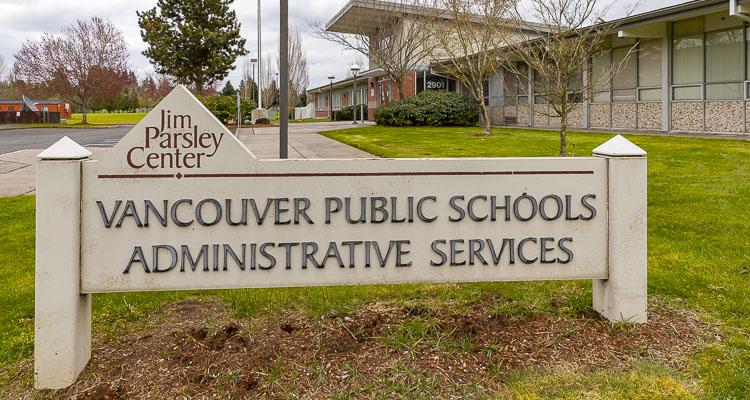
The district is requesting authorization of approximately $61.7 million for collection in 2024, $65.3 million for collection in 2025, $70 million for collection in 2026 and $75 million for collection in 2027
Vancouver Public Schools’ board of directors approved a renewal education and operations levy to appear on the Feb. 14, 2023 special election ballot. The board voted unanimously on a resolution at a Nov. 15 special meeting. The current levies will expire on Dec. 31, 2023.
If passed by voters, the renewal levy for education and operations would provide funding for schools for four years: 2024, 2025, 2026 and 2027. A local levy has been in place in Vancouver Public Schools for almost 60 years, since 1964.
District officials state that the local levy is necessary to make up for ongoing gaps in financial support for services and priorities necessary to deliver on the district’s commitment to offer every student a quality education, safety, and resources for well-being.
Local levy dollars make up about 12.5 percent of the district’s general fund budget. The education and operations levy helps to pay for the many things necessary to make learning possible including classroom supplies; textbooks and equipment; school safety and security; maintenance of buildings and grounds; teachers and support staff; classroom programs; extended day/year learning; educational supports for students with special needs; extracurricular activities and intramural sports; and utilities, insurance and fuel.
“We have a commitment to offer each student a quality education, safety, and resources for well-being. We take our responsibility to our students, their families, and of our community seriously. This community has provided tremendous support for public schools which we greatly appreciate. This support enables us to provide the additional resources and services that help us achieve our goals of healthy students and schools – who in turn really strengthen our Vancouver community,” said Superintendent Jeff Snell.
The district is requesting authorization of approximately $61.7 million for collection in 2024, $65.3 million for collection in 2025, $70 million for collection in 2026 and $75 million for collection in 2027.
The renewal levy for education and operations rate will be $1.99 per $1,000 of assessed property value. Voters last approved a supplemental levy in 2020. The combined local levy rate was $2.01 per $1,000 of assessed property value the first year of collection. This renewal levy replaces both expiring levies. Future tax rates are estimates and fluctuate due to changes in property assessments and area growth.
More information is available on the Vancouver Public Schools website.
Information provided by Vancouver Public Schools.
Also read:
- Obituary for Lucille ‘Erma’ Christenson Madore – April 22,1924-March 13, 2026
 Known for her love of music and family, Lucille ‘Erma’ Christenson Madore lived through nearly 102 years and leaves a large, grateful legacy in Vancouver.
 - Fiscal fallout: $375 million bond debt indirectly funding operating budget
 Shifting $375 million from a loan fund impacts local infrastructure as Washington state covers operating costs with bond debt, prompting concern among officials and advocacy groups.
 - Lawsuit aims to block new eligibility requirements for WA sheriffs
 Four sheriffs are suing over a state law that sets new eligibility rules, arguing it undermines voter authority by allowing removal for certification issues.
 - Opinion: The growing gap between public voice and political power
 Todd Myers describes how large-scale protest and sign-ins often fail to sway state leaders, and argues authentic influence is most likely found through local action.
 - City of Battle Ground seeks applicants for Salary Commission vacancy
 Battle Ground seeks a resident to join its independent Salary Commission, which reviews compensation and health benefits for local elected officials through 2027.
 - Opinion: Who is winning the race for affordable power?
 Hydroelectric power keeps Washington competitive, but new laws and carbon pricing are driving up electricity costs for residents each year.
 - Vancouver Fire Department assists with Columbia River Marina fire response
 Vancouver Fire Department joined Clark-Cowlitz and Scappoose crews to help fight a vessel and dock fire at Goble Marina, assisting in river operations where one boat sank and another was partially submerged.
 wpDiscuz
