



🎧 Vancouver Police Guild: Confusion Deepens After Chief’s Statement
Police officers feel their ability to enforce laws is being restricted, and the president of the Vancouver Police Officers Guild says the initial memorandum and the follow-up statements from city officials have added to the confusion
Paul Valencia
Clark County Today
The president of the Vancouver Police Officers Guild understands that the chief of police is working to find clarity in a difficult situation, but his officers are still frustrated with the memorandum that is changing the way laws are enforced in the city.
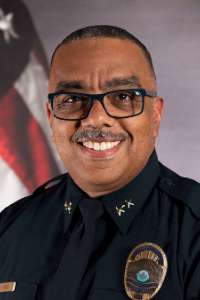
Troy Price
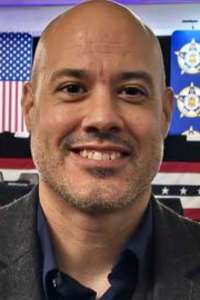
Jeff Anaya
“They are confused and obviously upset,” Jeff Anaya told Clark County Today on Monday morning, a few days after Vancouver Police Chief Troy Price issued a statement that the police will still respond to take reports for lower-level crimes.
Can the police make arrests or issue citations for shoplifting? For public drug use? For trespassing?
No. And yes. It depends. And that is making work life frustrating for the rank-and-file officers. Anaya said the guild understood the initial memorandum dated July 17 as no arrests or citations without extenuating circumstances.
“Should we even go?” Anaya asked. “What kind of legal liability are we opening ourselves up to? We have to look the citizens in the eye and tell them there is nothing we can do. ‘This is my job, and I’m not able to do it.’ And I have to explain that to them.”
On Friday, Price sent a release addressed to Vancouver residents and business owners:
“Vancouver Police Officers will continue to respond to and take reports for lower-level crimes — which include theft, criminal trespass, possession of controlled substances, and using a controlled substance in a public space, among others. Under the current process, Officers will refer these cases to the City Attorney’s Office for prosecution. Officers will also cite or make an arrest of individuals as permitted.”
Anaya appreciates that the chief is in a tough position. It was the City Attorney’s Office request for the change, to limit arrests for some criminal activity. And last week, the city manager acknowledged that the memorandum was in response to the lack of public defenders, and by making this move, there would be a priority placed on prosecuting higher-level crimes.
“VPOG acknowledges that the Office of the Chief is working to gain better clarity and understanding of a very uncertain and confusing situation,” Anaya said.
Still, Anaya said, there was a better way to go about this situation. He noted there is already a mechanism in place for legal proceedings to be delayed after arrests are made. He believes that charges can be dismissed without prejudice, meaning charges can be reinstated at a later date.
It is imperative, though, that arrests are made, so that accused criminals see an immediate consequence.
“Citizens are going to deal with repeat shoplifters if we can’t take them to jail. Citizens are going to deal with repeat trespassers if we can’t take them to jail,” Anaya said.
For criminals, Anaya wondered where would the motivation to stop stealing come from if they know they won’t be detained.
It will also be difficult for officers to find evidence under the current memorandum. Anaya said that if someone were to steal something and an officer places that person under arrest, the officer can search the person’s possessions. A backpack, for example. After an arrest, an officer can search a backpack for the stolen items.
“Without an arrest, I can’t go into their backpack,” Anaya said.
A similar situation could occur with public drug use. An officer could not search for illegal drugs without making an arrest, Anaya said.
“In this conundrum, what do we do? What level of force are we allowed to use? If we know there is no arrest ability and the city manager is saying these are low-level crimes, where are we?” Anaya asked. “How far can we push that to contain them?”
Furthermore, while the chief said in Friday’s statement that officers can cite or make arrests as permitted, Anaya said the computer system has made that difficult. Anaya said the computer software has changed, allowing only for referrals, not citations, for those lower-level crimes. The jail, he said, will not accept anyone with a referral.
Anaya added that the city councilors he has talked to about this did not know about the memorandum until the guild went public with it last week. Anaya said he learned that this was a months-long conversation between the City Attorney’s Office and the city manager.
“You would have thought they would have brought law enforcement in,” Anaya said. “What does an arrest look like? What does a citation look like? It’s a complete misunderstanding on how this affects law enforcement.”
The Vancouver City Council is meeting Monday night (July 27) at 6:30 p.m. This issue is not on the agenda. However, it could come up late in the meeting during Communications, when councilors, the mayor, and the city manager are given the opportunity to speak on any matter.
This will be the first council meeting since the guild went public with the memorandum.
Here is a timeline of events:
July 17: Chief Price issues memorandum to officers regarding low-level crimes.
July 21: Vancouver Police Officers Guild issues press release, questioning the new direction.
July 22: Police guild president offers more insight into the situation.
July 23: City manager says the move is about prioritizing public safety.
July 24: Clark County Sheriff John Horch responds.
Also read:
- Cost to battle 20 wildfires in WA has topped $200M
 Twenty wildfires have cost Washington $207M in one month, more than two-thirds of what DNR spent all last fiscal year.
 - Former State Rep. Liz Pike provides update on husband Neil Cahoon
 Neil Cahoon, a Camas resident, has undergone multiple surgeries including five on Aug. 15 after the Aug. 10 crash near La Center’s Daybreak Airport.
 - Auditor, auditor candidate address scrutiny over job title
 Greg Kimsey says roughly 40 county employees hold the deputy county auditor designation Kelly used in his campaign.
 - Ridgefield Waterfront plans meet resistance: Community voices weigh in
 Residents opposing Ridgefield’s waterfront development cite scale, wildlife impact, and inadequate boat launch parking as key concerns.
 - Gunfire at Hockinson Park leaves one dead; BGHS graduate, UW baseball signee charged with manslaughter
 Trent Richardson, 18, died from a gunshot wound at Hockinson Meadows Community Park; James Gill III charged with second-degree manslaughter.
 wpDiscuz