



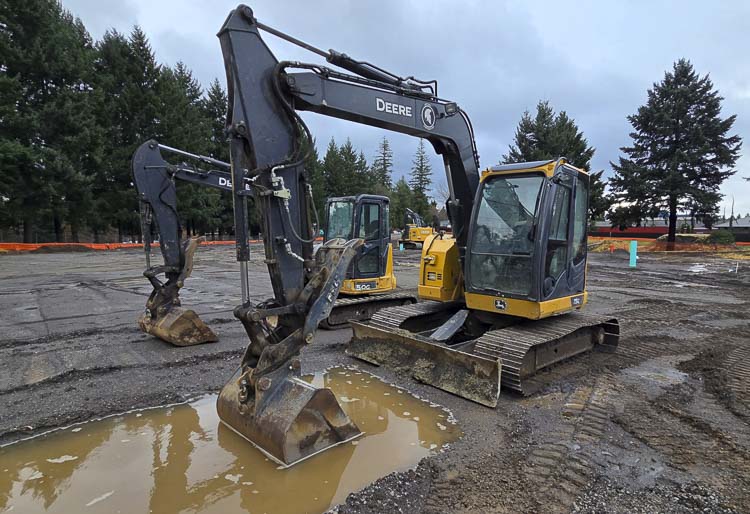
The Bridge Shelter, on the site that was previously home to Naydenov Gymnastics in the VanMall neighborhood, will have 120 beds and is scheduled to open in the fall of 2026
Paul Valencia
Clark County Today
 See Grok’s analysis of this story
The rain held off, but there was plenty of mud on the grounds of what will become the City of Vancouver’s Bridge Shelter.
Perfect, actually.
Because on Wednesday, the city hosted a “Muddy Boots Tour,” showing the progress and the first look at construction plans and how the campus will serve the homeless.

Policymakers, donors, and partners toured the site, as well as members of the media. Renderings of what the shelter will look like were on display inside the temporary construction office.
The Bridge Shelter will be on the property where the old Naydenov Gymnasium was located, in the VanMall neighborhood just west of I-205.
“The city and the county have worked to increase housing that is affordable, but housing takes a while to build,” said Jamie Spinelli, homeless response manager for the city. “We need something that is urgent.
Today, there is a lot of mud, and a clearing has been made at 5313 NE 94th Ave., in Vancouver.
Construction vehicles and tools are on the grounds, preparing to lay the foundation. The Bridge Shelter is expected to open in the fall of 2026.
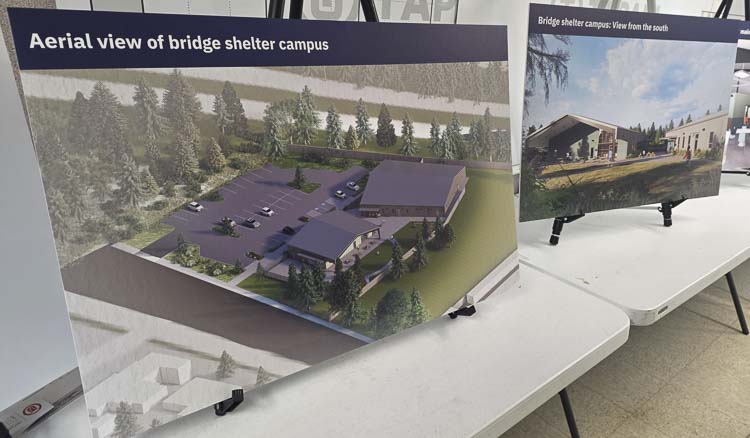
The shelter will have 120 beds, plus a full-size kitchen. It will also include space for support systems for residents, such as treatment for substance abuse.
The Bridge Shelter is simply an appropriate term, Spinelli said. The facility and the support system surrounding it is “intended to bridge someone from homelessness to housing.”
The Muddy Boots Tour was a way for the city to thank supporters of the shelter
“We want to help the community see we are making progress on this project,” said Kevin Kearns, capital projects manager for the city. “This is a way to get people together and celebrate this moment and all the support we had from the community and the county in making this happen.”
Organizers thanked PeaceHealth, which contributed funding to help build the commercial-grade kitchen at the shelter campus. They also thanked the Ed and Dollie Lynch Fund, Community Foundation of Southwest Washington for funding position with the Homeless Assistance and Resource Team (HART) to provide outreach and help guide people to the shelter once it opens.
The mayor of Vancouver and three council members were also there Wednesday for the tour.
“This will be the shelter for 120 individuals who need to leave their tents and come inside and work on their path to housing,” Mayor Anne McEnerny-Ogle said.

This independent analysis was created with Grok, an AI model from xAI. It is not written or edited by ClarkCountyToday.com and is provided to help readers evaluate the article’s sourcing and context.
Quick summary
The City of Vancouver hosted a “Muddy Boots Tour” of the future Bridge Shelter site in the VanMall neighborhood, showcasing early construction progress on a 120‑bed facility scheduled to open in fall 2026. The shelter, funded in part by community donors and designed with on‑site services, is described as a bridge from homelessness to permanent housing.
What Grok notices
- Clearly describes the shelter’s purpose, size, and anticipated opening date, placing it within Vancouver’s broader homelessness response.
- Notes key design elements such as the 120 beds, commercial kitchen, and planned space for on‑site substance‑use treatment and other services.
- Highlights participation by community donors and project partners, underscoring that funding involves both public and private contributions.
- Reflects the perspective of city officials and partners who are optimistic about the shelter’s potential to connect residents to longer‑term housing.
- Does not detail projected operating costs, staffing levels, or specific service‑provider contracts; readers may wish to review budget documents and agreements for those elements.
Questions worth asking
- How will the Bridge Shelter coordinate referrals and case management with existing low‑barrier shelters and permanent‑supportive housing in Vancouver?
- What benchmarks will the city use to measure whether residents are successfully moving from the shelter into stable housing?
- How might the shelter’s VanMall location affect neighborhood feedback, safety perceptions, and access to transit, healthcare, and employment?
- What role, if any, will peer‑support workers or staff with lived experience of homelessness play in day‑to‑day operations?
- How are regional partners planning to sustain operating funding after the shelter opens, and what share will come from local, state, federal, and philanthropic sources?
Research this topic more
Also read:
- 49th Legislative District Democrats share their reasons for backing state income tax at Town Hall
 Three Democrat legislators defended the new income tax affecting only those earning over $1 million annually.
 - Letter: Freeze the scope and build the bridge
 Vancouver resident calls for project discipline after 22 years of planning and nearly half a billion in costs.
 - Ekklesia Theatre presents ‘Every Brilliant Thing’
 Interactive theatre production donates 50% of ticket sales to local counseling services.
 - Opinion: Public workers’ First Amendment rights are getting attention – in Idaho, not Washington
 Idaho moves to stop public schools from collecting union dues through government payroll while Washington continues favoring unions over worker choice.
 - Opinion: Lawsuit filed against the unconstitutional income tax in Washington state
 Former Attorney General Rob McKenna and Supreme Court Justice Phil Talmadge challenge the 9.9% income tax in Klickitat Superior Court.
 - Vancouver Police investigate domestic violence homicide
 Vancouver Police Major Crimes Unit investigating after woman found dead with knife wounds on NE Oakbrook Circle.
 - Letter: ‘Oregon and Washington aren’t refusing to clean their rolls — they’re contesting federal jurisdiction and timing’
 Camas resident challenges Lars Larson’s fraud claims, explaining legal disputes over federal jurisdiction.
