



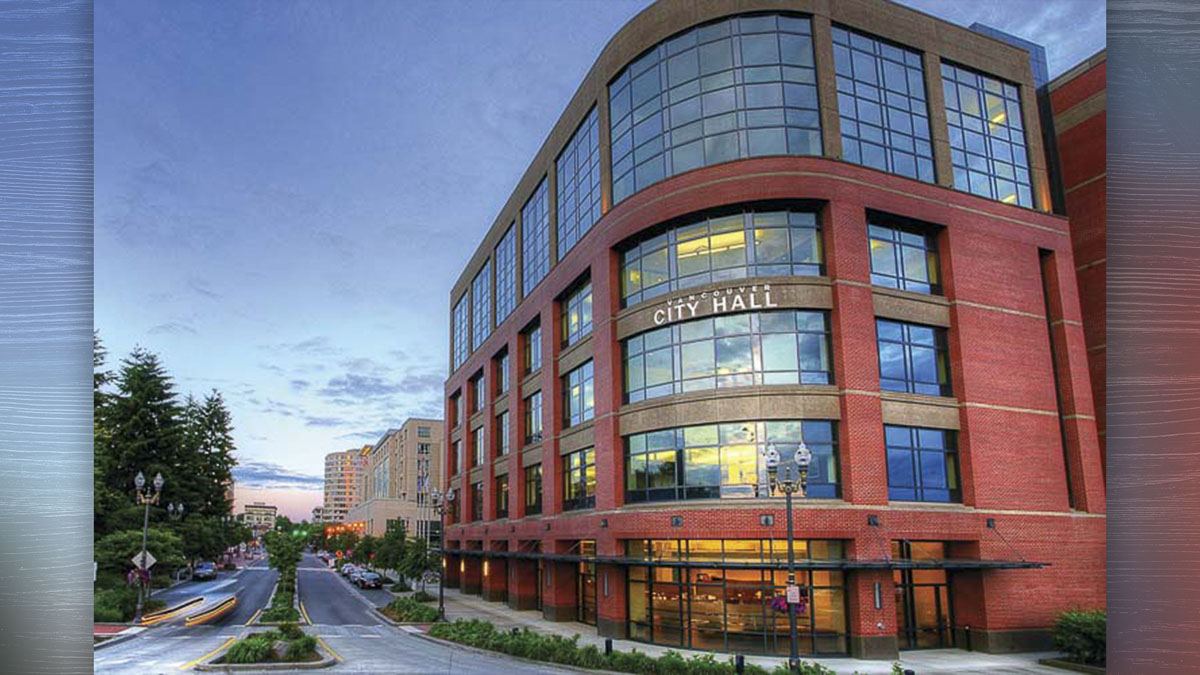
The budget – approximately $2.1 billion in total expenditures across all funds for the biennium – includes $1.5 billion in operating funds and $0.6 billion in capital funds
VANCOUVER – The Vancouver City Council voted to adopt the city’s 2025-26 biennial budget at their Dec. 2 meeting.
The balanced budget – approximately $2.1 billion in total expenditures across all funds for the biennium – includes $1.5 billion in operating funds and $0.6 billion in capital funds.
“Using a strategic mix of expenditure reductions and new revenue, we successfully closed the $43 million gap we faced for the upcoming biennium,” said City Manager Lon Pluckhahn. “The budget passed reflects current community priorities and the expectations for Vancouver’s future.”
The budget was developed with community input from engagement touchpoints, including a community survey, an online budget prioritization tool and various community meetings.
The budget included targeted reductions, enhancement of ongoing revenues, use of available cash resources, and several new revenue sources to support public safety, economic development, parks, transportation, the arts and the homelessness crisis. Review the itemized list of cuts, projects, and revenue; highlights include:
- New revenue through a new Business and Occupation Tax on retail sales slated for 2026 to help fund the capital and operating costs of a new bridge shelter in Vancouver
- A Cultural Access Sales Tax to support school student access to cultural events and an investment in the Vancouver Culture and Arts Program to support arts programming in Vancouver
- $109.9 million investment in City streets
- Continuation of four major economic development projects through the next biennium to modernize different parts of the City, including the Heights, Section 30, Fourth Plain and Waterfront Gateway
- Citywide trail program includes building a trail segment connecting Burnt Bridge Creek to the existing trail along 18th Street to allow for citywide movement of pedestrians and bikes
- One-time appropriations for select community non-profits, including the Children’s Justice Center, Vancouver Watershed Alliance, and Columbia Springs
Access the Adopted Budget, a map of capital projects, and more is on the City’s website at cityofvancouver.us/budget. The adopted budget will take effect on Jan. 1, 2025.
There will be additional communication later regarding the implementation of new revenue sources and applicable program/service changes.
Information provided by the city of Vancouver.
Also read:
- State Representatives McClintock and Ley answer questions at town hall in Battle Ground
 Residents voiced rising concerns about property taxes, school funding debates, the impact of new income tax legislation, and major costs tied to the Interstate Bridge plan.
 - As Washington gets an income tax, the fight to overturn it begins
 Opponents are organizing lawsuits and potential ballot measures to challenge the new 9.9% income tax on Washington households earning over $1 million.
 - Battle Ground Police arrest suspect in fatal 2025 crash
 Laboratory results from a blood sample collected in 2025 provided probable cause for police to arrest Michael T. Smith, more than a year after the Battle Ground crash.
 - Vancouver Police seeking missing person
 Vancouver Police are searching for 62-year-old Carrie Ann Winters, who was last known to be near Frenchman’s Bar in west Vancouver. She has distinctive tattoos.
 - VIDEO: WA diesel hits record $6.53, crushing truckers and school budgets
 With diesel nearing $6.53 per gallon in Washington, trucking businesses and school districts now confront sharply higher fuel expenses affecting budgets and workers.
 - WA’s status solidifies as one of the most expensive places in US
 A new study shows Washington outpaces most states on cost of living, with metrics revealing a sharp rise in daily expenses and major metro areas ranking among the nation’s most expensive.
 - Opinion: Someone explain the Democrat Party to me please
 Lars Larson criticizes Democrat politicians for shutdown threats, Homeland Security funding refusals, and positions on election laws, housing, and gun rights.
