


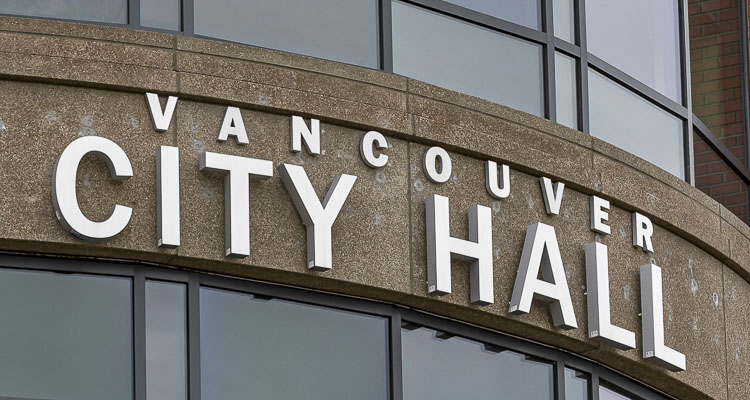
The $1.7 billion two-year budget includes $1.37 billion in the operating budget and $0.37 billion in the capital budget
VANCOUVER – The Vancouver City Council adopted the city’s 2023-2024 biennial budget at its Monday (Nov. 21) meeting. The balanced $1.7 billion two-year budget – built around the city’s universal policy themes of safety, equity and climate action – includes $1.37 billion in the operating budget and $0.37 billion in the capital budget.
The budget reflects the City Council’s policy priorities for this biennium, which include Improving Community Safety and Wellbeing, Reducing Carbon Footprint, Improving Equity and Inclusion, Growing Economic Opportunity, and Exceptional Public Spaces and Places.
“This budget echoes the values and vision the city holds for the entire community,” said Vancouver Mayor Anne McEnerny-Ogle. “It supports the city’s aspirations to improve livability, foster safety and wellbeing, and enhance our sense of community.”
The budget was shaped with the help of community input that came from a variety of sources and groups, including analysis associated with the Stronger Vancouver initiative. Capital and program investments were also informed by Vancouver’s newly developed Social Equity Index.
“The budget reflects the priorities of both the City Council and the community,” said City Manager Eric Holmes. “Through it, we’re addressing immediate needs and issues while moving transformative initiatives that focus on the future of Vancouver.”
The budget includes staffing increases in multiple areas across the city including significant additions aimed at enhancing public safety. It improves capacity to deliver a robust capital program and to advance the city’s positive direction towards achieving its leading-edge climate action goals. It also builds on the work previously completed through Stronger Vancouver, created in 2016 to help enhance the city’s economic prosperity and livability.
Highlights from the adopted budget include:
- An increase in staffing by 110.35 FTEs. More than half are for police and fire services (52 in police and fire and 10 in departments that support public safety). These public safety positions are directly funded by recently voter-approved property and sales tax increases from Proposition 2 and Proposition 11 respectively.
- Funding for efforts to respond to homelessness, including one new Safe Park, two additional Safe Stay Communities and expansion of the Homeless Assistance and Resources Team.
- Significant capital investments into water, wastewater and sewer infrastructure systems, building resiliency into the future, supported by a proposed aggregate 6% annual increase on city utility rates (sewer, water, drainage and garbage).
- New and updated parks in historically underserved areas of the community, activities for pre-teens and teenagers, and new parks to address community growth.
- A new citywide trail program to build connections between existing trails and improve mobility by all forms of non-vehicular transportation.
- A proactive outreach and education program to small and historically disadvantaged businesses, including those owned by minorities and women, helping them to become successful in contracting with municipal and county governments.
- Key strategic projects that will play a transformative role in Vancouver’s growth, including projects in the Fourth Plain Corridor, the Heights, Section 30, Waterfront Gateway, and a $64 million investment in city streets.
- Updating the business license fee and business license surcharge to generate additional funding for transportation, public safety, economic development and park improvements.
- A 0.1% sales tax approved by the Transportation Benefits District Board to fund and implement the Complete Streets policy.
The final budget document, map of capital projects, budget dashboard and additional information will be available at www.cityofvancouver.us/budget beginning the week of Nov. 28.
Information provided by city of Vancouver.
Also read:
- Opinion: Were Republican voters just sleeping during the August primary election?
 CCRP Chairman Matt Bumala says 60% of primary no-shows in the 17th and 18th districts were Republicans.
 - High school football: New coach prepares for long-term success at Prairie High School
 James Young-Lewis, a Clark County native who graduated from Evergreen in 2009, became Prairie’s head coach in May after working as an assistant coach across various programs since 2015, joining Prairie’s staff in 2024.
 - Cost to battle 20 wildfires in WA has topped $200M
 Twenty wildfires have cost Washington $207M in one month, more than two-thirds of what DNR spent all last fiscal year.
 - Opinion: WA Cares’ launch showcased care WA Cares did not provide
 Gov. Ferguson showcased a caregiving arrangement at the WA Cares launch that the program had not paid for a single day of.
 - Former State Rep. Liz Pike provides update on husband Neil Cahoon
 Neil Cahoon, a Camas resident, has undergone multiple surgeries including five on Aug. 15 after the Aug. 10 crash near La Center’s Daybreak Airport.
 - Opinion: Portland’s War on Cars Part 4 – A smarter automobile strategy to end gridlock
 O’Toole argues fuel wasted in Portland-area congestion has sextupled since 1982, generating 250,000 tons of extra greenhouse gases annually.
 - $1,000 first prize for Camas Plein Air Art Event honoring Marquita Call on Sept. 26
 Plein air artists compete Sept. 26 in Camas for $1,000 first prize honoring gallery founder Marquita Call.
 wpDiscuz