


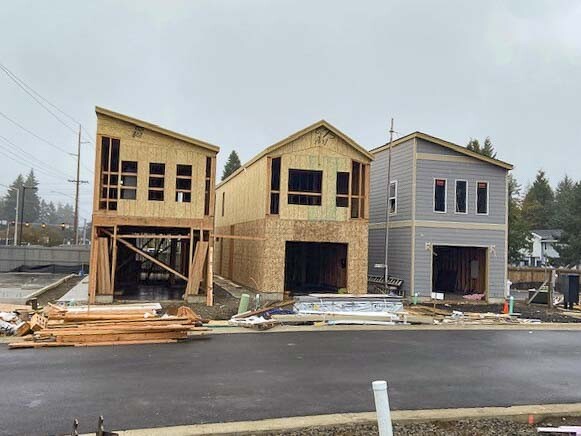
The funding is expected to help create nearly 230 units of essential housing in the city
VANCOUVER – The city of Vancouver has been awarded $3,487,233 in state grants for four affordable housing projects, the Washington Department of Commerce announced on Tuesday. The funding is expected to help create nearly 230 units of essential housing in the city.
The breakdown of grant amounts for each project is as follows:
Datepark Residence – 72 units – $2 million
Datepark Residence will be a 72-unit apartment complex that will offer affordable housing to households experiencing low income in Vancouver. The project will consist of studio, one-bedroom and two-bedroom units in the Harney Heights neighborhood of East Vancouver.
Parkhouse Vista – 20 3-bedroom homes for homeownership opportunities – $54,488
Parkhouse Vista, will provide home ownership opportunities to low-income homebuyers through a community land trust organized by Proud Ground and Evergreen Habitat for Humanity.
Lincoln Place II – 40 units – $492,299
Lincoln Place II is a planned permanent supportive housing development in the Esther Short neighborhood. The project will consist of 40 studio units and onsite, wraparound services for people exiting homelessness.
Waterfront Gateway – 95 units – $940,486
Waterfront Gateway will be a 95-unit housing development located in downtown Vancouver, including a mix of studio, one, two and three-bedroom units for households experiencing low income. The project is a part of the city’s Waterfront Gateway master plan that will provide greater connectivity between the Waterfront and the historic downtown core.
The grants are part of the Department of Commerce’s Connecting Housing to Infrastructure Program (CHIP), which granted a total of $47 million to 43 projects throughout the state. The program’s goal is to help build more housing units more quickly by covering upfront costs of infrastructure and connecting housing to municipal systems.
“These CHIP awards will lower the cost to develop a wide range of much-needed housing in our market,” said Patrick Quinton, City Economic Development director. “The funding supports housing development with wraparound services for tenants that have very low income and need extra supports after exiting homelessness, all the way to affordable homeownership development for first-time homebuyers that will be able to start building generational wealth.”
The projects will provide much-needed housing, contribute to Vancouver’s economic growth and stability, and help create a more inclusive and equitable community.
For more information on the Connecting Housing to Infrastructure Program, please visit the Department of Commerce’s website.
Information provided by the city of Vancouver.
Also read:
- Opinion: Were Republican voters just sleeping during the August primary election?
 CCRP Chairman Matt Bumala says 60% of primary no-shows in the 17th and 18th districts were Republicans.
 - High school football: New coach prepares for long-term success at Prairie High School
 James Young-Lewis, a Clark County native who graduated from Evergreen in 2009, became Prairie’s head coach in May after working as an assistant coach across various programs since 2015, joining Prairie’s staff in 2024.
 - Cost to battle 20 wildfires in WA has topped $200M
 Twenty wildfires have cost Washington $207M in one month, more than two-thirds of what DNR spent all last fiscal year.
 - Opinion: WA Cares’ launch showcased care WA Cares did not provide
 Gov. Ferguson showcased a caregiving arrangement at the WA Cares launch that the program had not paid for a single day of.
 - Former State Rep. Liz Pike provides update on husband Neil Cahoon
 Neil Cahoon, a Camas resident, has undergone multiple surgeries including five on Aug. 15 after the Aug. 10 crash near La Center’s Daybreak Airport.
 - Opinion: Portland’s War on Cars Part 4 – A smarter automobile strategy to end gridlock
 O’Toole argues fuel wasted in Portland-area congestion has sextupled since 1982, generating 250,000 tons of extra greenhouse gases annually.
 - $1,000 first prize for Camas Plein Air Art Event honoring Marquita Call on Sept. 26
 Plein air artists compete Sept. 26 in Camas for $1,000 first prize honoring gallery founder Marquita Call.
 wpDiscuz