



Vancouver is the sole recipient of CCA funds specifically designated for Multifamily Building Efficiency Grants
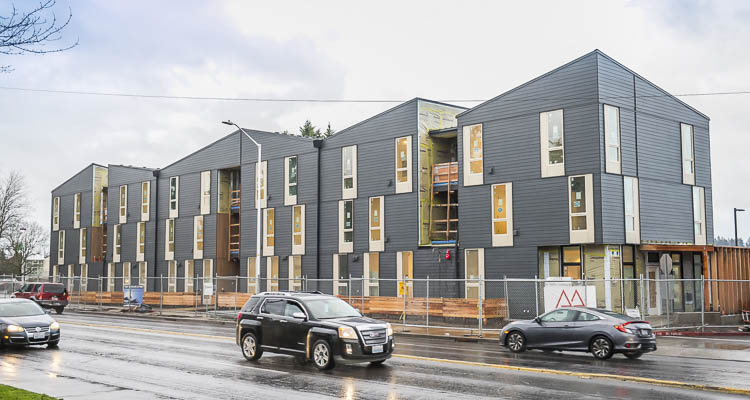
VANCOUVER – The city of Vancouver has been awarded a $1,030,000 grant from the Washington State Department of Commerce for energy efficiency upgrades in affordable housing. The grant is part of the Multifamily Building Efficiency Grant program and is allocated under the Climate Commitment Act (CCA). Vancouver is the sole recipient of CCA funds specifically designated for Multifamily Building Efficiency Grants.
Sen. Annette Cleveland (D-Vancouver) championed this project, which aims to implement energy efficiency retrofits at six affordable housing locations managed by the Vancouver Housing Authority (VHA). These retrofits will advance the state’s goal of carbon pollution reduction and align with Vancouver’s adopted Climate Action Framework, focusing on high-efficiency appliance upgrades, siding repair, window replacement for increased insulation, air sealing and heat pump installations.
“We are grateful for this significant grant award from the State. This funding not only demonstrates the state’s recognition of the critical intersection between housing and climate resilience, but also underscores our shared commitment to creating safe, sustainable communities for all residents,” said Samantha Whitley, Vancouver Housing program manager. “These upgrades, to be implemented through our housing partner, VHA, will not only enhance the resilience of our housing stock but also improve the quality of life for those we serve, ensuring that they are better prepared to withstand the challenges of a changing climate.”
The project also serves to enhance climate resilience and equity by safeguarding vulnerable residents, particularly seniors and individuals with disabilities, from extreme heat waves and wildfire smoke. The installation of energy-efficient heat pump systems, which provide both air conditioning and heat, will mitigate health risks associated with climate hazards such as extreme heat.
”VHA was very excited to learn that the city was awarded funding. We are working to establish benchmarks to reduce our impact on the environment and this opportunity gets us one step closer to our climate goals,” said Victor Caesar, chief real estate officer at VHA.
Funding for CCA-supported projects is set to be distributed starting Jan. 2025, action that is contingent on the outcome of Initiative 2117 on the November 2024 ballot regarding the Climate Commitment Act.
Information provided by the city of Vancouver.
Also read:
- Former legislator and County Chair Eileen Quiring O’Brien announces candidacy for Clark County auditor
 Former Clark County Chair Eileen Quiring O’Brien has announced her candidacy for county auditor following Greg Kimsey’s decision not to seek re-election.
 - Vancouver Police investigate traffic collision
 Vancouver Police are investigating a motorcycle and vehicle collision that left the rider with life-threatening injuries.
 - WA Democrats push for mid-decade redraw of congressional maps
 Washington Democrats have introduced a constitutional amendment that would allow congressional redistricting outside the normal post-census cycle, drawing sharp partisan debate.
 - Oregon Gov. Kotek calls for repeal of transportation funding package she championed
 Oregon Gov. Tina Kotek is urging lawmakers to repeal a transportation funding package she previously supported after a referendum effort halted key tax increases.
 - Opinion: State CO2 report shows 86% of Washington’s claimed climate benefits are probably fake
 Todd Myers argues a state climate report significantly overstates emissions reductions and raises concerns about data accuracy and accountability in Washington’s climate spending.
 - OnPoint Community Credit Union expands to Ridgefield
 OnPoint Community Credit Union announced a new Ridgefield branch opening Jan. 12, expanding its Clark County presence and supporting local nonprofits.
 - County Council votes to increase sales tax for yet-to-be-finalized plan for affordable housing
 Clark County Council approved a sales tax increase intended for housing-related uses despite concerns from one councilor that no final spending plan is in place.

So what does that work out to per unit or sq/ft? How does “affordable” get used? How much money will be saved on utility bills? Are there maintenance and upkeep costs for the modifications made?