

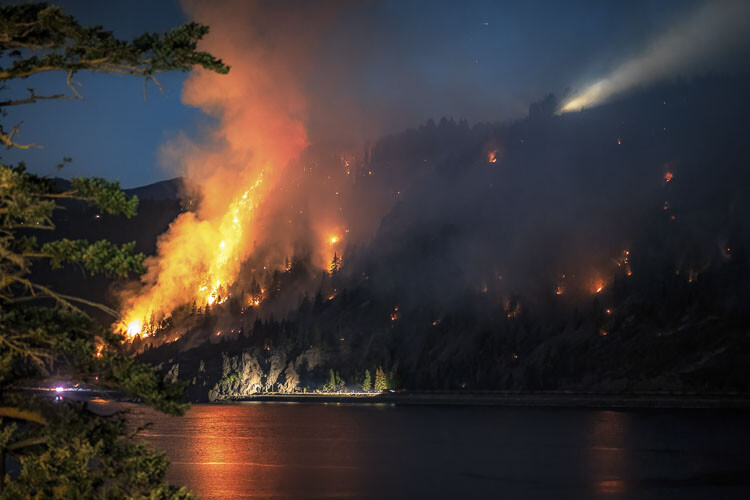
The fire along the Columbia River in Skamania County grew to 556 acres and was just 5 percent contained by Thursday
Logan Washburn
The Center Square Washington
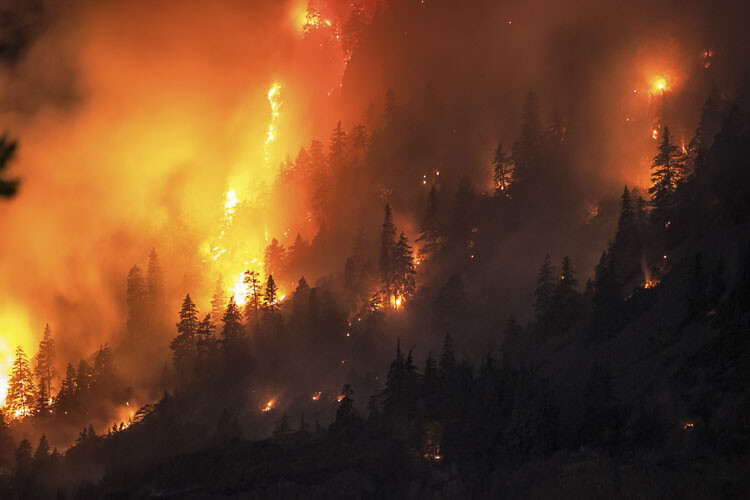
Washington state’s Tunnel 5 wildfire has burned more than 550 acres in less than a week.
“Boy, has it been a week,” said Skamania County Sheriff Summer Scheyer at a Wednesday community meeting. “It was absolutely incredible to see the fire response and how quickly it all fell together.”
The fire along the Columbia River in Skamania County grew to 556 acres and was 5% contained by Thursday, according to the National Wildfire Coordinating Group’s Inciweb database. More than 460 personnel are fighting the fire, and firefighters are preparing for higher winds.
“Firefighters worked to prepare structures in the western portion of the fire in anticipation of increased winds over the next couple days,” reads a fire update. “On the eastern fire edge, fire crews will continue to improve containment lines and construct hoselays to deliver water.”
On Thursday, officials changed Skamania County evacuation orders, with a reduced Level 3 evacuation still around the fire and Level 2 evacuations on its western and eastern edges.
In a Level 1 evacuation, residents should be aware of the danger that exists in their area and monitor local media outlets for information. A Level 2 evacuation indicates a high probability of a need to evacuate. A Level 3 evacuation means danger to the area is current or imminent, and immediate evacuation is advised.
The Skamania County Sheriff’s Office will post updates on its Facebook page. An evacuation center has been set up at the Skamania County Fairgrounds in Stevenson at 710 SW Rock Creek Drive.
Washington State Route 14 is closed from mile markers 56 to 65 due to fire activity, according to the update. Officials also set a temporary flight restriction above the fire. Than includes drones, which are never allowed to fly over wildfires because they could impede first responders.
“Travelers should use caution,” the update reads. “Recreationalists and boaters in the Columbia River in this area should use extreme caution and avoid areas where aircraft are dipping in the river.”
Helicopters, “scooper planes” and “fire boss” air tankers will continue to cool and slow the fire spread. Washington resources fighting the fire include 39 engines, 14 water tenders, 10 crews, six dozers and five helicopters. Responders in “initial attack” teams are prepared to help local agencies.
Scheyer said the fire had escalated to a “Type 2” incident requiring more resources.
“The increase in firefighters came within hours,” she said. “They’re bringing out more state resources.”
The fire started more than 2 miles west of White Salmon on Sunday. Firefighters responded just before 11:30 a.m. that saw hot and windy conditions on “extreme terrain” cause the fire to spread rapidly during the afternoon.
The fire’s cause is currently under investigation.
“I know there are no words to comfort you,” Scheyer said. “We have your backs, we will do everything in our power to help.”
Washington spent $83 million on average on fire suppression annually from 2015 to 2019, according to Oregon Public Broadcasting. In 2021, it dedicated $500 million over eight years to fire preparedness and prevention.
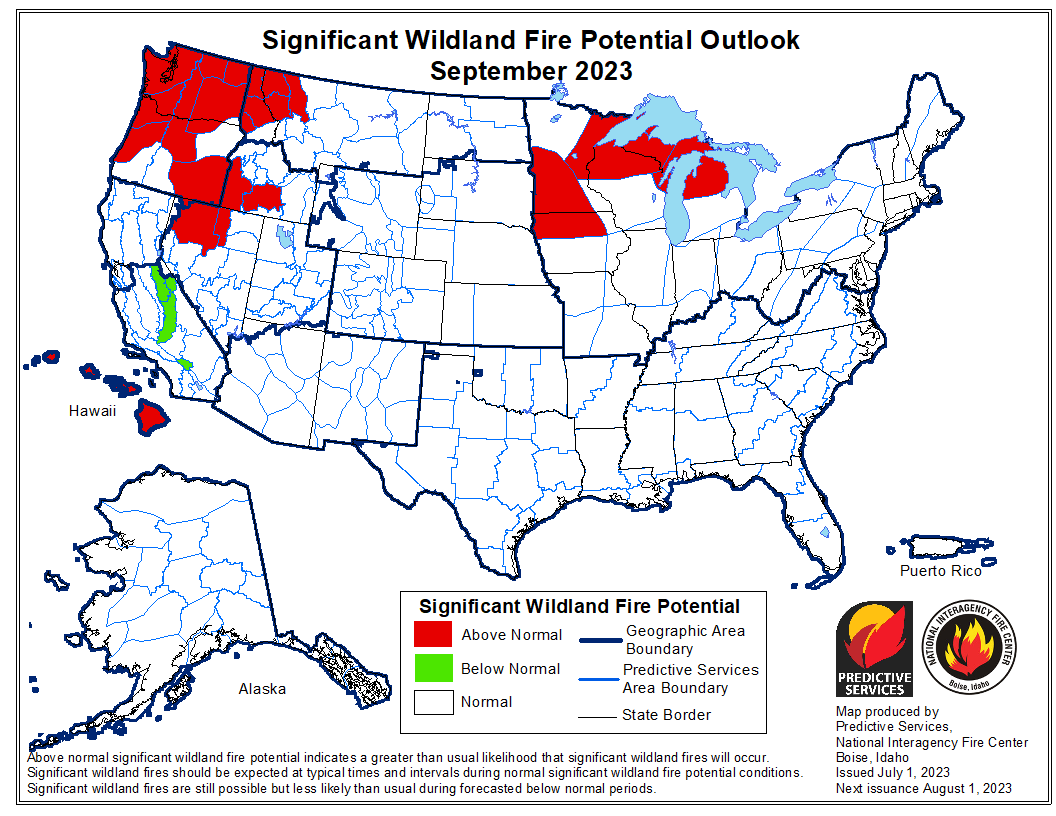
The National Interagency Fire Center predicts virtually all of Washington will see an above normal fire risk from July to September.
This report was first published by The Center Square Washington.
Also read:
- Opinion: Were Republican voters just sleeping during the August primary election?
 CCRP Chairman Matt Bumala says 60% of primary no-shows in the 17th and 18th districts were Republicans.
 - High school football: New coach prepares for long-term success at Prairie High School
 James Young-Lewis, a Clark County native who graduated from Evergreen in 2009, became Prairie’s head coach in May after working as an assistant coach across various programs since 2015, joining Prairie’s staff in 2024.
 - Cost to battle 20 wildfires in WA has topped $200M
 Twenty wildfires have cost Washington $207M in one month, more than two-thirds of what DNR spent all last fiscal year.
 - Opinion: WA Cares’ launch showcased care WA Cares did not provide
 Gov. Ferguson showcased a caregiving arrangement at the WA Cares launch that the program had not paid for a single day of.
 - Former State Rep. Liz Pike provides update on husband Neil Cahoon
 Neil Cahoon, a Camas resident, has undergone multiple surgeries including five on Aug. 15 after the Aug. 10 crash near La Center’s Daybreak Airport.
 - Opinion: Portland’s War on Cars Part 4 – A smarter automobile strategy to end gridlock
 O’Toole argues fuel wasted in Portland-area congestion has sextupled since 1982, generating 250,000 tons of extra greenhouse gases annually.
 - $1,000 first prize for Camas Plein Air Art Event honoring Marquita Call on Sept. 26
 Plein air artists compete Sept. 26 in Camas for $1,000 first prize honoring gallery founder Marquita Call.
 wpDiscuz