

For Washington cities and counties grappling with homelessness, the choice may no longer be between Housing First or treatment first, but between following federal orders or losing the funding to try either
Spencer Pauley
The Center Square Washington
President Donald Trump’s new executive order is a sharp blow to Washington state municipalities’ Housing First strategies, with potential loss of federal funding if they do not adhere to new requirements.
Trump’s executive order, signed on Thursday, aims to address the nation’s homelessness crisis by redirecting federal funding to substance abuse treatment, enforcing bans on open drug use and camping on public property, and prohibiting funding for drug injection sites, which no Washington municipality has established.
The order also prioritizes grants for compliant states and municipalities, and ensures sex offenders receiving homelessness assistance are not housed in the same building as children.
King County and Seattle, utilize a Housing First approach to ending homelessness, which Trump’s order threatens to end.
The King County Regional Homelessness Authority, or KCRHA, coordinates funding and services for unhoused people in the state’s most populated county. The agency faces a potential loss of $25.4 million in 2026 federal funding from the U.S. Department of Housing and Urban Development if it does not revise its Housing First strategy, which prioritizes stable housing before addressing other root causes of homelessness.
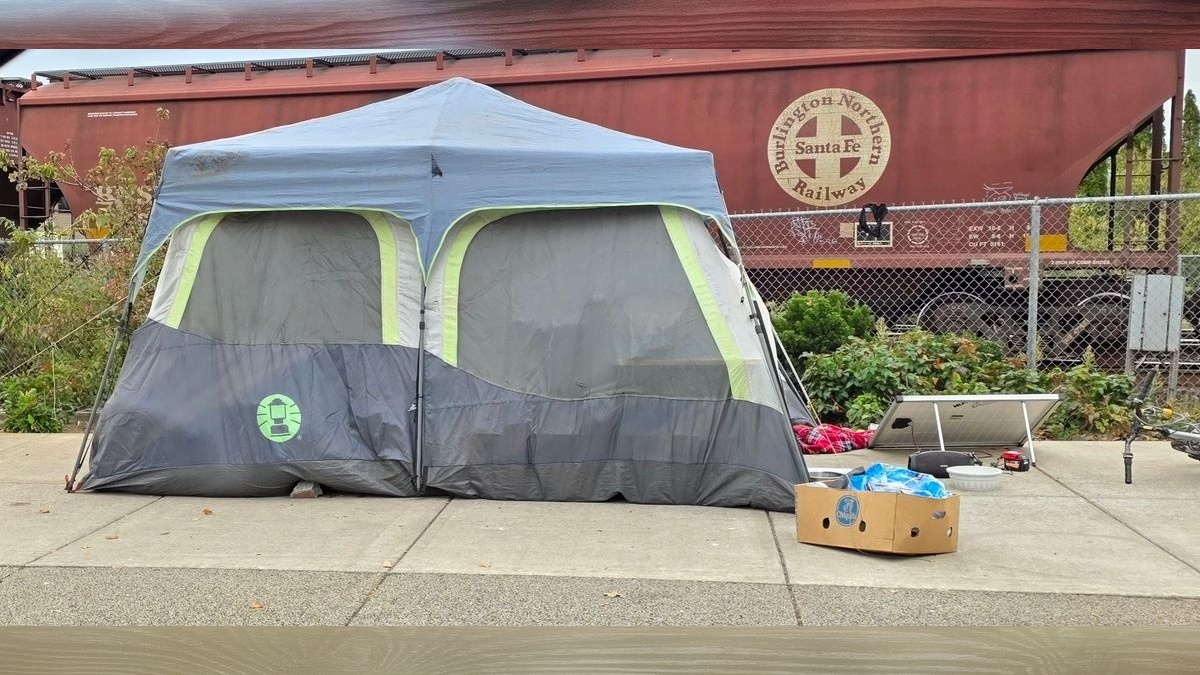
Proponents say providing housing first for people experiencing homelessness helps them regain dignity before they can tackle other issues, like drug addiction. But a growing number of people have grown uncomfortable with visible tent encampments on streets, reports of open drug use and crime associated with the unhoused population that continues to increase in King County and Washington.
Republican-aligned organizations, including Future 42 and the Discovery Institute, have been staunch advocates for a treatment-first approach to homelessness in Washington. Supporters of this approach say it would better equip Washington municipalities to address homelessness, which they believe is interwoven with drug addiction and mental health issues.
Future 42 Snohomish County Director Nate Nehring called the Housing First and harm reduction policies “a demonstrable failure in Washington state and beyond,” and believes Trump’s executive order is a positive step forward for people advocating for community safety as a priority.
“To date, we have seen increased overdose rates and a reduced sense of safety, all while the tax burden has grown heavier as billions of dollars are poured into unsuccessful programs,” Nehring told The Center Square in an email. “We can now have confidence that by focusing on the root causes of homelessness, namely drug addiction and mental illness, the most vulnerable in our communities will be better served.”
Proponents of the Housing First approach acknowledge that a portion of people living on the streets suffer from substance abuse and mental illness, but they see a correlation between the homelessness crisis and the affordability crisis that leads to lives spiraling.
In a previous interview with KCRHA Chief Research and Data Officer Tim Thomas, he told The Center Square that the unhoused people on the streets represent just a portion of the region’s homeless population of over 16,000. He explained that people can be behind on one-month’s rent and begin a steep decline into homelessness. This dramatic change in one’s life can sometimes lead to substance use as a desperate attempt to bear with stress.
Still, treatment-first supporters, like Discovery Institute President Steven Buri, say Trump’s executive order will save lives while improving communities.
“President Trump’s historic action redirects the nation’s homeless response away from permanent housing with no restrictions to a compassionate alternative focused on treatment, recovery, and the goal of self-sufficiency for those suffering on our streets,” Buri said.
For Washington cities and counties grappling with homelessness, the choice may no longer be between Housing First or treatment first, but between following federal orders or losing the funding to try either.
KCRHA acknowledged The Center Square’s request for comment and is working on responses for a follow-up story.
This report was first published by The Center Square Washington.



Comments
Loading comments…