



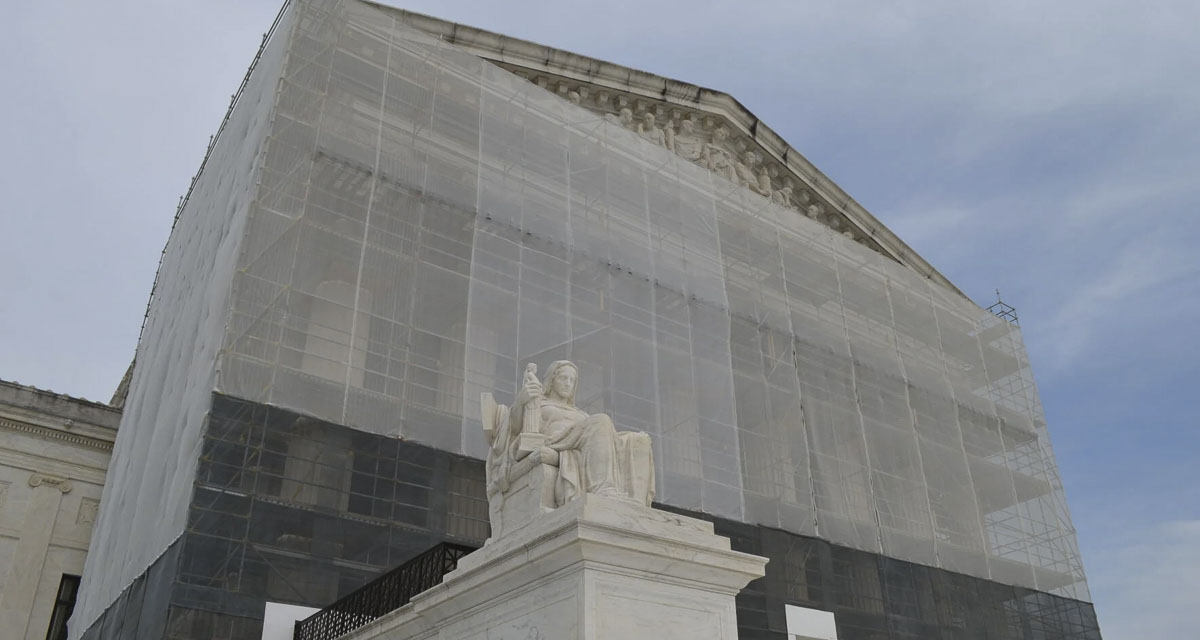
During oral arguments, questioning from Chief Justice John Roberts, Justices Samuel Alito, Amy Coney Barrett, Neil Gorsuch, Brett Kavanaugh and Clarence Thomas appeared to lean toward parental rights
Andrew Rice
The Center Square
The U.S. Supreme Court is set to decide a landmark case regarding the rights of parents to opt their children out of certain lessons related to gender and sexuality.
Mahmoud v. Taylor is a case coming out of Montgomery County Public Schools in Maryland. In 2022, the school district approved reading materials exploring themes of gender identity and sexuality.
These books were included in curriculums for kindergarten and pre-kindergarten students in the school system. Initially, schools allowed parents to be notified and given the option to opt-out of the curriculum.
However, in March 2023, the school board eliminated its notice and opt-out options. Groups of parents from various religious backgrounds sued the board, arguing it violated their parental rights and religious freedom.
“We have a right to determine the upbringing of our kids,” said Alleigh Marre, executive director of the American Parents Coalition.
“There should always be that protection in place,” Marre said about parental opt-out options. “That’s why you saw so many different groups of people coming out in support of that position,” she added.
During oral arguments, questioning from Chief Justice John Roberts, Justices Samuel Alito, Amy Coney Barrett, Neil Gorsuch, Brett Kavanaugh and Clarence Thomas appeared to lean toward parental rights.
Kavanaugh took issue with certain Maryland counties allowing parents to opt-out of curriculum related to sexuality in a health class setting but not applying that same standard to books on sexuality and gender identity.
“The other Maryland counties have opt-outs for all sorts of things. And yet, for this one thing, they changed in midyear and say no more opt-outs,” Kavanaugh said.
Kavanaugh said the goal in decisions regarding religion is “to look for the situation where you can respect the religious beliefs while the state or city or whatever it may be can pursue its goals.”
“Here, they’re not asking you to change what’s taught in the classroom,” Kavanaugh added. “They’re only seeking to be able to walk out so the parents don’t have their children exposed to these things that are contrary to their own beliefs,” he said.
Justices Sonia Sotomayor, Elena Kagan and Ketanji Brown Jackson seemed hesitant to uphold parents’ challenge against the school board. The justices cautioned against withholding materials in schools based on personally held beliefs among parents.
“We have a lot of sincerely held beliefs and concerns and children and principals,” Jackson said. “I see all of those things so I want to be careful about making the pronouncement that relates to this,” she added.
Marre said the unity between parents of different faiths and the varying content standards in different counties will help bolster the parents’ arguments.
“I think we’ll see that ruling side in the favor of those parents and sanity,” Marre said.
This report was first published by The Center Square.
Andrew Rice is an intern reporter and member of the 2025 Searle Freedom Trust and Young America’s Foundation National Journalism Center Apprentice and Internship initiative.
Also read:
- Opinion: ‘Stay close, stay informed, stay the course’
 Anna Miller calls on residents to join Clark County Republican Women’s dinner, urging perseverance and unity as local government faces turbulent times.
 - Overnight closure planned on westbound SR 14 Camas Slough Bridge Tuesday
 WSDOT crews will close westbound SR 14 at Exit 14 in Camas to collect bridge deck samples and plan future repairs; detours will be in effect.
 - OII completes investigation of Clark County Sheriff’s Office use of deadly force
 Marc Fogle died after a fatal struggle with Deputy Bryson Layton following a DUI crash; prosecutors will decide on charges after review of OII’s findings.
 - Video: Can accelerated home construction replace need for WA income tax?
 A new report suggests boosting housing production by 20,000 units yearly could bring in over $600 million in revenue, offsetting a portion of proposed income tax revenue.
 - WA Gov. Ferguson to meet with NBA commissioner as hopes rise for Sonics’ return
 The meeting this week comes before a vote that could clear the way for the league’s expansion to Seattle Jake Goldstein-StreetWashington State Standard Washington Gov. Bob Ferguson on Thursday previewed an upcoming meeting with NBA Commissioner Adam Silver ahead of a planned vote on league expansion that could bring men’s professional basketball back to Seattle. …
 - Opinion: Will the income tax cause a drop in charitable giving?
 High-income households leaving Washington after new tax may redirect donations, possibly shrinking local nonprofits’ funding despite the intended deduction benefit.
 - Spring car care tips to get your vehicle road-trip ready
 April is Car Care Month, a timely reminder for drivers to check their tires, batteries, wipers, and air filters before spring and summer travel begins.
