



Some small cities are vowing to fight, but it is possible that the city of Vancouver and Clark County will gain seats on the C-TRAN board, and that is leading some small cities to wonder where they stand in the C-TRAN organization
Paul Valencia
Clark County Today
Perhaps it was a comment made out of frustration.
Or maybe it was one of those jokes that really isn’t a joke.
Sean Boyle, representing La Center on the C-TRAN Board Composition Review Committee, last month wondered if the Southwest Washington Regional Transportation Council should change its name.
“So should we just make this a Vancouver Transit Zone?” he asked.
Wil Fuentes, a member of the Clark County Council and also a member of the review committee, had a quick reply.
Perhaps Fuentes just wanted to land a zinger.
Or maybe it was one of those jokes that really isn’t a joke.
“It’s got a nice ring to it,” he said.
C-TRAN, as we know it, might not be laughing. Because C-TRAN, as we know it, just might be nearing its end after 44 years.
Is that an exaggeration? Camas city leaders have already discussed the possibility of opting out of C-TRAN. And on Tuesday, the mayor of Ridgefield wrote in a letter to the review committee that his city would begin to evaluate legal options if the state does not accept the committee’s compromise.
The Boyle-Fuentes discussion came as the review committee looked to find a compromise to the state’s letter informing the committee that the C-TRAN Board of Directors is out of compliance with a state law regarding representation based on population.
The committee did come to an agreement to give Clark County one more seat and take a seat away from the small cities, but the state did not accept the compromise. On Wednesday, the review committee is to meet again, and a vote is expected to determine if the small cities in Clark County have to share two seats, while the city of Vancouver (four seats) and Clark County (three seats) will each gain a seat.
All of this, according to at least one member of the review committee, is to secure funding for annual operations and maintenance costs for Oregon’s light rail expansion into Vancouver, should it become part of the new Interstate Bridge.
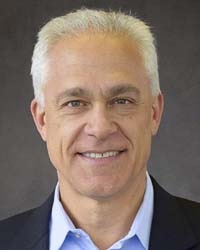
Tim Hein said he believes a number of maneuvers, including the dismissal of Michelle Belkot from the C-TRAN Board, in 2025 are to ensure that the board does not revert to older language that would protect C-TRAN, and Clark County taxpayers, from any partnership with Oregon’s TriMet.
“This should be a reason for the small cities to unite,” said Hein, a Camas city councilor as well as a member of the C-TRAN board and the review committee. “This is the reason Camas is considering leaving the organization.”
In November of 2024, C-TRAN voted to change its language from “shall not” to “may” in regard to paying for light rail O&M expenses. In the winter of 2025, it appeared a vote to revert to “shall not” was going to pass, but a last-minute action paused that vote. That week, three Clark County Council members voted to remove Belkot from the C-TRAN board. That vote on the language remains on pause as two lawsuits stemming from Belkot’s removal are still pending.
In the meantime, if the new board consists of four seats from the city of Vancouver and three from the Clark County Council, it would be unlikely that the language would revert to protect taxpayers. The city of Vancouver and most of the members of the Clark County Council have indicated they want the entire county to help pay for less than two miles of light rail into downtown Vancouver.
“The whole thing is being stacked so we can’t change the language back,” Hein said. “This is what citizens need to know. There has been a plan, and they are on the hook for paying it, and they should be outraged.”
Hein said he is a huge supporter of C-TRAN, at least for its intended purpose: to serve the needs of Clark County — the whole county. Light rail, he said, does not serve most of the county, and it would mean partnering with a large, failing organization — TriMet — and forcing C-TRAN taxpayers to help fund TriMet.
Hein also scoffs at the idea of proportionality in terms of the makeup of the C-TRAN board while small cities pay so much more into C-TRAN than in services received. That, in itself, is not a dealbreaker. Hein has always understood the concept of the entire region supporting C-TRAN’s mission to serve the county.
Now that the state says the C-TRAN board is out of compliance, and the new board makeup appears to be headed to a partnership with TriMet, Hein wants to look into ways to protect Camas.
It seems as if the regional part of the equation is taking a backseat to only Vancouver, according to Boyle’s comments in last month’s meeting as well as Hein’s point of view.
“Camas is going to work to either change the amount they are paying C-TRAN or leave C-TRAN,” Hein said. “We would welcome anyone who joins us in this endeavor. If they don’t fight this now, they will pay more later. Guaranteed.”
Camas, for example, paid an estimated $5 million in sales tax revenue to C-TRAN in 2024, while receiving just less than $2 million in services. Battle Ground, Ridgefield, Washougal, La Center, and Yacolt all paid more than received in services.
Vancouver paid more than $49 million but received $53.5 million in services.
Those numbers came from C-TRAN.
Hein noted that if Camas does leave C-TRAN, the city will find a way to serve its citizens who are in need of public transportation. He would welcome the idea of working with the other smaller cities, too, should they opt out of C-TRAN.
Also read:
- Opinion: Portland’s War on Cars Part 4 – A smarter automobile strategy to end gridlock
 O’Toole argues fuel wasted in Portland-area congestion has sextupled since 1982, generating 250,000 tons of extra greenhouse gases annually.
 - Opinion: Transit ridership trends are dismal but regional plans are oblivious
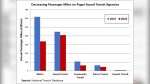 Puget Sound transit passenger-miles fell 31% from 2015 to 2024 despite a half-million-resident population increase.
 - Interstate Bridge Replacement Program seeks qualified firms for bridge replacement contract
 The CRBR project is backed by $5.7 billion from state funds, federal grants, and future tolling.
 - Opinion: Bankrupt – A $3.5 billion Rose Quarter Freeway widening project
 Joe Cortright argues ODOT’s Rose Quarter project has grown from a $450M approval to a $3.5B estimate, with a $2B funding gap.
 - Opinion: Portland’s War on Cars 3 – Ending the war on automobiles
 O’Toole argues Portland should add toll lanes, fix safety hazards, and redesign TriMet routes to end its anti-auto policies.
 wpDiscuz