



Senate budget leader is keeping an eye on a growth projection that is noticeably lower than any time outside of the Great Recession earlier this century
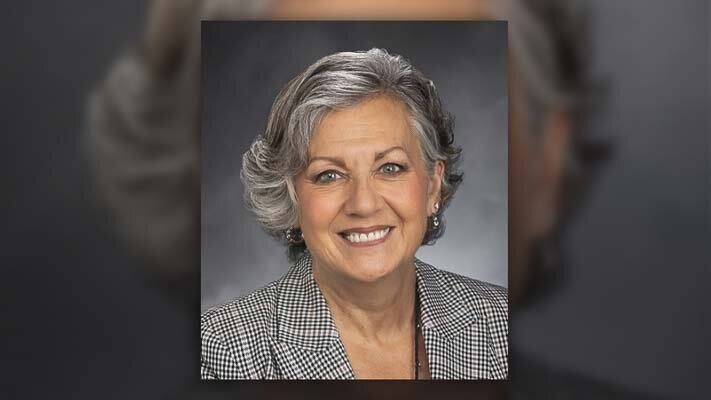
VANCOUVER — While the state revenue forecast adopted today keeps the government’s revenue picture comfortably on the plus side, Sen. Lynda Wilson is keeping an eye on a growth projection that is noticeably lower than any time outside of the Great Recession earlier this century.
Wilson, R-Vancouver, is Senate Republican budget leader and chair of the state Economic and Revenue Forecast Council, which met today to adopt the third of the state’s quarterly revenue forecasts for 2023. It adjusts state government’s four-year budget outlook upward by $1.1 billion, with $663 million of that for the 2023-25 biennium and $437 million for the following two-year budget cycle.
Following the meeting she offered this assessment:
“The signals in this forecast are mixed. While consumer spending in our state has been resilient, and personal income is up, and unemployment is historically low, we learned today how that’s being offset by things like rising interest rates, which are a drag not just on vehicle sales and real-estate activity but also are putting a harder hit on people working to pay down credit-card debt left from the pandemic.
“Add in rising rents and higher gas prices and the coming student-loan repayments and you have people spending more on things which don’t generate sales-tax revenue. That helps explain why revenue growth is projected at only 3% in this budget cycle, a low that hasn’t been seen in many years. Also, the capital-gains income tax is generating much more revenue than was expected early this year, and the death tax – which is double taxation that shouldn’t happen – produced $138 million more than anticipated in the June forecast. While government can spend those tax dollars like any others, no one should forget they aren’t a product of normal economic activity and are not as predictable.
“As a budget leader I’m inclined to take a wait-and-see attitude. There’s one more forecast before the next legislative session, and it will tell us much more about opportunities in 2024 to address the affordability crisis that continues to weigh heavily on so many families around our state. For Republicans, this is a top priority – while Democrats keep supporting new taxes and fees and other policies that make the cost of living higher.”
Also read:
- White House govt. Funding request for 2027 cuts $73 billion
 President Trump’s budget seeks to boost defense funding while cutting $73 billion from agencies like the EPA, NASA, and Agriculture, prompting sharp criticism from Democratic leaders.
 - Heywood asks WA Supreme Court to allow referendum effort on income tax
 Brian Heywood is petitioning the state Supreme Court after the Secretary of State rejected a referendum to repeal Washington’s new 9.9% tax on income over $1 million.
 - Opinion: Half the road, full stop – Understanding pedestrian right-of-way
 Doug Dahl explains how Washington’s law requires drivers to stop when a pedestrian is within one lane of their half of the road, not just when directly in front.
 - Clark County seeks volunteer for Law and Justice Council
 Applicants with experience in mental health services are encouraged to help guide Clark County’s coordination of local criminal justice and corrections planning.
 - VIDEO: Families at center of WA transgender sports debate face-to-face with OSPI
 Two Washington high school students and their parents met with Superintendent Chris Reykdal to discuss concerns about sports policies after one student faced an investigation for harassment.
 - As Washington lawmakers punt on school cellphone ban, some want more action
 At Robert Eagle Staff Middle School, all-day phone removal led to fewer conflicts and more student engagement, but some parents and lawmakers argue a ban should not be imposed statewide.
 - Opinion: The state’s RFK-proofing bill comes with a cost
 Mandates like HB 2242 can lead to higher premiums as insurance companies absorb costs for new preventive services, affecting affordability statewide.
 wpDiscuz
