



Sen. Lynda Wilson was involved in appropriating $53 million of federal and state funding and Sen. Ann Rivers co-sponsored the Senate version of the 2019 bipartisan legislation
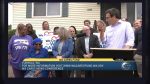
Republican state senators who have been out front on increasing access to behavioral-health treatment and fighting the state’s opioid epidemic are marking the opening of a major new facility that combines treatment with training: the Center For Behavioral Health and Learning, on the University of Washington campus in Seattle.
Sen. Ann Rivers, Republican leader on the Senate Health and Long Term Care Committee, co-sponsored the Senate version of the 2019 bipartisan legislation that authorized the new behavioral-health campus within the university’s medical school.
“This facility holds tremendous promise for our state’s efforts to turn the tide on the drug-overdose epidemic that has harmed so many families and communities in our state,” said Rivers, R-La Center. She is assistant Senate Republican leader for the state capital budget, source of the $244 million in funding to construct the new center.
As Senate Republican leader on the state operating budget, Sen. Lynda Wilson was involved in appropriating the $53 million of federal and state funding that will launch the center’s teaching component as well as support inpatient care for up to 150 people – a mix of slots for short-term psychiatric treatment and for commitments lasting 90 to 180 days.
“The Legislature still has work to do when it comes to discouraging opioid abuse in the first place, and saving babies and young children from being harmed by adults’ opioid use. But this is a day for acknowledging the completion of an important step toward building the workforce to meet the growing demand for behavioral-health treatment, whether it’s addiction-related or not,” said Wilson, R-Vancouver.
Although neither senator made the trip from Clark County to this morning’s ribbon-cutting ceremony, other Republicans who supported the 2019 legislation were present.
Wilson’s work to fight the opioid crisis includes the passage of her “One Pill Kills” legislation this year, to create a statewide drug-overdose prevention and education campaign. She also led the Senate’s repeated effort to add fentanyl and other synthetic opioids to the state’s child-endangerment law, only to see Senate Bill 5010 blocked consistently by the Democrat majority in the state House.
“When this was endorsed unanimously by the Legislature five years ago,” said Rivers, “our state already was short on treatment capacity – both bedspace and workforce. No one could have known how things were about to get much worse, between the increasing flow of fentanyl into our communities and the disastrous move by the legislative majority to basically decriminalize hard drugs.”
“The reality is, the need for treatment space is more acute than ever. In that sense the bedspace in this facility is already taken, but as a former teacher, I am so glad for the emphasis on teaching,” Rivers added. “That’s what really sets this campus apart, especially because – unfortunately – the drug epidemic will be with us for a long time.”
Also read:
- Opinion: Were Republican voters just sleeping during the August primary election?
 CCRP Chairman Matt Bumala says 60% of primary no-shows in the 17th and 18th districts were Republicans.
 - High school football: New coach prepares for long-term success at Prairie High School
 James Young-Lewis, a Clark County native who graduated from Evergreen in 2009, became Prairie’s head coach in May after working as an assistant coach across various programs since 2015, joining Prairie’s staff in 2024.
 - Cost to battle 20 wildfires in WA has topped $200M
 Twenty wildfires have cost Washington $207M in one month, more than two-thirds of what DNR spent all last fiscal year.
 - Opinion: WA Cares’ launch showcased care WA Cares did not provide
 Gov. Ferguson showcased a caregiving arrangement at the WA Cares launch that the program had not paid for a single day of.
 - Former State Rep. Liz Pike provides update on husband Neil Cahoon
 Neil Cahoon, a Camas resident, has undergone multiple surgeries including five on Aug. 15 after the Aug. 10 crash near La Center’s Daybreak Airport.
 - Opinion: Portland’s War on Cars Part 4 – A smarter automobile strategy to end gridlock
 O’Toole argues fuel wasted in Portland-area congestion has sextupled since 1982, generating 250,000 tons of extra greenhouse gases annually.
 - $1,000 first prize for Camas Plein Air Art Event honoring Marquita Call on Sept. 26
 Plein air artists compete Sept. 26 in Camas for $1,000 first prize honoring gallery founder Marquita Call.