



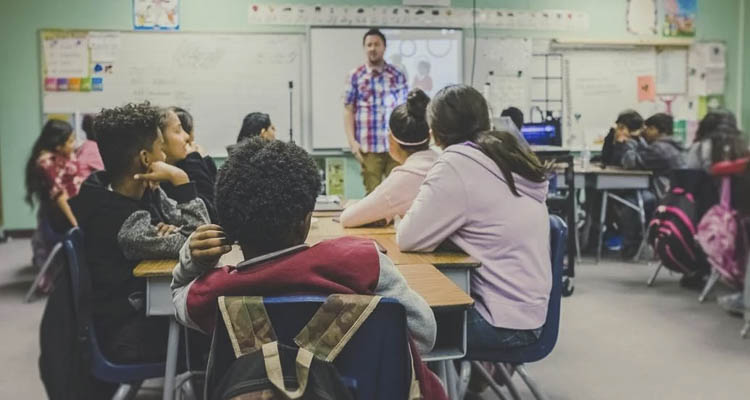
That is one of the main takeaways from the Washington State Board of Education’s Charter Schools Report
Carleen Johnson
The Center Square Washington
Charter schools in Washington state are doing a better job educating children in math and English Language Arts than traditional schools.
That is one of the main takeaways from the Washington State Board of Education’s Charter Schools Report.
“The overall finding for all of the prior charter school reports and this seventh edition submitted by the SBE is that students attending Washington charter schools perform similar to or better than academically, economically, and ethnically similar students attending traditional public schools,” the key findings section of the report states. “The analyses of the one-to-one matching of students from the 2022-23 school year found that charter school students identifying as Black or African Americans, students identifying as Hispanic, students who are English learners, and students qualifying for the Free and Reduced Price Lunch program (FRL) outperformed their matched TPS peers on the ELA and math measures.”
Liv Finne, director of the Center for Education at the free market Washington Policy Center think tank, said she is not surprised at the findings.
“Traditional schools are doing a poor job educating students from low-income backgrounds and charter schools are doing a much better job in educating these populations,” she said.
Washington was a late adopter of charter schools. It took many citizen initiative efforts and legal battles to overcome opposition from the Washington Education Association, which argues charter schools take away much needed funding from traditional public schools.
“We’ve only had charter schools in Washington state for about eight years,” said Finne, “but charter schools are doing a much better job than schools where students are assigned by ZIP code.”
According to charter school backers, one of the largest obstacles to leveling the playing field is funding. Charter schools are not allowed to receive local levy dollars, so expenses like rent or other capital improvement costs have to come out of per-pupil funding from the state.
Lawmakers did budget additional funding for charter schools this year, but Finne explains that is “one-time money, meaning per-pupil funding for students in charter schools is still far below traditional public schools.
That money from the Legislature amounts to $7.8 million for charter schools, which will allow charters to receive $1,500 per student. The SBE report recommends that funding be permanent.
One of the other recommendations in the SBE report is to open a new window for charter school applications.
The initial law was designed to allow up to 40 charter schools to open within a five-year period.
“But they made it so difficult for those wanting to open charter schools, so we’ve only got 18 charter schools right now,” Finne said. “They’re trying to slowly starve them of dollars in hopes they collapse, but the charters we have are resilient and doing amazing work as the evidence shows.”
Finne points to the individualized attention charter school students receive as part of the reason for the success of charter schools.
“They are 100% focused on each child, and they give them mentors that stay with them and help these children raise expectations for college and life,” she said.
There are networks of charter schools in other states that are highly successful, according to Finne, and they want to come to Washington.
“They can’t come to begin with, and they won’t because the funding isn’t fair,” she explained. “We should reopen the window for new charters to open, make the funding equitable and reduce the regulatory burden for applying for a charter contract.”
The Center Square reached out to the WEA for comment on the SBE report but did not receive a response.
This report was first published by The Center Square Washington.
Also read:
- Dollars flowing into a pair of hotly contested WA congressional races
 Amanda McKinney leads 4th District GOP field with $523,892 raised, while Braun trails significantly behind incumbent.
 - Final Supplemental Environmental Impact Statement published for Interstate Bridge Replacement Program
 Federal agencies published the final environmental impact statement for the Interstate Bridge replacement project.
 - Belkot appeals judge’s decision to dismiss her case against Clark County
 Belkot’s attorney says the federal appeals court will hear the case in several months after judge dismissed all five claims.
 - Union baseball, softball teams honor military, veterans, and first responders
 Baseball and softball teams combined efforts to recognize military heroes and first responders with ceremonial pitches.
 - Union baseball, softball teams honor military, veterans, and first responders
 Baseball and softball teams combined efforts to recognize military heroes and first responders with ceremonial pitches.
 - Speed cameras designed to bring added safety to work zones
 WSP issued 65,000 infractions in first year, with 59,000 being penalty-free first offenses as program expands statewide.
 - Cathy Doriot retiring as the Ridgefield Chief of Police
 Chief Cathy Doriot expanded Ridgefield PD with detective, sergeants, officers and drone program during her tenure.
