



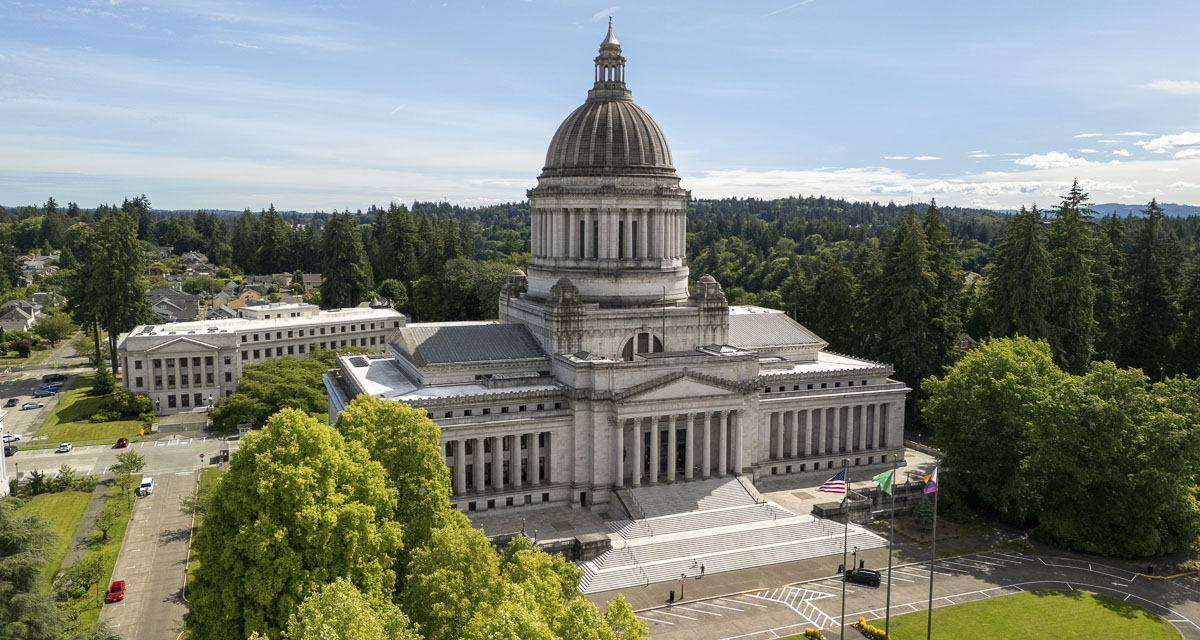
The index specifically measures ‘friendliness’ to religious freedom and regulatory freedom for nonprofits that are not classified as churches or religious orders
Andrew Rice
The Center Square
Michigan and Washington scored the most poorly in the nation for religious freedom protections, according to a new report.
Napa Legal Institute, a Catholic nonprofit organization, released the 2025 Faith and Freedom Index on Monday. The index scores laws across all 50 states and the District of Columbia based on religious liberty and religious freedom protections.
The index specifically measures “friendliness” to religious freedom and regulatory freedom for nonprofits that are not classified as churches or religious orders.
“This is mostly an advocacy and an educational tool to show you what is the lay of the land in each state,” said Frank Devito, senior counsel and director of content at Napa Legal.
Michigan is 51st on the list and Washington is 50th, making each “one of the worst places to operate a faith-based nonprofit,” according to Napa’s website.
Napa cites the states’ Blaine Amendment as a reason for both of the states’ low rankings. The Blaine Amendment prevents a state from using public funds to support religious organizations, including religious private or nonpublic schools.
Napa Legal also weighed whether a state passed its own religious freedom restoration act. This act would require courts to apply the highest level of judicial scrutiny in a case where an organization’s or individual’s free exercise is threatened.
Devito said this mainly applies to making employment decisions in a religiously affiliated nonprofit, specifically related to religion, sex, sexual orientation and gender identity.
“The ideal is that you don’t have to go to court and sue and see if you have a right to hire in accordance with your religious principles,” Devito said, “but if you have no other choice, there’s no statutory protection against that employment law or public programming law, you at least can bring a challenge under the Religious Freedom Restoration Act.”
The Rev. Tony Pillari, a Catholic priest, helps operate a school in Kansas where a statute allows schools to make hiring decisions aligned with faith, similar to RFRA. He said it is beneficial to have the statute so his school can define how their hiring and teaching practices will align with the Catholic faith.
“That was very helpful for us to go the extra mile to begin talking with some other schools, you know, universities who had very carefully crafted their statutes to make very clear what the expectations were from anyone working for the school in terms of living in harmony with or not publicly dissenting from, but rather supporting the faith in question, the Catholic faith in our case,” Pillari said.
Kansas and Alabama are the top two states for religious freedom in the country, according to Napa Legal Institute’s analysis.
Earlier this year, the U.S. Supreme Court sided with a Catholic charity in Wisconsin, allowing it to serve meals and provide services, even for those not aligned with the Catholic faith. Additionally, the court sided with a coalition of religious parents in Maryland who did not want their children to be exposed to reading material about same-sex relationships and gender identity.
“Too many Americans have been forced to spend precious time and money litigating issues that should never have gone to court in the first place,” Devito said
“This becomes an opportunity for states to evaluate themselves relative to their peers and to look for opportunities to open up their state legal and regulatory regimes to make them more open to faith-based organizations because the cause of the significant positive impact that they can have in states through their service of the poor and disadvantaged,” said John Pieffer, president a legal counsel at the Napa Legal Institute.
This report was first published by The Center Square.
Also read:
- White House govt. Funding request for 2027 cuts $73 billion
 President Trump’s budget seeks to boost defense funding while cutting $73 billion from agencies like the EPA, NASA, and Agriculture, prompting sharp criticism from Democratic leaders.
 - Heywood asks WA Supreme Court to allow referendum effort on income tax
 Brian Heywood is petitioning the state Supreme Court after the Secretary of State rejected a referendum to repeal Washington’s new 9.9% tax on income over $1 million.
 - Opinion: Half the road, full stop – Understanding pedestrian right-of-way
 Doug Dahl explains how Washington’s law requires drivers to stop when a pedestrian is within one lane of their half of the road, not just when directly in front.
 - Clark County seeks volunteer for Law and Justice Council
 Applicants with experience in mental health services are encouraged to help guide Clark County’s coordination of local criminal justice and corrections planning.
 - VIDEO: Families at center of WA transgender sports debate face-to-face with OSPI
 Two Washington high school students and their parents met with Superintendent Chris Reykdal to discuss concerns about sports policies after one student faced an investigation for harassment.
 - As Washington lawmakers punt on school cellphone ban, some want more action
 At Robert Eagle Staff Middle School, all-day phone removal led to fewer conflicts and more student engagement, but some parents and lawmakers argue a ban should not be imposed statewide.
 - Opinion: The state’s RFK-proofing bill comes with a cost
 Mandates like HB 2242 can lead to higher premiums as insurance companies absorb costs for new preventive services, affecting affordability statewide.
