


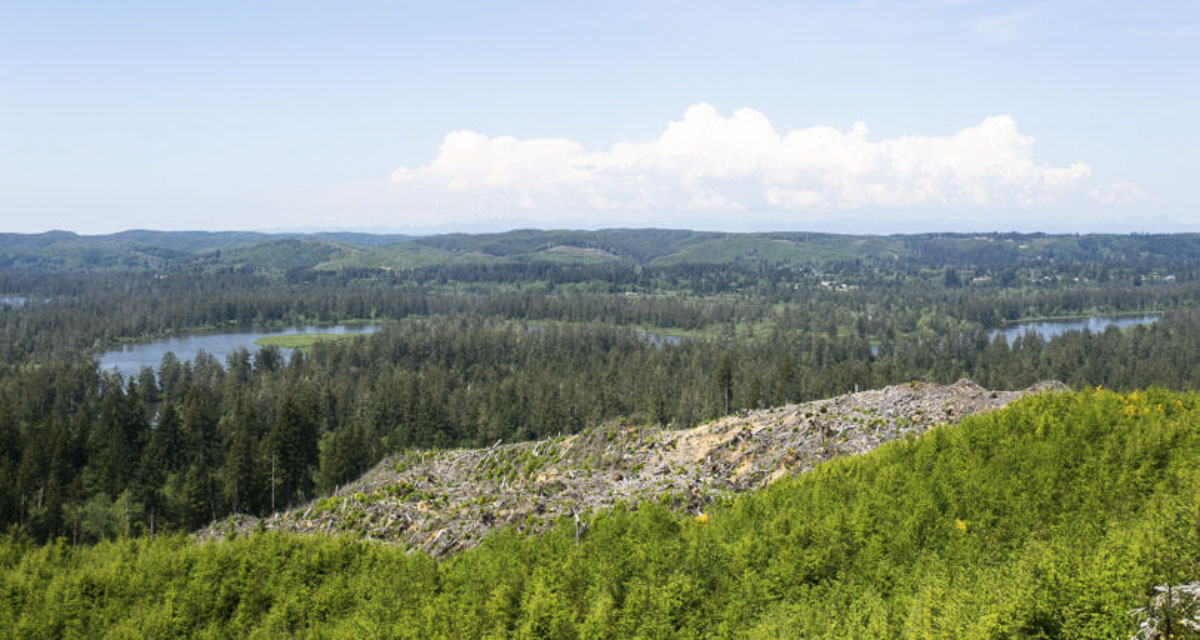
House Bill 2653 would authorize counties to enter into shared stewardship agreements with federal land management agencies, including the U.S. Forest Service, to maintain and manage fuel breaks on federally owned land near roads
Legislation sponsored by Rep. Kevin Waters would give Washington counties new tools to reduce wildfire risk along major roadways while ensuring local governments are fairly compensated for their work managing federal forestlands.

House Bill 2653 would authorize counties to enter into shared stewardship agreements with federal land management agencies, including the U.S. Forest Service, to maintain and manage fuel breaks on federally owned land near roads. Under the bill, counties could manage forestlands up to one mile on either side of a roadway, including interstate highways, state highways, and other roads selected by the county.
“Wildfires don’t stop at jurisdictional boundaries, and counties are often on the front lines of prevention and response,” said Waters, R-Stevenson. “This bill would ensure counties can be real partners in forest management while also protecting taxpayers and critical transportation corridors.”
While shared stewardship agreements already exist at the federal level, Waters said many of those programs fail to allow counties to share in revenue generated from forest management activities. HB 2653 would address that gap by requiring any shared stewardship agreement entered into by a county to include a revenue-sharing provision. Under the bill, counties would retain proceeds from timber sales resulting from fuel reduction and forest health work performed under the agreement.
“For rural counties, timber revenue has declined sharply over the years, and federal forest payments are less reliable than they once were,” Waters said. “At the same time, counties are being asked to do more to prevent catastrophic wildfires, and much of the timber they cut down is going to waste. This bill would balance those responsibilities by allowing counties to recoup some of the costs through responsible timber management.”
The legislation would especially benefit rural counties with large amounts of federal forestland. By allowing counties to retain timber sale proceeds, the bill could help stabilize local budgets, support essential county services, and ease financial pressure on rural school districts affected by the loss of traditional timber revenues.
“This is about smarter forest management, safer communities, and stronger partnerships between local and federal governments,” Waters said. “House Bill 2653 would move us in that direction.”
The bill awaits a public hearing in the House Local Government Committee.
Information provided by the Washington State House Republicans, houserepublicans.wa.gov

Also read:
- Opinion: Were Republican voters just sleeping during the August primary election?
 CCRP Chairman Matt Bumala says 60% of primary no-shows in the 17th and 18th districts were Republicans.
 - Opinion: WA Cares’ launch showcased care WA Cares did not provide
 Gov. Ferguson showcased a caregiving arrangement at the WA Cares launch that the program had not paid for a single day of.
 - Auditor, auditor candidate address scrutiny over job title
 Greg Kimsey says roughly 40 county employees hold the deputy county auditor designation Kelly used in his campaign.
 - Opinion: Is Mitchell Kelly misleading voters with his ‘deputy auditor’ claim?
 Clark County HR records show no position called “Deputy County Auditor” has ever existed, Anderson argues.
 - Opinion: Democrats rig the ballot to save their income tax
 Churchill argues the ballot disclosure warning voters of education cuts describes revenue never collected and not yet allocated.