



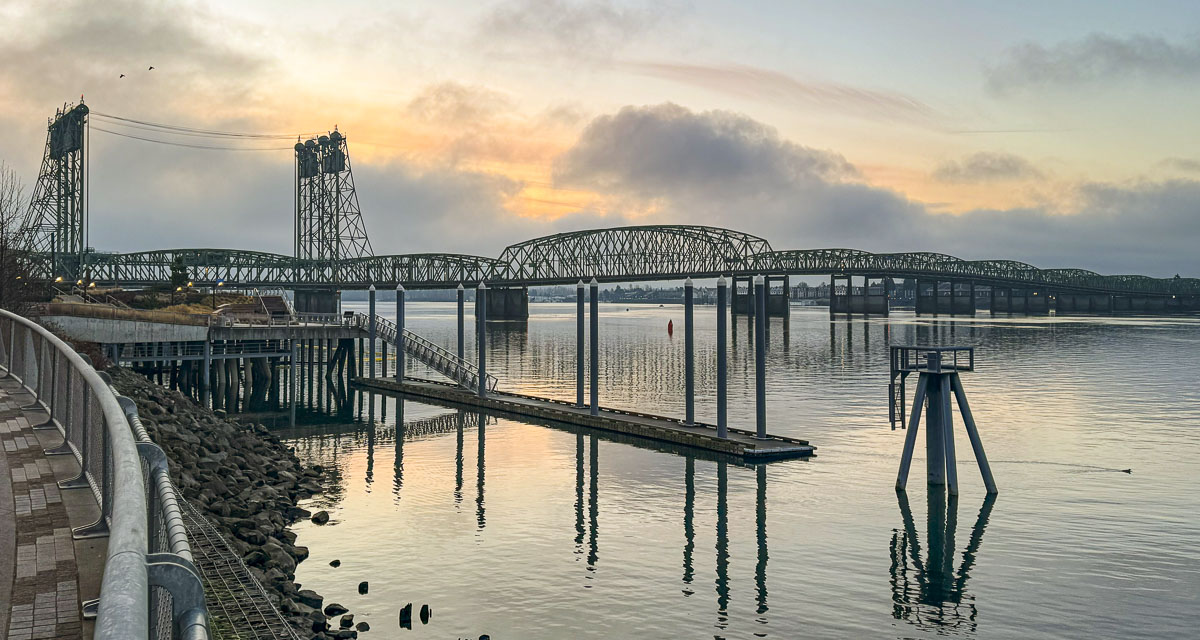
House Bill 1869 would specifically prohibit the Washington State Department of Transportation from spending money on any transportation capital project owned and operated in another state
As funding for the I-5 Bridge Replacement project continues to be in flux, Rep. John Ley of the 18th Legislative District introduced a bill that that could save the state transportation capital budget between $400 and $500 million.
House Bill 1869 would specifically prohibit the Washington State Department of Transportation from spending money on any transportation capital project owned and operated in another state.

“Washington taxpayers should not be paying a penny to buy TriMet anything,” said Ley, R-Vancouver. “C-Tran has been operating buses into Portland for decades, and TriMet has never paid anything to help C-Tran or Clark County taxpayers. This money belongs to Washington and should be used for Washington projects.”
The legislation would specifically target Portland’s TriMet and the proposed $2 billion, 1.8-mile MAX light rail extension into Vancouver. TriMet is demanding 19 new light rail vehicles in addition to other capital investments. “This would be the most expensive rail project in the world, on a per-mile basis,” Ley said.
Federal Transit Administration funding would cover at most half the cost. The IBR is expecting to ask the federal agency for $1 billion later this year. That means Washington and Oregon would have to come up with the rest, or about $500 million each.
Ley pointed out that his bill would not prohibit light rail from being a component of the IBR project but it would make Oregon pay for it.
Transit ridership over the river has been dropping for over a decade. Recent C-Tran reports indicate that less than 1,000 people a day use transit to cross the Columbia River. The transit agency reduced its express bus service from seven lines in 2019 to just three lines today.
If high-capacity transit is needed for the IBR project, Ley prefers that Clark County’s C-Tran buses be used. “They are more flexible, faster, and cheaper to operate than light rail,” said Ley. “The TriMet MAX Yellow Line travels an average of 14 miles per hour. Nobody wants to travel that slow, let alone having to connect to another train or bus to get to their destination.”
Earlier this week, the Camas City Council rejected light rail on the IBR. TriMet wants Washington to pay over $7 million yearly in Operations and Maintenance costs. Other cities around Clark County also question this expense and why local citizens should pay it.
Recently, nationwide studies reported there has been a permanent change in how people work. There has been a significant increase in the number of people working from home, more people choosing to use their privately owned vehicles, and a huge decline in transit ridership for going to and from work.
“We must invest our scarce transportation dollars wisely, in a way that actually delivers value for taxpayer dollars,” Ley said. “Spending huge sums that only benefit an out-of-state transit agency that lost $850 million last year, delivers no value for Washington citizens.”
HB 1869 now waits for a hearing in the House Transportation Committee.
Information provided by the Washington State House Republicans, houserepublicans.wa.gov
Also read:
- Expect delays on SR 14 in Vancouver for guardrail repairs Wednesday
 State Route 14 travelers in Vancouver should plan for morning delays as WSDOT will close two eastbound lanes for guardrail repairs, affecting mileposts 6.0 to 7.0.
 - Overnight closure planned on westbound SR 14 Camas Slough Bridge Tuesday
 WSDOT crews will close westbound SR 14 at Exit 14 in Camas to collect bridge deck samples and plan future repairs; detours will be in effect.
 - Opinion: Stay in your lane – seriously, it’s the law
 Drivers must choose the nearest lane when turning in Washington, and left turns bring added risk. Even with signals, every driver must help prevent crashes by following law.
 - POLL: After hearing state leaders describe the I-5 Bridge as vulnerable in an earthquake, what is your reaction?
 State and local leaders describe the I-5 Bridge as structurally at risk but recommend drivers continue crossing it while complex replacement plans unfold.
 - WA and OR scale back I-5 Bridge ambitions as cost balloons
 A $14.4 billion price tag prompts Washington and Oregon leaders to delay portions of the I-5 bridge project and prioritize just the main spans.
