



The 2024 legislative session is scheduled to conclude on Thursday, March 7
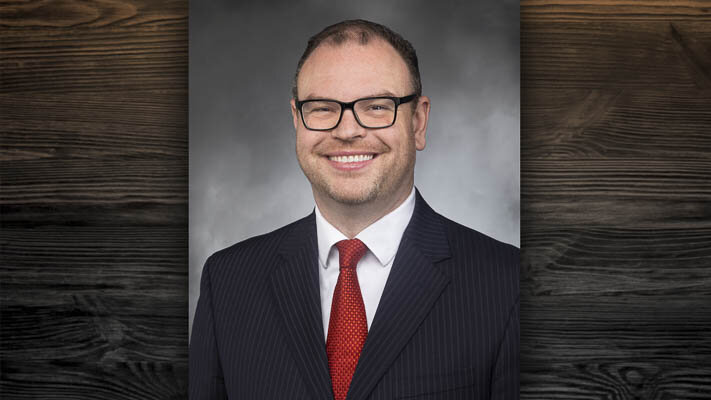
Rep. Greg Cheney, R-Battle Ground, successfully guided five bills through the Washington State House of Representatives. Each of these bills garnered overwhelming bipartisan support, highlighting their significance in shaping the future of Washington state.
House Bill 2032 improves election transparency by reducing the size of yard signs exempt from certain political advertising disclosure requirements.
Under Cheney’s bill, any sign larger than the standard yard sign (24” x 18”) must disclose the candidate or committee that paid for the signs. The bill bolsters transparency by mandating these advertising disclosures, ensuring voters have comprehensive information about those spending money on political advertising.
Cheney remarked, “In a robust democracy, transparency in political advertising is paramount. My bill reinforces trust in our electoral system by providing voters with essential insights into who is funding signage.”
- HB 2032 was approved in the House with a vote of 91-2. It is now with the Senate Rules Committee, awaiting scheduling for a vote by the Senate Chamber.
House Bill 2371 clarifies the rules surrounding the removal of political advertising and was approved unanimously by the House 97-0. Currently, it’s a misdemeanor under state law to remove or deface a political advertisement lawfully placed, such as yard signs or billboards, without authorization, regardless of how long they have remained on public property.
By clearly defining when an advertisement is no longer considered lawfully placed, it would allow individuals to throw away signs that a candidate or campaign failed to clean up after an election.
Cheney explained the rationale behind his proposal, stating, “This bill addresses a common-sense issue of post-election clutter. It balances local timelines for sign removal while also ensuring that our communities remain free from unnecessary visual pollution, thereby upholding the integrity of political expression. Additionally, it provides a common-sense approach to preventing signs from cluttering our culverts and waterways.”
House Bill 2034 requires counties and cities to provide notice to the Administrative Office of the Courts regarding court reorganizations. The bill passed unanimously out of the House with an impressive vote of 97-0 and was recently approved by the Senate Law and Justice Committee.
Cheney’s bill seeks to ensure the state judiciary is informed of changes affecting local court operations. The bill promotes accountability, and by accurately recording convictions and case information in a central database, it prevents unforeseen technology disruptions. This approach enhances coordination between local and state entities, fostering improved collaboration.
Cheney underscored the importance of his bill, stating, “This is a good step toward improving the efficiency of our legal system. By ensuring that all stakeholders, including the state judiciary, are informed of changes affecting court operations, it promotes accountability and prevents unforeseen disruptions. This approach enhances coordination between local and state entities, improving collaboration.”
- HB 2034 is now with the Senate Rules Committee, where it awaits scheduling for a vote by the Senate Chamber.
House Bill 2213 is an act relating to defects and omissions in the laws that have been identified by the Washington Supreme Court and superior court judges. “Defects and omissions” is a Washington state law. This is a constitutional obligation that comes from the courts to report statutes that require modifications, corrections, amendments, or omissions. This process ensures the statutes align with the current law.
Cheney noted, “As separate but co-equal branches of government, it is important that we examine what we are adding to or removing from the statutes.”
- HB 2213 passed out of the House and the Senate Committees, and now awaits a Senate floor vote.
Substitute House Bill 2216, reduces barriers to state employment by eliminating unnecessary degree requirements. The bill broadens access to employment opportunities and opens doors for individuals who possess relevant skills and experience but may not have pursued a traditional higher education path.
SHB 2216 aligns with efforts to address workforce shortages. Cheney highlighted the significance of his bill, stating, “This is an essential step toward removing unnecessary degree requirements, enabling qualified candidates to access the workforce, furthering their professional development, benefiting our state’s economy, and fostering a more inclusive and diverse workforce.”
- HB 2216 passed the House overwhelmingly with a vote of 96-1 and unanimously passed the Senate State Government and Elections Committee. It now awaits a Senate floor vote.
The 2024 legislative session is scheduled to conclude on Thursday, March 7.
Information provided by Washington State House Republicans, houserepublicans.wa.gov.
Also read:
- White House govt. Funding request for 2027 cuts $73 billion
 President Trump’s budget seeks to boost defense funding while cutting $73 billion from agencies like the EPA, NASA, and Agriculture, prompting sharp criticism from Democratic leaders.
 - Heywood asks WA Supreme Court to allow referendum effort on income tax
 Brian Heywood is petitioning the state Supreme Court after the Secretary of State rejected a referendum to repeal Washington’s new 9.9% tax on income over $1 million.
 - Opinion: Half the road, full stop – Understanding pedestrian right-of-way
 Doug Dahl explains how Washington’s law requires drivers to stop when a pedestrian is within one lane of their half of the road, not just when directly in front.
 - Clark County seeks volunteer for Law and Justice Council
 Applicants with experience in mental health services are encouraged to help guide Clark County’s coordination of local criminal justice and corrections planning.
 - VIDEO: Families at center of WA transgender sports debate face-to-face with OSPI
 Two Washington high school students and their parents met with Superintendent Chris Reykdal to discuss concerns about sports policies after one student faced an investigation for harassment.
 - As Washington lawmakers punt on school cellphone ban, some want more action
 At Robert Eagle Staff Middle School, all-day phone removal led to fewer conflicts and more student engagement, but some parents and lawmakers argue a ban should not be imposed statewide.
 - Opinion: The state’s RFK-proofing bill comes with a cost
 Mandates like HB 2242 can lead to higher premiums as insurance companies absorb costs for new preventive services, affecting affordability statewide.
