


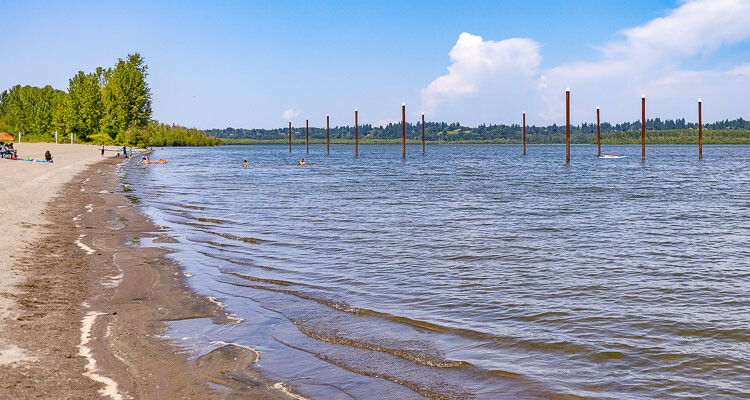
Test results for one of five water samples collected at Vancouver Lake on Tuesday showed elevated levels of E. coli bacteria
VANCOUVER – Clark County Public Health has issued a swim beach warning at Vancouver Lake after routine testing showed elevated levels of E. coli bacteria. E. coli bacteria can cause serious gastrointestinal illness when water is accidentally swallowed.
Test results for one of five water samples collected at Vancouver Lake on Tuesday showed elevated levels of E. coli bacteria. The other samples had bacteria levels within acceptable water quality standards.
Warning signs are being posted at the lake. While the warning is in place, Public Health advises against swimming and wading, especially for young children who are more likely to accidentally swallow water. People who have contact with the water at the swim beach should rinse off after.
Public Health will collect additional water samples on Monday. If results show the water quality has improved, the beach warning will be lifted.
Public Health began routine monitoring of the designated swim beaches at Vancouver Lake, Klineline Pond and Battle Ground Lake this week. While visiting Vancouver Lake, Public Health staff spotted a harmful algal bloom at the swim beach. Water samples were collected to test toxin levels. Those results are expected this week and may result in an additional advisory.
As long as blooms of harmful algae are present, toxin levels can change as the weather and lake conditions change. People should avoid areas of floating scum when swimming or recreating in the water, and pets should not go into or drink the water.
Vancouver Lake Regional Park remains open. Water in park restrooms and shelters is not affected by lake water and remains safe to drink. Park visitors may continue to catch and consume fish caught in the lake but should thoroughly clean all fish and equipment. Fish should be cooked and not eaten raw.
Information about current advisories is available on the Public Health public beaches website.
Information about E. coli
E. coli is a common kind of bacteria that lives in the intestines of animals and people. The presence of E. coli in Vancouver Lake water indicates that the water may contain bacteria found in animal or human feces. Some of these bacteria are capable of causing severe gastrointestinal illness.
Depending on the cause, people with gastrointestinal infections may experience fever, abdominal pain, nausea, vomiting and/or diarrhea beginning several hours to several days or longer after exposure. Some infections may cause bloody diarrhea.
People who experience bloody diarrhea or persistent gastrointestinal symptoms should call their physician or other health care provider.
Information provided by Clark Co. WA Communications.
Also read:
- Save Vancouver Streets will make its argument before Washington State Court of Appeals
 Save Vancouver Streets will argue before the WA Court of Appeals on Sept. 11 after collecting 6,500 signatures.
 - VIDEO: Federal court hears Puyallup wrestler’s alleged sex assault, Title IX case
 16-year-old Kallie Keeler is seeking a federal injunction after alleging sexual assault during a Dec. 6, 2025 wrestling match against a transgender athlete.
 - Opinion: Workers need their wages more than the state’s paid-leave program does
 Washington’s paid-leave payroll tax stands at 1.13% and is projected to hit its 1.2% cap by 2027, with some lawmakers eyeing a 2% rate.
 - Opinion: Fatal flaws of Socialism – The knowledge problem
 Cargill argues no government, committee, or computer can possess the dispersed knowledge that markets coordinate through prices.
 - Battle Ground Public Schools seeks citizen advisory committee members
 Battle Ground Public Schools invites parents and residents to join its Citizens Advisory Committee, with open meetings Sept. 10 and Oct. 8.
 - Ridgefield Main Street unveils new Greely Building photo panels
 Large-scale photo panels on the Greely Building showcase Ridgefield’s wildlife refuge, Chinookan Plankhouse, and dragon boat traditions.
 - Vancouver Police investigate fatal collision
 A 74-year-old man in a motorized wheelchair died after a pickup truck struck him in a Vancouver intersection Wednesday evening.